|
E

Earlocks

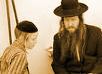
(pe-oht hah-ROHSH) n. Earlocks; Sidelocks; peyot (פֵּאוֹת), from the singuar (pe'ah) that means corner, side or edge (i.e., of a field, as in agricultural laws), though this terms was taken to mean the hair in front of the ears extending to beneath the cheekbone (Talmud - Makkot 20a regarding Lev. 19:27). According to Maimonides, cutting the sidelocks was a pagan practice. Note that the verse: "You shall not round the corners of your heads, neither shalt thou mar the comers of thy beard" (Leviticus 19:27) is not understood by the sages not to mean that it is wrong for a man to be cleanshaven, but only that sidelocks should be allowed to grow and not be cut. There are many different "styles" of peyot (twisted, braided, curled, straight, etc.), with various mystical explanations offered to justify each style by those who wear them for religious reasons...
Ebionites
A group of Jews who (during the early history of the Christian Church) accepted Jesus Natseret as the Mashiach but only adhered to the Gospel According to Matthew (in Aramaic) and rejected Rav Sha'ul Paul as a heretic. Ebionites continued to follow Jewish law and celebrate Jewish feasts and holidays and considered Torah Observance to be necessary to follow Jesus' way.
The Ebionites were descendants of John the Baptist. They denied the deity of Jesus, the doctrine of the Trinity and the virgin birth. They emphasized Jesus' humanity as the mortal son of Mary and Joseph, who was 'adopted' as a son of God (or rather elevated to the status of prophet) when he was anointed with the Holy Spirit at his baptism. Jesus could have become the Messianic king-priest of Israel, but was chosen to be the last and greatest of the prophets.
It appears that the Ebionites also rejected the doctrine of atonement for sin through the death of Jesus, and judged sightings of the risen LORD as spiritual experiences such as dreams and visions rather than an actual physical resurrection.
The Ebionites revered Jesus' blood relatives, especially James the Just, as the legitimate apostolic successors of Jesus, rather than Peter. Ebionites believed that all followers of Jesus, whether they be Judean or Gentile, must adhere to Noahide Laws and Mosaic law, tempered with the wisdom teachings of Jesus. Obviously Ebionism is a heresy and unfortunately appears to be re-emerging in the new Torah-Observant Messianic movement. (*sources for this information include: Wikipedia, Catholic Encyclopedia, Jewish Enclycopledia.com).
Echad

(e-KHAD) n/adj. Echad. One.
Echad mi yodea

(e-KHAD mee yoh-DAY-ah) n. Echad Mi Yodea, "Who knows one?" (אחד מי יודע). A "cumulative" song at the end of the Passover Haggadah designed to keep the children awake until the end of the Seder service. According to the Encyclopaedia Judaica, the song was first included in Ashkenazi Haggadot of the 1500s. The fundamental Jewish beliefs and traditions are imparted in the 13 stanzas of this poem.
- Who knows one? I know one! One is Hashem, one is Hashem, one is Hashem! In the Heaven and the Earth.
- Who knows two? I know two! Two are the tablets that Moses brought.
- etc. etc.
Ecclesiastes

(ko-HE-let) n. Ecclesiastes, one of the five scrolls (part of the Ketuvim). King Solomon's (sh'lomo's) study of the futility and meaninglessness inherent in natural reasoning "under the sun." Read during Sukkot (Tabernacles). Kohelet means "one who assembles."
Ecology

(bal tash-KHEET) phr. "Don't be destructive or wasteful." Principle not to destroy anything needlessly; i.e., preservation of environment. The foundation of most Jewish concepts regarding ecology.
Ed / Edim

(ayd / ay-DEEM) n. Witness(es); edut means witness or testimony.
Eden

(AY-den) n. Delight; Pleasure; Luxury; Gan Eden is the Garden of Eden representing paradise.
Education

(kheen-NOOK) n. "Education," a word that shares the same root as the word "chanukah"
(חֲנֻכָּה, dedication). Unlike the ancient Greek view that pragmatically saw education as a humanistic process of escaping from "the cave of ignorance" to better one's personal power or happiness, the Jewish idea implies dedication to God and His concrete purposes on the earth. Rambam (Maimonides) notes that the word chinukh is borrowed from the Torah's description of dedicating a tool for use with the Holy Altar, "habituating the tool for its work." In other words, godly education is a process of being made a "fit vessel" for the service of God in the world. All other ends of knowledge ultimately exist for this purpose, and rightly understood, education is a form of worship. "The world exists because of the breath of the schoolchildren who study Torah" (Talmud Bavli Shabbat 119b).
Educator

(me-kha-neikh) n. Educator, teacher, coach; etc. The word "chinuch" means "dedication" by establishing a connection with the truth of God. The Hebrew word "mechanech" (מְחַנֵך) derives from the Hebrew word for grace (חֵן). A godly teacher will help you establish a connection with God by means of God's grace.
Egypt

(meets-RAI-yeem) Egypt. Also transliterated as Mitsraim, Mitsrayim. Mitzrayim, etc.
Eichah

(ay-KHAH) n. Echah. Lamentations. One of the five scrolls. Jeremiah's acrostic lament over Jerusalem's destruction. Part of the Ketuvim in the Tanakh.
Eidot

(ay-DOHT) n. (sing. eidah). "Testimonials" (from the root 'ed, witness). Mitzvot that commemorate or represent something -- e.g., the commandments to put on tefillin, wear tzitzit, eat matzah on Passover, blow a shofar, etc. Since they commemorate or symbolically represent something, the eidot occupy a sort of middle ground between the rationally understandable mishpatim and the supra-rational chukkim. Note that a testimony is eidut in Hebrew.
Eil Ha-milu'im

(ayl ham-mee-loo-EEM) n. "The Ram of Ordination" (from aiyil, ram and milu, installation or dedication). The eil ha-milu'im was a ram whose blood was sprinkled upon Aaron as the Kohen Gadol of the newly established mishkan (Tabernacle). The blood of the eil ha-milu'im was put on the right ear, right thumb, and big toe of the Aaron and his sons (a clear picture of Yeshua and His sacrifice as the coming greater High Priest) and the rest of the blood was dashed upon the sides of the altar. After its slaughter, Moses also took the innards of the eil hamilu'im and some unleavened bread and put them in the hands of the priests to perform tenufah (a wave offering) before burning them upon the altar (a picture of the resurrection). Finally, Moses mixed some of the blood of the eil hamilu'im and anointing oil and sprinkled it on the priest's garments to sanctify them.
Ein Keiloheinu

(AYN kay-loh-HAY-noo) n. "There is none like our God," a well-known synagogue song that exalts the Lord. It is noteworthy on account of its memorable melody and the easy Hebrew phrasing. One charming custom in Orthodox synagogues is to appoint a child to be the chazzan (or cantor) for this song at the end of a Musaf (additional) service.
Ein Sof

(AYN sohf) n. "Without end"; God's essence or infinity.
El

(EL) n. Name for God; "Strength." Used 250 times in the Tanakh. See the Names of God.
El Haromiyim

(el ha-RO-mee-YEEM) n. "To the Romans." Paul's letter to the kehillah (congregation) in Rome. This letter is perhaps Pauls greatest doctrinal work, expounding all of the key doctrines of the gospel of God (besorat haelohim) in a masterfully written summary.
Elijah the Prophet

(e-lee-YA-hoo ha-nah-VEE) n. Elijah the prophet; Mal. 3:23, 4:5 says he will herald "the great and terrible day of Adonai." Jewish tradition regards him as the forerunner of the Messiah. Eliyahu means "My God is Yah."
Elijah's Cup -- a cup with wine which is poured but not drunk during the Passover Seder, between the third and fourth cups.
Elisha

(e-lee-SHAH) n. Elisha. Elijah's talmid and successor (1 Kings 19:16); Elisha means "God is Salvation."
Elisheva

(e-lee-SHE-va') n. Elizabeth. Luke 1:15. Elisheva means "Oath of God."
El Melekh Ne'eman

(el ME-lekh ne-ay-MAHN) phr. "God is a faithful king;" the phrase spoken before the recitation of the Shema; a supposed acronym for "Amen."
Elohim

(e-loh-HEEM) n. God; gods. The plural form of el, meaning "strong one." Occurs 2,570 times in the Tanakh. (Isa. 54:5; Jer. 32:27; Gen. 1:1; Isa. 45:18; Deut. 5:23; 8:15; Ps. 68:7). First name of God in Tanakh. See the Names of God.
Elohim Avinu

(e-loh-heem ah-VEE-noo) n. phr. "God our Father" (John 8:42).
El Shaddai

(el shad-DIE) n. The All Sufficient God. Shad means "breast" in Hebrew (Gen. 17:1; 28:3; 35:11; 43:14; 48:3; 49:25; Exod. 6:3; Num. 24:6; Ruth 1:20; Job (various references); Psa. 22:10; 68:15; 91:1; Ezek. 1:24; 10:5; 23:21 etc.). Occurs 48 times in the Tanakh.
Elul

(e-LOOL) n. The 6th month of the Jewish calendar (late summer). The name Elul is claimed to be an acronym of Ani l'dodi v'dodi li, "I am my Beloved's and my Beloved is mine," a quote from Song of Songs 6:3, where the Beloved is G-d and the "I" is the Jewish people. This month is particularly a time set apart for repentence, or teshuvah, in preparation of the High Holidays (Rosh Hashanah and Yom Kippur). For more, click here.
Elyon

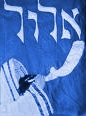
(el-YOHN) n. The Most High; God; Upper; Highest. See the Names of God.
Emanation(s)

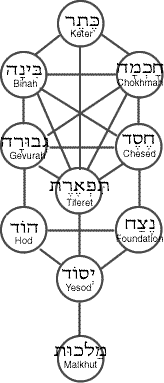
(se-fee-RAH / se-fee-ROHT) n/pl. A channel of Divine energy or life-force. This most fundamental concept of Kabbalah is that in the process of creation an intermediate stage was emanated from God's infinite light to create what we experience as finite reality. These channels are called the Ten Sefirot, Ten Divine Emanations, Ten Divine Radiances, Ten Divine Eluminices, or Ten Divine Powers which are the basic terms and concepts of the inner wisdom of the Torah which is called Kabbalah. The Ten Sefirot are the ten "Divine Emanations" within Zoharic mysticism.
The Ten Sefirot are:
- Keter - Crown
- Chochmah - Wisdom
- Binah - Understanding
- Chessed - Kindness
- Gevura - Strength
- Tiferet - Beauty
- Netzach - Victory
- Hod - Awe
- Yesod - Foundation
- Malkhut - Kingdom
Sometimes the Sefirot are listed without Keter, and then Da'at (knowledge) is listed between Binah and Chesed.
Emet

(EH-met) n. Emet. Truth. Firmness; Stability.
Emissary

(shah-LEE-akh) n. Messenger; Delegate. Emissary. A person sent forth as an agent to perform a task for a Principal. In Jewish understanding the identity of the agent becomes that of the Principal when the agent performs the task given to him by the Principal. Plural form is Sh'lichim.
Emorites

(e-moh-ree) n. pl. An ancient nomadic people who dominated the history of Mesopotamia, Syria, and Palestine from about 2000 to about 1600 BC. Amorites means "westerners" in Sumerian. There are also sometimes called Eastern Canaanites, since a large group of them later settled in the Levant. They are associated with ancient Babylon, and the Egyptians called them the Hyksos.
Emunah

(eh-moo-NAH) n. KEYWORD. Faith. Firmness; Steadiness; Fidelity; Steadfastness (Ex. 17:2. Deut. 32:4). Practically speaking, emunah implies that a person, at the core of their heart, believes in the existence and presence of the One True God.
Encouragement

(kheez-ZOOK) n. Encouragement. Giving chazak to someone. (Give the guy some ~).
End (Goal) of the Torah

(takh-LEET) n. Aim, purpose, end; as in, "One of the "tachlitot" (pl.) of studying Torah is to reveal the need for the Mashiach. Romans 10:4 says, "For Mashiach is the end of the law for righteousness to everyone who believes":

Ephod

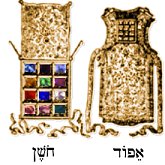
(ay-FOHD) n. Ephod. A linen apron with two shoulder straps to which the golden breastplate (choshen) was attached. For some interesting information about the ephod, click here.
Ephraim

(ef-RAI-eem) n. Ephraim, one of the two sons of Joseph the son of the Patriarch Jacob, hence a half-tribe (as was Manasseh). Also a town northeast of Jerusalem.
Eretz Ha-kodesh

(E-rets hak-KO-desh) n. The holy land. Israel.
Eretz Yisrael

(E-rets yis-ra-EL) n. The land of Israel. Also known as Eretz Hakkodesh.
Erev Rav

(e-rev rav) n. "Mixed Multitude" (Exod. 12:38). those Gentiles who tagged along with Israelites during the Exodus from Egypt. Among some ultra-Orthodox, the "erev rav" are the bane of Israel's existence, a sort of scapegoat for Israel's lapses of faith. For example, here are a few quotes regarding them: "Erev Rav which are the souls from the world of chaos, G-d transplants them every generation, and they are the bold-faced of the generation"; "Adam, the first Man, sinned because of the souls of the erev rav he contained - they caused him to sin. Similarly, Moshe Rabbeinu... because of the erev rav came to make mistakes"; "All the exile, the destruction of the Temple and all the troubles - it all results from Moshe Rabbeinu having accepted the erev rav"; "Esau and Ishmael are entwined in Abraham and Issac, but the erev rav are entwined in Jacob; they are more problematic to Israel and to the shekhinah, for they are the leaven in the dough," and so on. These people should recall God's commandments expressed in the Torah: "There shall be one law (תּוֹרָה אַחַת) for the native and for the stranger who sojourns among you" (Exod. 12:49). "You shall treat the stranger who sojourns with you as the native among you, and you shall love him as yourself" (Lev. 19:34).
Erev Shabbat

(e-rev shab-BAHT) n. Erev Shabbat. Friday up to sundown. Sabbath Eve (Friday evening). Erev means "evening." Erev Tov! means "good evening."
Eruv

(e-ROOV) n. (עֵירוּב) A Rabbinic law that draws a symbolic line or "fence" around an area so that the area may be considered as one's "own yard," thus permitting the carrying of things within it without fear of desecrating the Sabbath. This concept is ultimately derived from the Torah: Numbers 2:2 reads, "Every one of the Israelites must camp under his standard with the emblems of his family; they must camp at some distance (מִנֶּגֶד) around the tent of meeting." Moreover, the instructions that the cities of the Levites were to include a pastureland that measured 2,000 cubits in every direction from the city (Num. 35:5) is cited as futher evidence of the prescribed limit. Finally, in the Book of Joshua, the people were further instructed to keep 3,000 feet away from the Ark of the Covenant (Josh. 3:4), which the rabbis later interpreted to mean that there should a "walking limit" (eruv) of no more than 3,000 feet beyond one's house on the Sabbath.
Esau

(e-SAHV) n. Esau. The eldest son of Isaac and Rebecca and twin brother of Jacob; sold the birthright for food when he was hungry and the divine blessing went to Jacob; progenitor of the Edomites. Esau means "hairy."
Eser Ha-Makot

(e-ser ham-mah-KOHT) n. The ten plagues. The ten calamities that befell Egypt by the hand of the God of Israel as recounted in the Book of Exodus (chapters 7-12) and further mentioned in Psalm 78:44-51 and Psalm 105:23-39. The Ten Plagues are also called the "Plagues of Egypt" (i.e., makot Mitzrayim: מַכּוֹת מִצְרַיִם). These include:
- Makat Dam (מַכַּת־דָם): Water turned to blood (Exod. 7:14–25)
- Makat Tzefarde'a (מַכַּת־צְפַרְדֵּעַ): Frogs from the Nile (Exod. 7:25–8:11)
- Makat Kinim (מַכַּת־כּנִּים): Gnats (or lice) from the dust (Exod. 8:12–15)
- Makat Arov (מַכַּת־עָרוֹב): Swarms of flies (or wild animals) (Exod. 8:20–32)
- Makat Dever (מַכַּת־דֶבֶר): Pestilence (Exod. 9:1-7)
- Makat Shechin (מַכַּת־שְׁחין): Boils (Exod. 9:8-12)
- Makat Barad (מַכַּת־בָּרָד): Hail and Fire (Exod. 9:13-35)
- Makat Arbeh (מַכַּת־אַרְבֶּה): Locusts (Exod. 10:1-20)
- Makat Choshekh (מַכַּת־חוֹשֶׁךְ): Darkness (Exod. 10:21-29)
- Makat Bechorot (מַכַּת בְּכוֹרוֹת): Death of the firstborn (Exod. 11:1-12:36)
Exodus 12:12 God says, "... on all the gods of Egypt I will execute judgments." Thus the plagues are thought to be symbolic of the defeat of various gods venerated in ancient Egyptian mythology (and occultism in general):
- Water turned to blood - Hapi and/or Khnum (god of the Nile)
- Frogs from the Nile River - Heket (goddess of fertility and water)
- Gnats from the dust - Geb (god of the Earth)
- Swarms of Flies - Khepri (god of creation, lord of flies or beetles)
- Death of Livestock - Apis (goddess of animals depicted as a bull); Osiris
- Ashes to boils - Isis (goddess of nature, healing and peace)
- Hail and Fire - Nut (sky goddess and sister of Geb)
- Locusts sent from the winds - Set (god of storms, darkness, and disorder)
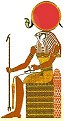
- Three days of darkness - Ra (the Sun god) and Set (god of darkness)
- Death of the firstborn - Pharoah ("son of Ra"); Khnum/ Amon (ram god)
Some commentators ask whether the plagues were intended more for the Israelites than for the Egyptians, since the Israelites had been oppressed by the powers of Egypt to the point of being "without the breath of hope."
Eser Sefirot

(e-ser se-fee-ROHT) n. Ten Sefirot. Ten divine emanations or manifestations of God of Jewish mysticism. These "emanations" or "enumerations" form the very heart of all Kabbalistic theology and theosophy. The sefirot are the ten archetypal attributes or characteristics of the Godhead. A distinction is made in Kabbalah between the unknowable Godhead, the Ein Sof or "infinite", and the knowable qualities of God, represented by the sefirot.
Eshet Chayil

(e-shet KHAI-yeel) n. phr. "Woman of valor." Ideal woman (Prov. 31). Balabusteh. The poem in praise of the good wife (Proverbs 31:10-31) has an acrostic arrangement that describes the ideal Jewish housewife. Reading this is part of the Kabbalat Shabbat (welcoming of the Shabbat) liturgy, prior to the Shabbat meal.
Essenes

(ees-SEEM) n. pl. Essenes; According to Josephus, one of the three major sects of first-century Judaism (the other two being the Sadduces and the Pharisees). The Essenes seem to have originated in the second century BC as a sect of dissident priests. They are believed to have rejected the Seleucid and/or Hasmonean appointed High Priests as illegitimate. Ultimately they rejected the Second Temple and regarded their new community as true Temple, with obedience to the law as genuine sacrifice.
Esther

(ES-tayr) n. Eshter. The last of the five Megillot (scrolls) that are part of the Ketuvim. The story of God's providence in the affairs of the Jews during the time of Xerxes (486-465 B.C.), ruler of Persia. Ester is read during Purim. The Fast of Ester is the 13th of Adar on the Jewish Calendar. Note that Queen Esther's Jewish name was Hadassah (הֲדַסָּה, see Esther 2:7), derived from hadas (הֲדַס), meaning "myrtle" (i.e., an evergreen shrub) that has an ancient association with healing (hadas is also a branch of myrtle that forms part of the lulav used during Sukkot). The name Esther (אֶסְתֵּר), on the other hand, may derive from the Persian word for "star" or may come from the Babylonian pagan fertility idol named "Ishtar" (an idol that inspired the invention of "Venus"). The English word "Easter" (and its derivatives) also derive from the same root.
Esther, Book of

(me-gee-lat ES-tayr) n. Esther; The scroll with the story of Esther.
Etrog

(E-trog) n. One of the arba mimim (four spices) used during the festival of Sukkot (Lev. 23:40). Citron.
Etzem

(EH-tzem) n. Bone; essence; core; substance. A noun in Hebrew is called shem etzem, literally the "name of the essence."
Etzem me'atzamai

(EH-tzem may-a-tzah-MAI) phr. Bone of my bone (Gen. 2:23). Hence, woman, wife.
Etz hachayim

(ayts ha-KHAI-yeem) n. The Tree of Life (Gen. 2.9). Note that the wisdom of the Torah is called etz chayim (עֵץ־חַיִּים), a "tree of life" in Proverbs 3:18. Etz chayim also refer to the handles used to roll a Torah Scroll (Sefer Torah).
Eved Hashem

(E-ved ha-SHEM) n. Servant of God.
Even Ha-Shetiyah

(E-ven ha-she-tee-YAH) n. "The Foundation Stone." The bedrock at Mount Moriah is called Even ha-Shetiyah (אבן השתייה), "the Foundation Stone," referring to the creation of the earth on the First Day (Isa. 28:16). This is also the name of the rock at the heart of the Dome of the Rock in Jerusalem. The rock is located towards the center of the Temple Mount, an artificial platform built by Herod the Great on top of vaults over a hill, generally believed to be Mount Moriah.
Evening Service

(ma-a-REEV) n. Evening prayer; service for evening prayers. It is said that Abraham invented Shacharit by regularly praying to God in the morning; Issac is said to have invented Minchah (the afternoon service) by praying in the afternoon, and Jacob invented the Ma'ariv.
Everlasting Covenant

(be-REET oh-LAHM) n. Everlasting covenant. The exact nature of olam is subject to some dispute. For instance, the Sinai covenant is olam, yet it has been superceded by the brit chadashah. The terms qua that covenant are eternal, but they apply only so long as the covenant itself is in force.
Everlasting Love

(ah-ha-VAT oh-LAHM) phr. "Everlasting love."
Everything is for the Best

(gam zoo le-toh-VAH) phr. "This too, is for the best." From a story in the Talmud of a sage named Nachum, whose staunch faith in God led him to declare all of God's actions as being for the best. His name therefore became Nachum Ish Gam Zu, Nachum, the Man of 'Everything is for the Best.' (Note: gamzu is an abbreviation for the phrase.) An old saying: "The optimist believes this is the best of all possible worlds, and the pessimist is afraid that the optimist is correct."
Evil Eye

(ra' AI-yeen) n. The "evil eye" of envy; stinginess; meanness. There are various superstitious practices to avoid the gaze of the evil eye, such "hiding celebrations" or refraining from expressions of too much happiness to keep away envious looks (e.g., the breaking of the goblet during a wedding may have roots in this idea). Sometimes any expression of happiness for another is qualified with the phrase "kayn ayin hara" (without the Evil Eye), pronounced "keynahara" in Yiddish, meaning "I am happy for you with no envy in my heart..." Some people go so far as to wear charms (e.g., the "hamsa hand") or a "thin red string" around the wrist for protection.
Of course we must reject such superstitions and affirm "ein od milvado" - there is no power (including the power of evil) that is not under the direct authority of God... Yeshua is the LORD over Satan and all evil forever and ever, Amen.

Evil Speech

(lah-SHOHN hah-RAH) n. "The evil tongue," which means saying something bad about another person even if it happens to be true. In other words, lashon hara is gossip, spreading evil (even if true) reports, or expressing a critical or negative spirit about others. Such behavior is explicitly forbidden in Levitcus 19:16. Of course there are times when a person is obligated to speak out, even though the information is disparaging (for example, while testifying under oath, and so on). However, the practice of being motzi ra (someone who speaks evil) is related to the status of metzora, the one who is afflicted with tzara'at, and therefore many of the Jewish sages have made the connection between the sin of lashon hara and the unclean condition known as tzara'at.
Exodus

(she-MOHT) n. pl. Names; Exodus. The story of the liberation of the Jewish people from their bondage in Egypt and the giving of the Mosaic covenant to Israel. The book of Exodus in the Bible is called "Sefer Yetziat Mitzraim" - the book of the Exodus from Egypt.
Exodus from Egypt

(ye-tsee-AT meets-RIGH-eem) n. Yetztiat Mitzraim: "The Exodus from Egypt."
Expert

(may-VEEN) n. Judge; one who can discriminate between (bein) things well; a maven (yiddish); an expert.
Expertise

(me-vee-NOOT) n. Expertise; the quality of being mevin about something.
Ezra

(ez-RA') n. Ezra; book of the Ketuvim in the Tanakh. Ezra means "help" or "aid."
<< Return
|