|
Prayer Request (for site updates, see below)
I was laid off from my full-time job several years ago when -- after a lot of prayer, soul searching and discussion with my wife -- we decided to operate the Hebrew for Christians ministry entirely by faith in God's provision through the love and kindness of His people. I am not paid for doing this work, and therefore I ask you to consider supporting us. If you can help, please offer a donation or purchase some of the Hebrew study materials offered here. Encouraging other web sites to link here also helps us become more visible on the web. Above all, agree with us for the Lord's will to be done in our lives. Todah, chaverim.
Note: My wife and I have have three young children (Josiah, Judah, and Emanuel David ). The LORD has graciously provided for us as Adonai Yireh (יְהוָה יִרְאֶה), "the One who sees [our need]." We are living one day at a time by the grace and mercy of God, and I want to publicly praise Yeshua and acknowledge His faithful love in caring for my family -- despite the trials during this time. The LORD God of Israel is faithful and true! And to those of you who have sent us a word of encouragement or donation during this difficult time, please accept our heartfelt appreciation! Your chesed truly helps sustain us.
יהי שׁם יהוה מברך - "May the Name of the Lord be blessed."
 |
Please Donate Today
Jewish Holiday Calendar
Note: For site updates, please scroll past this entry....
The Torah divides the calendar into two symmetrical halves: the Spring and the Fall, indicating the two advents of Messiah. The Biblical year officially begins during the month of the Passover from Egypt (called Rosh Chodashim, see Exod. 12:2), and the spring holidays of Passover, Unleavened Bread, and Firstfruits both recall our deliverance from Egypt and also our greater deliverance given by means of the death, burial, and resurrection of the Messiah, the great Passover Lamb of God. The holiday of Shavuot (i.e., "Pentecost") both commemorates the revelation of the Torah at Sinai as well as the revelation of the Ruach HaKodesh (Holy Spirit) at Zion, in fulfillment of the promise given by our Lord....
The intermediate months of summer end with the advent of the sixth month of the calendar, the month of Elul, which recalls the time Moses interceded on behalf of Israel after the sin of the Golden Calf. To commemorate this time of our history, we likewise focus on teshuvah (repentance) in anticipation of Rosh Hashanah and especially in anticipation of Yom Kippur, the great "Day of Atonement." In Jewish tradition the 30 days of Elul are combined with the first ten days of the seventh month (called the "Days of Awe") to set apart "Forty Days of Teshuvah" leading up to the Day of Forgiveness for Israel. Immediately following Yom Kippur, the mood changes as we begin preparing for a joyous week-long celebration called Sukkot (i.e., "Tabernacles") that concludes with the holiday of Simchat Torah.
In the summer there occurs a three week period of mourning that begins with the Fast of Tammuz and ends with Tishah B'Av. The last nine days of this three week period (i.e., from Av 1 until Av 9th) are days of increased mourning. However, after this somber time, the romantic holiday of Tu B'Av, the 15th of Av occurs. Summer ends with the 30 days of the month of Elul, a yearly season of teshuvah (repentance) that anticipates Rosh Hashanah and the fall holidays. The 30 days of Elul are combined with the first 10 days of the month of Tishri to create the "Forty Days of Teshuvah" that culminate with Yom Kippur.
Because they occur between the spring and fall holidays, the summer holidays help us prepare for the second coming of the Messiah:
 |
The Summer Holidays:
Note that in accordance with tradition, holiday dates begin at sundown. Moreover, some holidays may be postponed one day if they happen to fall on the weekly Sabbath:
- Month of Tammuz (Sun. June 14th [eve] - Tues. July 14th [day])
- Month of Av (Tues. July 14th [eve] - Wed. Aug. 12th [day])
- Month of Elul (Wed. Aug. 12th [eve] - Fri. Sept. 11th [day])
- Month of Tishri (Fri. Sept. 11th [eve] - Sat. Oct. 10th [day])
Note: For more about the dates of these holidays see the Calendar pages....
Search the H4C Site
July 2026 Site Updates
Note: Please refresh the page (or press F5) to see the latest updates...
Deliver us from anxiety...

"To look away from the world, or to stare at it, does not help a man to reach God; but he who sees the world in Him stands in His presence." - Martin Buber
07.10.26 (Tammuz 25, 5786) Why do we often feel anxious? Why are we filled with unease and worry about what might happen to us? Is it not because everything seems out of our control? The world around us seems threatening and unstable; our interpersonal relationships are fragile and vulnerable; our bodies can get sick and falter; we grow despondent, lonely, and grieved. Time relentlessly passes and dissolution seems omnipresent; we feel distressed, swallowed up, overwhelmed, and powerless...
Now while it is true that everything is out of our control, it is not true we are utterly alone, the victims of unhappy chance and sorrowful fortune, for we find life in relationship with a loving God who has repeatedly told us that he is with us always, through all the byways and valleys, and that he will never leave nor forsake us. The Lord has promised to shepherd us through the present darkness; he is the ground of our being, the place of our refuge.
We do not deny reality or pretend that we are not in struggle between hope and despair. But while it is true that we are in a world that is frightening and uncertain, we are given strength by God to walk in shalom here, to bear witness of his radiant light. We are "in" but not "of" the world -- a realm that God has subjected to vanity in order to redeem it to a heavenly and eternal hope (Rom. 8:20). You are not alone, friend; you are part of God's blessing. The Lord is with you and he provides you sure refuge and abiding comfort in the midst of the storm. God is always between you and your wounds...
Just as humanity was plunged into darkness through unbelief, so we are brought to the light through faith in God's deliverance. Therefore hold fast to hope, and keep the fire of your heart burning, friend... Rabbi Nachman once told a person who was struggling with his faith: "It is written that all creation was brought into being because of people like you. God saw there would be people who would cling to our holy faith, suffering greatly because confusion and doubt would plague them. God perceived that such would overcome these doubts and troubles of heart and remain strong in their belief. It was because of this that God brought forth all creation." Amen. Repudiate anxiety and never yield to despair, since that leads to further darkness and fear. "Do not be anxious (i.e., inwardly divided, two-hearted) over anything, but in every thing by prayer bring your needs before God with gratitude, and the peace of God that surpasses all understanding (שלום אלוהים העולה על ההבנה) will guard your hearts and minds in Yeshua the Messiah (Phil. 4:6-7).
Press on and keep fighting the "good fight" of faith (1 Tim. 6:12). When the apostle Peter lost courage at the sight of the swelling waves, Yeshua reached out his hand and took hold of him, saying, "O you of little faith, why did you doubt (lit., think twice)?" Remember that you infinitely matter to heaven; your life has great value; you are significant and you are truly loved by our Heavenly Father. "The LORD your God goes with you to fight on your behalf against your enemies to give you victory" (Deut. 20:4).
We are not alone; God will help us get through... "I am sure of this, that he who began a good work in you will bring it to completion (ἐπιτελέω) at the Day of Yeshua the Messiah" (Phil 1:6). The LORD is able to guard you (φυλάξαι) from stumbling and to present you blameless before the presence of His glory with great joy (Jude 1:24). "The LORD upholds all who are falling and raises up all who are bowed down" (Psalm 145:14). "He will sustain you to the end, guiltless in the Day of our Yeshua the Messiah" (1 Cor. 1:8). He who calls you is forever faithful; He will surely do it (1 Thess. 5:24). Yea, "the Lord is faithful (נֶאֱמָן הוּא): He will establish you and guard you against the evil one" (2 Thess. 3:3). The Spirit of the Lord says, "Fear not, for I AM with you always." Amen and amen.
Hebrew Lesson
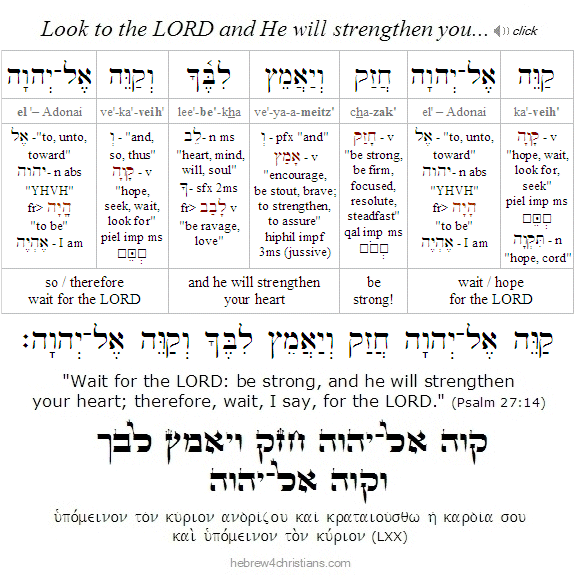
Isaiah 41:13 reading (click):
 |
Heaven's Last Laugh...

07.10.26 (Tammuz 25, 5786) "Blessed are you who weep now, for you shall laugh" (Luke 6:21). Despite the heartache of our present life and the grief we now bear, sorrow will not be given the last word, but rather laughter and joy... And even now, in the midst of our afflictions, we can laugh in joy at the prospect of the coming great Day when all things shall be completely healed, the untrue will be made true, the crooked made straight, and our hearts deepest dream for love will be fulfilled...
Nonetheless we still weep because we see the world as painful, tragic, and filled with so much sadness; we cry out for deliverance; we mourn over our lives and for the lives of others we love... If you have a heart that still can feel, you know the crushing weight of sin, you share the agony of others who struggle with their sufferings; and you may feel nearly suffocated by the darkness, pain, and inconsolable despair. Indeed only those who are heartless can laugh at the troubles of this world, unmoved and untouched by the sorrows of others, perhaps because they are insulated in their moneyed indifference or else because they scorn life as "hard" and unforgiving, yet in either case we hear Yeshua add, "Woe to you who laugh now" (either in levity or in bitterness), "for you shall mourn and weep" (Luke 6:25). So you see how it is: God's people will always be "out of step" with this world and its godless idolatry. Genuine faith is a form of protest against any interpretation of reality that denies or minimizes the truth of the Divine Presence and therefore it suffers as the world exchanges truth for the lie.
Indeed God's people are "strangers" in this world; they are estranged and live as "resident aliens" -- here, yet not here.... Those who 'settle' here, who lay claim to life in this world, therefore make God their stranger. Thus King David said to the LORD: "We are strangers with You (כִּי־גֵרִים אֲנַחְנוּ לְפָנֶיךָ) and sojourners like our fathers; our days on earth are like a shadow (כַּצֵּל יָמֵינוּ) without abiding (1 Chron. 29:15). Faith in Yeshua affirms that underlying the surface appearance of life is a deeper reality that is ultimately real and abiding. It "sees what is invisible" (2 Cor. 4:18) and understands (i.e., accepts) that the "present form of this world is passing away" (1 Cor. 7:31). The mode of faith therefore calls us to live as toshavim - sojourners - who are at an infinite "distance" from the world of appearances and who seek the Eternal. We are "just passing through" this world, as we look forward to our promised home in heaven (Heb. 11:9-10). Then the days of our mourning shall be turned to dancing and God himself shall wipe away all tears from our eyes (Rev. 7:17; Isa. 55:11). Amen.
Hebrew Lesson
Psalm 30:5 reading (click for audio):
The Mystery of Spirit...

07.09.26 (Tammuz 24, 5786) The word "spirit" points to wonder, to something extraordinary and beyond our expectation, that is, to the mysterious Divine Presence that pervades all things yet rises above all things. Yeshua likened the Ruach (רוּחַ) with the inscrutable motions of the wind: "The wind blows where it wishes, and you hear its sound, but you do not know where it comes from or where it goes. So it is with everyone who is born of the Spirit" (John 3:8). We see the effect of the wind, but not the wind itself, which illustrates that the wind is ultimately beyond our grasp and control. To be "born of the Spirit" is therefore a mysterious intervention from heaven (John 1:13), just as being "led by the Spirit" implies seeing differently, that is, apprehending the Divine Presence in the mysterious motions of life.
Hebrew Lesson
Psalm 139:7 reading (click):
Soren Kierkegaard connects the movement of the Spirit with a deep sense of longing: "The wind blows where it will; you are aware of its soughing, but no one knows whence it comes or whither it goes. So also with longing, the longing for God and the eternal, the longing for our Savior and Redeemer. Comprehend it you cannot, nor should you; indeed, you dare not even want to attempt - but you are to use the longing. Would the merchant be responsible if he does not use the opportune moment; would the sailor be responsible if he does not use the favorable winds - how much more, then, is the one who does not use the occasion of longing when it is offered?" (Kierkegaard: Discourses)
Meaning and Life...

07.09.26 (Tammuz 24, 5786) The Hebrew word for "life" is chayim (חַיִּים), a plural noun that contains two consecutive letter yods (יי) that picture two "hands held together" (the Hebrew word yad [יָד] means "hand"), or the union of our spirit with God's Spirit. The word itself reveals that there is no life apart from union with God, who extends his hand to you and says, "Live in me" (John 15:4). Live in God, who is your life, your love, your light, your truth, your healing, your beauty, your breath, and your salvation. Yeshua is the Source of all life, and we find nourishment, strength, and fullness of joy as we connect with his life. The Lord is our light and our salvation, the Mediator of divine life (Psalm 27:1; John 1:4). The Voice of the LORD still speaks: "Take heart. It is I; be not afraid."
The word chayim can also be read as chai (חי), "alive," combined with the particle im (אם), "if," suggesting that being alive is conditional on our connection with God in the truth. "Whoever believes in the Son has eternal life (חַיֵּי עוֹלָם); whoever refuses the Son shall not see life, but the separation of God remains" (John 3:36). Life and peace are therefore inextricably connected, and those who refuse Yeshua, the Prince of Peace (שַׂר־שָׁלוֹם), therefore separate themselves from unity with God. Yeshua alone is the means of receiving the divine life: "Whoever has the Son has the life (הַחַיִּים); but whoever does not have the Son of God does not have the life" (1 John 5:12).
The Divine Life is such that it is never diminished as it shared but instead grows and multiplies in miraculous ways. This is alluded to by the Hebrew word for love (i.e., ahavah: אהבה), the gematria of which is thirteen (1+5+2+5=13), but when shared with another it is multiplied: 13 x 2 = 26 - the same value for the Sacred Name (יהוה), i.e., (10+5+6+5=26). Love is inherently relational, and the love of God is the very life of the universe...
The word chayim is also written in the plural both to indicate that we are in relationship with ourselves as well as with others, and moreover that our souls, despite the various changes we may go through in life, remain a unique identity. When Cain murdered his brother Abel, the Torah says, "the voice of your brother's bloods (plural) cries out from the ground" (Gen. 4:10), indicating that Abel's soul, (and the souls of his descendants) also cried out (Heb. 12:24). "Whoever destroys a soul, it is considered as if he destroyed an entire world; and whoever saves a life, it is as if he saved an entire world" (Sanhedrin 37a).
A broken relationship is a kind of death, as anyone who has experienced divorce or the loss of a friend can attest. Death is separation from life. The message of the "gospel" is that our relationship with God is dead and in need of reconcilliation, and that he reaches out to us in our alienation and heartache to restore our lost hope. It is the life blood of Messiah shed in the passion of God's outstretched arms that heals our separation and accepts us into the Divine Presence... The voice of Yeshua's blood cries out on our behalf (Heb. 12:24) as his life was given in exchange for ours: "For our sake he made him to be sin who knew no sin, so that in him we might become the righteousness of God" (2 Cor. 5:12).
We make "spiritual contact" with the sacrificial blood of Yeshua through faith -- by being "baptized into His death" and identifying with Him as our Sin-Bearer before God. We "lean into" Yeshua, confessing our rage, and are cleansed from all unrighteousness (1 John 1:9). In the New Testament Yeshua is called the "atonement" (ἱλασμός) for our sins (1 John 2:2), a Greek word that was used in the Septuagint (i.e., LXX) to translate the Hebrew word kippurim in the Torah (Lev. 25:9). The Septuagint uses the same word (ἱλασμός) to translate the Hebrew word for selichah (forgiveness), for example: "But with you there is forgiveness (הַסְּלִיחָה), that you may be held in awe" (Psalm 130:4). Just as the blood was sprinkled upon the kapporet (cover of the Ark of the Covenant) in the Holy of Holies during the Yom Kippur ritual, so the blood of Messiah was sprinkled the heavenly kapporet, the very altar of Almighty God, to secure for us everlasting redemption and healing... The breach has been healed by our Savior Yeshua, who alone mediates the life of God within us. By faith we are delivered from condemnation and are accepted as God's beloved children.
Hebrew Lesson
Psalm 6:4 reading (click for audio):
 |
The Journey of Journeys...
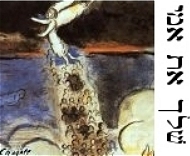
07.08.26 (Tammuz 23, 5786) From our Torah portion for this week (i.e., parashat Masei) we read: "These are the journeys of the people of Israel (מַסְעֵי בְנֵי־יִשְׂרָאֵל) who went out of the land of Egypt..." (Num. 33:1). The sages ask why the word "journeys" (plural) was used here, since only the first journey – from Rameses to Sukkot – literally marked "yetziat mitzrayim," the going out of Egypt – and all the other journeys were outside of Egypt, in desert regions. They answer that the journey out of Egypt goes beyond the physical land into the spiritual - an exodus from captivity to the world into the realm of the spirit. As has been said, it took the LORD 40 days to get Israel out of Egypt, but it took 40 years to get Egypt out of Israel... The "journey out of Egypt" is therefore a journey of smaller journeys that leads to the full consciousness of deliverance.
Along the way we are repeatedly tested. The "desert experience" reveals what is hidden in our hearts... The murmuring and rebellion of the Israelites in the desert is our own, and our challenge is to find healing from our fears. Anger, doubt, boredom, cravings, and outright rebellion are symptoms of a deeper problem, and to change we must first confess our inner poverty, neediness, and emptiness (James 5:16). When we stop making excuses we can learn to trust in God's provision for our lives; we will taste of the heavenly manna and be satisfied; we will be delivered from our fears by be filled with God's love. The impulses that sought to lead us away from God will no longer be able to pretend to be the truth, since God's peace and love will direct the heart. We will begin to take hold of the promise...
Be encouraged my fellow sojourners walking by faith through the desert of this present world. The Torah uses a repetitious expression, "Sanctify yourselves and you shall be holy" (הִתְקַדִּשְׁתֶּם וִהְיִיתֶם קְדשִׁים) (Lev. 11:44) because when we make a sincere effort -- no matter how feeble at times -- to draw near to the LORD, He will draw near to us (Zech. 1:3; James 4:8; Psalm 145:18). Indeed the walk of faith is one of ascent and descent and ascent again: It's often "two steps forward, one step back..." It is a long road, a process, as we learn to obey and seek to grow closer to God. Authentic repentance doesn't imply that we will never sin or make any mistakes, of course, but rather means that the oscillating pattern of "up, then down, then up" is the basic way we walk. Our direction has changed for good; we have turned to God for life and hope. We now understand our sins in light of a greater love that bears them for us even as we draw ever closer to the One who calls us home...
Hebrew Lesson
Zechariah 1:3 reading (click):
 |
The Prayer of God...

"And this is eternal life: that they know you the only true God, and Yeshua the Messiah whom you have sent." - Yeshua (John 17:3)
07.07.26 (Tammuz 22, 5786) Man prays to God, but to whom does God pray? And for what does He pray? Or do you think that the Almighty has no desires of His own, no yearning of heart? The sages of the Talmud believed that God indeed addresses himself: Yehi ratzon milfanai, "May it be acceptable before me, may it be My will, that my compassion overcome my anger, and that it may prevail over my justice when my children appeal to me, so that I may deal with them in mercy and in love" (Berachot 6a). This is the deeper unity of the Name YHVH (יהוה), the Savior and LORD, revealed to Moses after the sin of the Golden Calf (Exod. 34:6-7), and this is the essential meaning of the cross of Yeshua, where the LORD passionately "prayed within Himself" so that His compassion would overcome His judgment for our sins.
Only the cross allows God's righteousness and mercy to "kiss" (Psalm 85:10; 89:14); only the cross reveals the true Holy of Holies where the blood was placed over the Ark of the Law; only the cross intimates the Inner Sanctum of God's heart. Because of the cross, a holy God is able to truly love and help the trusting sinner (Rom. 3:26). It is written: "Righteousness and justice are the foundation of your throne (צֶדֶק וּמִשְׁפָּט מְכוֹן כִּסְאֶךָ); steadfast love and faithfulness go before you" (Psalm 89:14). Because of Yeshua, God is vindicated as entirely just - and the Justifier of those who trust in His redemptive love (Rom. 3:24-26). Yeshua is the prayer of God the Father's on behalf of His children...
The will of God - His heart's yearning and desire - is for his children to receive his love (2 Pet. 3:9; 1 Tim. 2:4; John 3:16; Ezek. 18:23). As Yeshua prayed, "Holy Father, keep them in your Name, which you have given me, that they may be one, even as we are one... I in them and you in me, that they may become perfectly one, so that the world may know that you sent me and loved them even as you loved me" (John 17:11,23).
Yeshua died on the cross to bear the shame for your sins, to be sure, but he did this so that you could be accepted and securely loved forever.... It is the love of God that is the goal of all things, after all. When Yeshua cried out, "It is finished" and breathed his last breath as He died for our sins upon the cross, the greatest exhalation of the Spirit occurred, the greatest sigh, the greatest utterance was ever declared. The sacrificial death of Yeshua for our deliverance was God's final word of love breathed out to those who are trusting in Him.
Hebrew Lesson
Psalm 85:10 reading (click for audio):
 |
His Abiding Presence...

07.07.26 (Tammuz 22, 5786) The Spirit of the Lord comforts and reassures those who come to trust in Him: "My sheep hear my voice, and I know them, and they follow me. And I give them eternal life (חַיֵּי עוֹלָם), and they will never perish - no, never! - and no one will snatch them out of my hand" (John 10:27-28).
Note that the Greek grammar in this verse uses a "double negation," which is the strongest way to deny something. In other words, if the question were asked, "Will one of these sheep perish?" the answer is emphatic: "No, no, it will never happen! It is unthinkable!" Indeed all those who belong to Messiah "shall never, ever perish - not into eternity (εἰς τὸν αἰῶνα)." It is an eternal certainty that you who are trusting in Yeshua will never perish, and no power in heaven or earth will be able to take you out of God's hand... "Surely goodness and mercy shall pursue you all the days of your life, and you shall dwell in the Presence of the Lord forever (Psalm 23:6).
Regarding the certainty of salvation Yeshua said: "I tell you the solemn truth, the one who hears my message and believes in the One who sent me has (i.e., ἔχει, present active indicative) eternal life and will not be condemned, but has passed over (i.e., μετά + βαίνω, lit., "crossed over" [עָבַר]) from death to life" (John 5:24).
The verb translated "has passed over" (μεταβέβηκεν) is a perfect active that expresses completed action: "this one has already passed over from death to life." In other words, it is an accomplished reality though it is only experienced as we surrender to the love and grace of God. As the apostle Paul later summarized: "For it is by grace you have been saved (i.e., σεσῳσμένοι, a perfect passive participle that denotes completed action done on your behalf with effects that continue to the present) through faith, and this not from yourselves, it is the gift of God, not a result of works, so that no one may boast" (Eph. 2:9-10). Ultimately, salvation is a question about who you really are, not about what you do.
God does not want us uncertain or unsure of His great love for us. A fearful believer explained that he was anxious about his acceptance before heaven. When he was asked to define "salvation," he answered, "freedom, deliverance, rest, peace." So you think fear will help you do away with your fear? You are fearful of the idea of freedom from fear?
"Be strong and of good courage" - chazak ve'ematz (חֲזַק וֶאֱמָץ). The LORD God promises "never to leave you nor forsake you," and to be with you wherever you go (Josh. 1:5,9; Heb. 13:15, Psalm 139; Matt. 28:20). In the Greek New Testament the wording of Hebrews 13:15 is highly emphatic: "Not ever will I give up on you (οὐ μή σε ἀνῶ); no, not ever will I leave you behind (οὐδ᾽ οὐ μή σε ἐγκαταλίπω)." May you hear the voice of the Good Shepherd calling you, and may He forever keep you under His watchful care. Amen.
Hebrew Lesson
Joshua 1:9 reading (click for audio):
Sanctity of Heart...
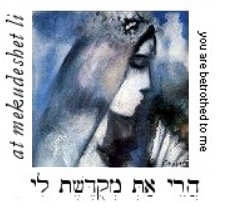
07.07.26 (Tammuz 22, 5786) From our Torah portion this week we read: "Speak to the children of Israel, and say unto them, 'When ye are passed over into the land of promise ... drive away all the inhabitants of the land before you; destroy all their carved images, all their molten images, and demolish their high places'" (Num. 33:51-52). The Hebrew term for idolatry is "avodah zarah" (עֲבוֹדָה זַרָה), which literally means strange or "foreign" worship... The worship of anything other than the true God, whether it is pleasure, money, fame, control, security, self-improvement, health, religion, etc., is regarded as foreign, since it alienates us from the truth of reality. We were created to be in relationship with God but we lose sight of this truth whenever elevate what is finite to the status of the infinite. Indeed idolatry is the substitution of what is not-god (לא־אֵל) for the sacred, absolutizing the present and worshiping the temporal. Since our greatest good is found in the eternal verities of the divine communion, the Lord cannot give us an absolute good apart from Him, since there literally is no such thing. "No one can serve two masters," Yeshua said, and "a divided house cannot stand." For our own good, then, God necessarily is the Ultimate Concern of our life, and he wants to spare us the pain, disappointment, and trauma of being double-minded, disintegrated, and full of inner conflict. Spiritual warfare therefore means taking every thought captive before the bar of God's truth, rooting out and destroying all our inner idols so that we can be delivered from the anguish of uncertainty and ambivalence.
What is at stake here is your inner life, or rather the threat of the disintegration of your deepest essence into a fragmented multiplicity without center... The soul must be grounded in Reality or it is lost, dissipated in existential dread and despair. Yeshua said that when your eye is "single" (ἁπλοῦς), your whole being will be full of light (Matt. 6:22), which means that being single-minded and wholehearted unifies and heals the soul.... Being pulled in opposite directions is both painful and debilitating, for there is no overarching reason to direct the will in its decisions. Hating and loving the good is the ambivalence of despair. Being both willing and unwilling weakens the soul, but seeking the good and making God your ultimate concern binds up the broken heart and centers the will. "Your faith has made you whole..."
"Keep your heart with all vigilance, for from it flow the springs of life" (Prov. 4:23). The heart, that is, the willing and desiring center of the self, is to be proactively guarded, and for this sacred task God offers us heavenly comfort and resolve. Courage does not chase away or deny fear and despair, but instead gives us determination to persevere despite these feelings. "Why are you cast down, O my soul, and why are you in turmoil within me? Hope thou in God" (Psalm 42:11). Courage expresses hope in the midst of the struggle; it finds strength to confront pain, danger, or grief with God's help. Courage is grounded in the decision to trust that God is with us, despite our circumstances or feelings of abandonment. How you choose to guard your heart from the corruption and hardness of the world will determine the "road" of your life. If you do not care to keep your heart open and soft, you will become cynical, weary, and more and more selfish. Your way will be lonely, suspicious, and dangerous. If, however, you keep yourself from the hardness of unbelief, you will experience compassion, encouragement, and the joy of loving others.
Hebrew Lesson:
Proverbs 4:23 Hebrew reading (click)
 |
Sufficient unto the Day...

07.07.26 (Tammuz 22, 5786) In the Gospel of Matthew we read these words of our Lord: "Therefore do not be anxious about tomorrow, for tomorrow will be anxious for itself. Sufficient for the day is its own trouble" (Matt. 6:34). Soren Kierkegaard comments: "If there is no next day for you, then all earthly care is annihilated. When the next day comes, it loses its enchantment and its disquieting insecurity. If there is no next day for you, then either you are dying or you are one who by dying to temporality has grasped the Eternal, either one who is actually dying or one who is really living... The one who rows a boat turns his back to the goal toward which he is working. So it is with the next day. When, with the help of the Eternal, a person lives absorbed in today, he turns his back to the next day. The more he is eternally absorbed in today, the more decisively he turns his back to the next day." Amen. Today is the day of salvation; today may we hear His voice...
"If there is no next day for you, then either you are dying or you are one who by dying to temporality has grasped the Eternal, either one who is actually dying or one who is really living..." - Soren Kierkegaard
"For he that loses his life will find it..." (Luke 17:33). But how are we to understand this? An old story from the Desert Fathers comes to mind. A visitor came to the Master and was struck by his radiance. Later he spoke to a disciple and asked him for an explanation. The disciple quoted the Master's words, "Truly, truly, I say to you, unless a grain of wheat falls into the earth and dies, it remains alone; but if it dies, it bears much fruit" (John 12:24). Life is a sacred mystery, but death provides the key to unlock its meaning. We can "turn the key" by surrendering ourselves in silent expectation before God. Once we die to life in this world we are set free and empowered to live in joy and gratitude for everything. We experience serenity as we let go in surrender to God's care.
A person must be content to be as he is; a dependent being, as little capable of sustaining himself as of creating himself. If we choose to forget God and look after our own sustenance, then we are overcome with anxiety. It is certainly praiseworthy and pleasing to God when a person works for his food. But if he forgets God, and thinks that he himself is supporting himself, then he becomes burdened with the necessities of life... Worry about making a living, or not making a living, is a snare. In actuality, it is the snare. No external power, no actual circumstance, can trap a person. If a person chooses to be his own providence, then he will go quite ingenuously into his own trap, the wealthy as well as the poor. If he wants to entrench himself in his own plot of ground that is not under God's care, then he is living, though he does not acknowledge it, in a prison. When the farmer shut the door on the wood dove, the wood dove believed himself to be safe, when in fact he was caught. Or to put it another way, he was shut out from the care of Providence and trapped in a life of anxiety. In a spiritual sense he made himself a captive and "trapped himself unto death." (Kierkegaard UPD)
It is the saddest thing of all if a human being goes through life without discovering his need for God. Therefore blessed indeed are the poor in spirit, for theirs is the kingdom of heaven (Matt. 5:3). It is a "blessed fault" to understand our inner poverty, to know anguish of heart, and to be able to abide in God's salvation one day at a time....
The Spirit cries out: "Fear not, for I am with you..." אַל־תִּירָא כִּי עִמְּךָ־אָנִי. What we need most of all is right here, present in this hour, whether we're conscious of it or not. God is with you, even if you feel alone, lost in darkness, unclean, afraid... "Dear Lord Jesus, I don't know who I am, I don't know where I am, and I don't know what I am, but please love me" (prayer of a sufferer from Alzheimer's disease). That's what we need most, to trust that we are safe in God's love, and that's the ultimate message of our atonement in Messiah.
Hebrew Lesson
Psalm 73:23 reading (click for audio):
Safe in God's Arms...
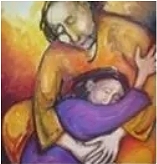
"God be praised that it is not because of my worthiness that God loves me; otherwise, I might at any moment die of fear lest the next moment I cease to be worthy." - Kierkegaard, Journals
07.06.26 (Tammuz 21, 5786) "Now I lay me down to sleep, I pray the Lord my soul to keep..." After praying with my youngest son Emanuel before he goes to bed, and just after we have said our closing "amens," a moment of silence sets in and he often asks me to pray again so that he won't have be afraid. I get it. The lingering thoughts, the liminal awareness that something went undone today, the fear of the unknown. So we pray some more, asking God to deliver us from our fears and to put his "shields of his protection" all around us as we sleep. And I think to myself, and isn't this what we are praying much of the time anyway -- not to be afraid? And not to be angry, which really is the other side of our fear?
We may sometimes feel uneasy over our lives; we may wrestle with "inner demons" that lurk in the shadows of consciousness and seek refuge from them; we may feel fragile, powerless, stupefied, sad, guilty, remorseful, fearful, insecure, lonely... We call out to the Lord for his protection and deliverance. We need reassurance that He is there for us, that he's on the other end of our heart's cry, that he cares. But surely our deepest fear is that of ourselves - our own inner darkness - and whether we will be able to hold it together and not destroy ourselves. As Yeshua said, "If the light that is in you is darkness, how great is that darkness!" (Matt. 6:23).
Our faith in God's love must be greater than the fear of our inner darkness -- those parts of ourselves that seemingly lurk in the shadows. It is not simply trusting God to protect you from external evil but trusting God to deliver you from yourself - trusting him to heal you in the unconscious depths of your soul - the wound that evokes the raw cry of the heart. And more than that, our prayers are a cry for our Abba to be there for us, to take us up in his "everlasting arms," to have him shush away our fears and to quietly say to us: "I love you; I am here with you..." Be at peace my beloved child.
Hebrew Lesson
Isaiah 41:13 reading (click for audio):
|
Guarding your Tongue...
07.06.26 (Tammuz 21, 5786) Our Torah portion this week (i.e., Mattot) begins with Moses instructing the leaders of the tribes, saying: "If a person makes a vow (נֶדֶר) ... he shall not break his word; but he shall do according to all he has said" (Num. 30:2). Notice that the phrase "break his word" literally means to profane (חָלַל) his word, which implies that breaking a promise is a type of profanity or spiritual defilement...
If we do not honor and respect our words, we lose a sense of meaning, and the substance of what we say and think becomes unstable. Such double-mindedness leads to shame, since without inner conviction we become inwardly divided and fragmented, so that we no longer trust ourselves... Being honest (i.e., yashar: יָשָׁר) implies that what we say and what we mean are unified. An honest person doesn't play games with words but understands that communication is a sacred trust...
We have a moral obligation to speak truth to others. This is called dibbur emet (דברי אמת) in Hebrew. Dibbur emet, or "speaking truth," is the duty to use words and language with integrity, compassion, and justice. We abuse language when we gossip, slander, or express contempt to others, and therefore the Torah urges us to practice "shemirat lashon" (שמירת לשון), or "guarding of the tongue" (Psalm 34:11-18).
Yeshua warned us not make oaths but rather we should be trustworthy with our words: let your "yes" mean yes, and your "no" mean no (Matt. 5:37). The talmud agrees by saying that 'no' is an oath and 'yes' is an oath." Our words are to be regarded as sacred, a confession of truth. God has made us inviolable promises, and we are never to play games with that. Just as His word is sacred, so we should strive to be sacred in our speech, too: "I tell you, on the day of judgment people will give account for every careless word they speak, for by your words you will be justified, and by your words you will be condemned" (Matt. 12:37).
The Torah states, "You shall not put a stumbling block (מִכְשׁוֹל) before the blind" (Lev. 19:14). In addition to its literal meaning, the word "blind" figuratively refers to a person unaware of all the facts and who is therefore made vulnerable. Someone who misdirects the blind deceives them, and this violates the 9th commandment not to bear false witness (Exod. 20:16; 23:1). Such deception is called genevat da'at (גְּנֵבַת דַעַת), or "stealing the mind," since it defrauds the other person's trust. For example, it is common practice for politicians to disclose only what they think others need to know, and therefore they offer incomplete versions of truth for the sake of their own self-serving interests. Lying to others is a violation, then, of both the commandment not to steal and the commandment not to bear false witness. "The righteous person hates lies" - דְּבַר־שֶׁקֶר יִשְׂנָא צַדִּיק (Prov. 13:5).
Hebrew Lesson
Proverbs 13:5 reading (click):
 |
"Deliver me, O LORD, from lying lips, from a deceitful tongue" (Psalm 120:2). The sages say that the virtue of eminut (אֲמִינוּת), or trustworthiness, begins with learning to trust others... Parents are therefore responsible to fulfill their commitments to their children. Rabbi Zera said, "One should not say to a child, 'I will give you something' and then not do so, since that teaches the child to lie" (Sukka 46b). People learn to lie from a sense of betrayal, from the mismatch between professed words and reality. The breakdown of trust leads to the evasive use of words to protect ourselves. We tell others what we think they want to hear or we mislead them to keep ourselves safe. Breaking promises wounds others, and children can learn to become hardhearted, untrusting, and fearful of intimacy as a result.
Power to the Faint...

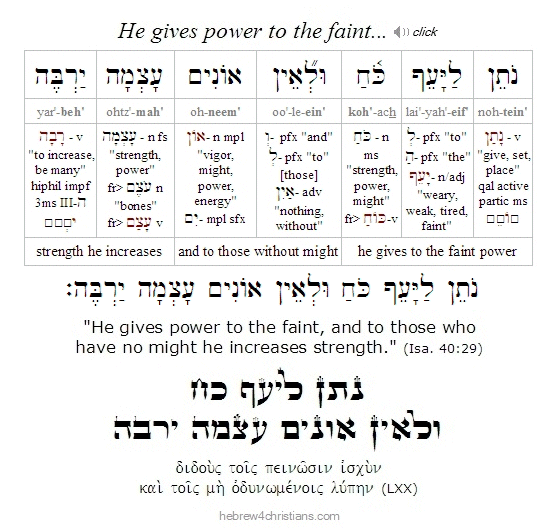
07.06.26 (Tammuz 21, 5786) "Have you not known? Have you not heard? The Eternal One, the LORD, is the Creator of the ends of the earth (בּוֹרֵא קְצוֹת הָאָרֶץ). He does not faint nor grow weary; his understanding is unsearchable. He gives power to the faint, and to him who has no might he increases strength" (Isa. 40:28-29).
Human pride has no objection that God can impart strength, but it objects that strength is found in those who are broken and weary – that is, to those mortally wounded in the battle against evil. The principle of the self-life, the ego, religious observance, "doing the law," etc., is a spiritual dead-end. The word is this: God gives strength to the weary, to the faint, to those who are without potency or power. But this means that they must first be emptied, broken, and stripped of self-sufficiency before the strength of God is manifest in them: "My power is made perfect (τελειοῦται) in weakness" (2 Cor. 12:9). God's way is first to break us, to make us weaker and weaker, so that he can then fill us with the miraculous divine nature.
Like all sacrifices brought to the altar, we must pass through death to life by means of our union with the Messiah at the cross... It is only after the cross that it may be truly said, "It is no longer 'I' who lives; now it is Messiah who lives His life in me" (Gal. 2:20). There is indeed strength, power, and victory – but such comes after the cross, after we reckon carnal energy as useless. "Not by might, nor by power, but by My Spirit, says Adonai Tzeva'ot" (Zech. 4:6).
Hebrew Lesson:
Isaiah 40:29 reading (click):
Where we read, "Messiah who loved me and gave himself for me" (Gal. 2:20), we emphasize the object of God's redeeming love; we stress that this word is being spoken to "me," and that Messiah's love is poured out "for me." But how can we justify doing so, in light of the innumerable souls that have been brought forth in the world? The Mishnah asks, "Why was man created alone?" and answers so that each person must say the world was created for me. "Whoever destroys a soul, it is considered as if he destroyed an entire world; and whoever saves a soul, it is considered as if he saved an entire world..." Amen.
This Week's Torah:
Parashat Mattot-Masei...

07.05.26 (Tammuz 20, 5786) Shavuah tov, chaverim! This week we will read a "double portion" of Torah that concludes Sefer Bamidbar, or "the Book of Numbers." Our first Torah portion, called parashat Mattot (מַטּוֹת, "tribes"), begins with the LORD giving laws and prohibitions regarding the making of vows (nedarim). After this, the Israelites were commanded to wage war against the Midianites for seducing the people to sin at the incident of "Baal Peor." During the ensuing battle, the wicked sorcerer Balaam was killed, as well as five tribal kings of the land of Midian.
The tribes of Reuben and Gad (and half of the tribe of Manasseh) asked permission to settle in the pasture land of Gilead (on the east of the Jordan), since they had large herds of cattle. At first Moses disapproved their request, since he feared that the other tribes would lose heart if these tribes stayed behind during the conquest of Canaan. However, when the tribal leaders made a vow to join the fight while their families remained in Gilead, Moses finally agreed.
 |
In our second Torah portion, called parashat Masei (מַסְעֵי, "journeys"), Moses recounted the various "stations" of the journey from Egypt to the edge of the promised land, and instructed that when the people would finally cross the Jordan River into the land of Canaan, they were to drive out all the inhabitants and to utterly destroy all traces of their culture and religion. After this, the land would be divided by lot according to tribes of Israel, based on the size of each tribe. God then warned Moses that if the Israelites would not drive out the inhabitants of the land, they would become a "snare" to them, and God would then judge and exile the Israelites as he intended to do to the Canaanites.
The Israelites were then instructed to assign towns with surrounding pasture lands to the Levites. There were to be a total of 42 towns, chosen by lot and distributed throughout the land according to the size of each tribe. In addition, six more cities were to be given to the Levites and designated as "cities of refuge" to which a person who unintentionally killed another may flee to take refuge from an "avenger of blood" (i.e., next of kin). The death penalty required testimony from at least two witnesses and admitted of no "ransom" (plea bargain) to be offered in place of the murderer's execution. On the other hand, a person responsible for involuntary manslaughter of another was required to dwell within the confines of a city of refuge until the death of the High Priest, after which time he was free to return to his home without fear of retribution from an avenger of blood.
The Book of Numbers – and the historical narrative of the Torah itself – concludes with the resolution of the question of legal inheritance in the land just before Joshua would lead the people into the land of Canaan. The book ends with this statement: "These are the commandments and the rules that the LORD commanded through Moses to the people of Israel in the plains of Moab by the Jordan at Jericho."
 |
The Way of Perfect Peace...
07.03.26 (Tammuz 18, 5786) When we lose sight of the truth that God is in complete control of all things, we tend to grow anxious... Feeling worried comes from focusing on ourselves, a perspective that can make us feel alone, forgotten, and even victimized in this world. Worry moves us to defend ourselves, to seek refuge in our own devices, and to forfeit the will of God according to the dictates of lesser fears...
The sages say it is not permitted to worry: "To worry is a sin; only one sort of worry is permissible; to worry because one worries." We should worry that we worry because this indicates our hardness of heart and our unbelief. God's name YHVH (יהוה) means "Presence," "Breath," "Life," and "Love." So why should we be anxious for "tomorrow"? We really only have this moment, but this moment is entirely sufficient when we walk in the light of God and seek to know him in all our ways (Prov. 3:5-6).
The first part of the Shema (i.e., Deut. 6:4-9) admonishes us to remember the truth of God "when you sit in your house, when you walk in your ways, when you lie down, and when you rise up." "In all your ways know Him," that is, in all that you put your hand to do look for the God's Presence and guidance (Prov. 3:6; 1 Cor. 10:31). This is something you must do: As King David stated, "I have set the Lord always before me, because He is at my right hand, I shall not be moved" (Psalm 16:8). Make up your mind: "Let the peace of God rule in you" (Col. 3:15).
The Name of the LORD is "I-AM-WITH-YOU-ALWAYS," which implies that we always live within His Presence and care, even if we are sometimes unconscious of this truth (Matt. 28:20). As it is written in the prophets, hen al kapayim hachotikh: "Behold I have engraved you on the palms of my hands" (הֵן עַל־כַּפַּיִם חַקּתִיךְ; Isa. 49:16). Remember the One who stretched out his hands and died for your healing; remember that he said, "Do not be anxious about tomorrow... sufficient for the day is its own trouble" (Matt. 6:34). A
Again it is written in our Scriptures: "Do not be anxious about anything, but in everything by prayer and supplication with thanksgiving let your requests be made known to God" (Phil. 4:6). When we worry we heed voices of fear and begin to feel 'double-minded,' (i.e., δίψυχος), unstable, and unable to think clearly; we get restless and find it difficult to deeply breathe. We start to feel out of control, fearful that something bad will happen despite all our efforts or wishes to the contrary; we sense doom; we lose heart; we go dark...
The Scripture here admonishes us to pray when we are tempted to be anxious by focusing on something for which we are grateful. Doing so will instill the "peace of God" (שלום יהוה) that quells all our fears (Phil. 4:7). We gain the "light of life," that is, inner illumination from God, so that we can remain steadfast and unmovable in faith. We will experience complete peace, shalom shaleim (שלום שלם) when we make up our minds to trust in Him (Isa. 26:3).
If you leave everything in God's hands, eventually you will see God's hand in everything....
Hebrew Lesson
Isaiah 26:3 reading (click):
Gift of Holy Desperation...
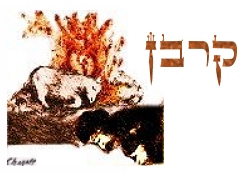
"The mass of men lead lives of quiet desperation. What is called resignation is confirmed desperation." -- Henry David Thoreau
07.03.26 (Tammuz 18, 5786) Many of us have been given the "gift of holy desperation." That's the special blessing of needing God so viscerally that you will fall apart or even self-destruct apart from His daily intervention in your life... "Blessed are the poor in spirit, for theirs is the kingdom of heaven" (Matt. 5:3). We groan in hope...
Our Torah portion this week (Pinchas) says that the fire on the altar was to be kept burning at all times (Lev. 6:12-13), which symbolizes esh tamid (אֵשׁ תָּמִיד), or the inner fire of the heart... How blessed it is to be full of the fire of this inner need, this relentless groaning, this constant hunger to be set free. Even more wonderful is how the korban tamid (קָרְבָּן תָּמִיד) - the daily whole burnt sacrifice of the lamb - represents Yeshua's ongoing and wholehearted passion for you to come alive to God's love... The heart of the Lord is offered to you in brokenness and compassion.
Hebrew Lesson:
Psalm 143:6 Hebrew reading:
 |
Awakening to Wonder...

"Every sparrow is unlike every other sparrow despite the similarities." - De Mello
07.03.26 (Tammuz 18, 5786) Every day we are alive is a miracle, though because of the "evil spell of habit" we desensitize the wonder of existence right out of consciousness itself. Kierkegaard once quipped that many people sleep away the days of their lives only to awaken one day to find that they had died! "The greatest hazard of all, losing one's self, can occur very quietly in the world, as if it were nothing at all. No other loss can occur so quietly; any other loss—an arm, a leg, five dollars, a wife, etc.—is sure to be noticed."
The "sleepwalking" person mindlessly follows the social programming of the crowd and unreflectively conforms to worldly culture and its distractions. They live on the "surface" of life, conditioned by the bells and whistles of social programming. Being unconscious is likened to being asleep and oblivious to the truth of reality, which is a pleasant sort of nightmare...
When we are told to "reduce" ourselves (and the universe itself) to be "merely" or "really" the product of impersonal forces, "mechanistic" laws, overarching fate, and so on, we lose sight of the "magic" of creation and miss the wonder of why there is something rather than nothing at all. We explain away divine mysteries and pretend that we already know what is real, failing to see the great poetry and beauty of life...
Habit steals the heart and soul out of life, inducing feelings of indifference and meaninglessness. Once we open our eyes in childlike wonder, we will discover amazing grace and gratuitous blessings all around us. Our breath, the beating of our hearts, and our thoughts will declare the wonder and glory of God....
Hebrew Lesson
Psalm 119:1-2 reading (click for audio):
 |
True and False Zeal...
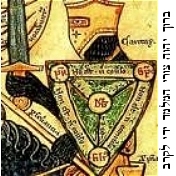
The following entry concerns our Torah reading for this week, parashat Pinchas...
07.03.26 (Tammuz 18, 5786) You may be entirely sincere in your convictions, but you may be sincerely wrong... In the time of the Second Temple, for instance, the Jewish "Zealots" despised the rule of Rome, and their political hatred caused them to blindly regard anyone who didn't share their passion as a personal enemy. In one of the great tragedies of Jewish history, these zealots actually killed more Jews than did the Romans themselves! And how many Christians these days "kill" relationships with other believers because of their particular zeal regarding some doctrinal question? I am not suggesting that doctrine is unimportant, of course, but before you pick up that sword to do the business of Pinchas, you might do well to consider your heart's attitude...
"In this respect fundamentalism has demonic traits. It destroys the humble honesty of the search for truth, it splits the conscience of its thoughtful adherents, and it makes them fanatical because they are forced to suppress elements of truth of which they are dimly aware." - Paul Tillich
We need to be careful with our passions. There is a "false zeal" that leads to estrangement and confusion. Withholding love from others is ultimately grounded in an appeal to God as the administrator of Justice. It is an appeal to God as Elohim (אֱלהִים), not as YHVH (יהוה), the Compassionate Source of Life. If we insist on our rights, we are appealing to principles of justice, i.e., to God as the Lawgiver. But if we intend to have God be the Judge of others, we will know Him as our own Judge as well. This is a serious matter, friends: If we have an unforgiving spirit toward others, we will not receive our own forgiveness (Matt. 6:15); if we are judgmental toward them, we ourselves will be put on trial;but if we are cruel and ungiving toward them, we will experience life as hellish, miserable and mean. This reciprocal principle of Kingdom life appears throughout Yeshua's teaching. "According to your faith, be it done unto you" (Matt. 9:29).
Hebrew Lesson:
Psalm 18:26 reading (click):
 |
Olam Katan: A Small World...
Being made in God's likeness means that how we regard ourselves and others will be the measure that we regard God Himself...
07.02.26 (Tammuz 17, 5786) It is written in our Torah portion for this week (i.e., Pinchas), "My offering, my food for my food offerings, my pleasing aroma, you shall be careful to offer to me at its appointed time" (Num. 28:2). Food for God? What need has the LORD for food? But by this is meant "as you have done it to least of these my brethren, you have done it unto Me" (Matt. 25:40). The offerings you make to tzedakah (giving charity, your time, your kindness, etc.) constitute food presented before the secret place of God's altar...
God created Adam alone, as a solitary being, made in the divine image, to teach us that to destroy a single life is to destroy an entire world, and to sustain a single life is to sustain an entire world. Therefore everyone should say: 'For my sake the world was created' (Talmud). Each of us is olam katan (עולם קטן), a small world that represents the large world. Indeed, one righteous human being can sustain the entire world, as it is written (Prov. 10:25), "the righteous is the foundation of the world" (וְצַדִּיק יְסוֹד עוֹלָם).
On the other hand, balance is of course required here. Each of us is olam katan, a small world, though, as Rabbi Noah of Lekhivitz once wisely said, "if we are small in our own eyes, we are indeed 'a world,' but if we are a 'world' in our own eyes, we are thereby made small." This thought obviously echoes Yeshua's teaching: "Whoever exalts himself will be humbled, and whoever humbles himself will be exalted" (Matt. 23:12).
There are assumptions we bring to the reading of Torah that affect how we read and what we will hear... The sages generally agreed that the greatest principle of Torah is to love your neighbor as yourself (Lev. 19:18), though Ben Azzai further said that even greater is the principle that God created man in His likeness (i.e., bid'mut Elohim, בִּדְמוּת אֱלֹהִים, in "outline" or "silhouette," the word demut [דְּמוּת] a synonym of tzelem [צֶלֶם], a "shadow" or semblance) because then one cannot say, 'Since I despise myself I can despise another as well; since I curse myself, let the other be accursed as well.' Being made in God's likeness means how we regard ourselves and others will be the measure we regard God Himself (1 John 4:20). Therefore the first commandment is always, "I am the LORD thy God..." (Exod. 20:2), since apart from faith, there is no Torah of any kind.
Eleazar ha-Kappar used to say: "They who have been born are destined to die. They that are dead are destined to be made alive. They who live are destined to be judged, that men may know and make known and understand that He is God, He is the maker, He is the creator, He is the discerner, He is the judge, He is the witness, He is the complainant, and it is He who will in the future judge, blessed be He, in whose presence is neither guile nor forgetfulness nor respect of persons nor taking of bribes; for all is His. And know that everything is according to the reckoning. And let not your evil nature assure you that the grave will be your refuge: for despite yourself you were fashioned, and despite yourself you were born, and despite yourself you live, and despite yourself you die, and despite yourself shall you are destined to give account and reckoning before the supreme King of kings, the Holy One, blessed be He." (Pirkei Avot 4:29)
Hebrew Lesson
Eccl. 12:13 Hebrew reading:
The Fast of Tammuz...

07.02.26 (Tammuz 17, 5786) In Jewish tradition, Moses smashed the tablets on the seventeenth day of the fourth month (later called Tammuz) after he came down from Sinai and found the people worshiping the Golden Calf. This tragedy was seen as prophetic, since it was on this same date that the walls of Jerusalem were crushed by the invading armies of Nebuchadnezzar (see 2 Kings 25:2-7), an event which led to the destruction of the Temple and the exile of the people three weeks later, that is, on the ninth of Av. Today, the seventeenth of Tammuz is commemorated as a fast day (i.e., the "Fast of 4th month") that marks the beginning of the three week period of mourning for the lost vision of Zion...
Since the three week period from the 17th day of Tammuz through the 9th day of Av recalls the season when the Temple was destroyed and the people were exiled from the promised land, it is called yemei bein ha-metzarim (יְמֵי בֵּין הַמְּצָרִים), "the days in the midst of distress," a phrase taken from the Book of Lamentations: "Judah has gone into exile, her pursuers have all overtaken her in the midst of her distresses" (i.e., bein ha-metzarim: בֵּין הַמְּצָרִים).
The tears of the prophet Jeremiah represent God's compassionate love for the Jewish people; the Book of Lamentations is really God's cry... God cares about the suffering of His people: b'khol tzaratam lo tzar (בְּכָל־צָרָתָם לוֹ צָר) - "In all their affliction he was afflicted" (Isa. 63:9). Even after all the horrors that befell the people of Judah due to God's disciplinary judgment, the LORD still encouraged them to seek Him again. "The faithful love of the LORD (חַסְדֵי יהוה) never ceases, and his compassions never fail. They are new every morning; great is your faithfulness" (Lam. 3:22-23). Our response to the faithful love of the LORD is teshuvah (i.e., תְּשׁוּבָה, "turning [shuv] to God"). In Modern Hebrew teshuvah means an "answer" to a shelah (שְׁאֵלָה), or a question. God's love for us is the question, and our teshuvah – our turning of the heart toward Him – is the answer. We return to the LORD when we truly acknowledge that He is our Father and our King.
הֲשִׁיבֵנוּ יְהוָה אֵלֶיךָ וְנָשׁוּבָה
חַדֵּשׁ יָמֵינוּ כְּקֶדֶם
ha·shi·vei'·nu · Adonai · ei·lei'·kha · ve·na·shu'·va
cha·desh · ya·mei'·noo · ke·ke'·dem

"Turn us back to yourself, O LORD, so that we may return to you;
renew our days as of old" (Lam. 5:21)

Hebrew Study Card
Note that the word "distress" (i.e., metzar: מֵצַר) comes from a root word (i.e., tzarah: צָרָה) that means to "make narrow or restricted" (the Yiddish word "tsuris" comes from this root), whereas the word for "deliverance" or "salvation" (i.e., yeshuah: יְשׁוּעָה) means to "make wide" or "make sufficient." These two ideas can be seen in a verse from the Psalms: "Out of my distress (מִן־הַמֵּצַר) I called on the LORD; the LORD answered me and set me in a wide open place" (Psalm 118:5). Among other things, deliverance (salvation) is always a transition from bondage to freedom...
Note: For more information about the Fast of Tammuz, click here.
The Torah of Mercies...

07.01.26 (Tammuz 16, 5786) Shalom chaverim. It has been said that grace is getting what you don't deserve, whereas mercy is not getting what you do... Yeshua said, "Blessed are the merciful, for they shall receive mercy" (Matt. 5:7). This is not a reciprocal law like karma, i.e., you get in return what you first give, since we cannot obtain God's mercy as reward for our own supposed merit (Rom. 4:4). No, we are able to extend mercy to others only when we are made merciful ("full of mercy"), that is, when we first receive mercy as the gift of God (Eph. 2:8; Rom. 5:15). After all, you can't give away what you don't have, and if you have no mercy for others, it is likely that you have not received it for yourself, as the parable of the "Good Samaritan" reveals (Luke 10:25-8).
Your forgiveness is your forgiveness, that is, as you forgive, so you reveal your heart. What you do comes from what you are, not the other way around. We are first transformed by God's grace and then come works of love. We are able to judge others mercifully, with the "good eye," because we come to believe that we are beloved by God.
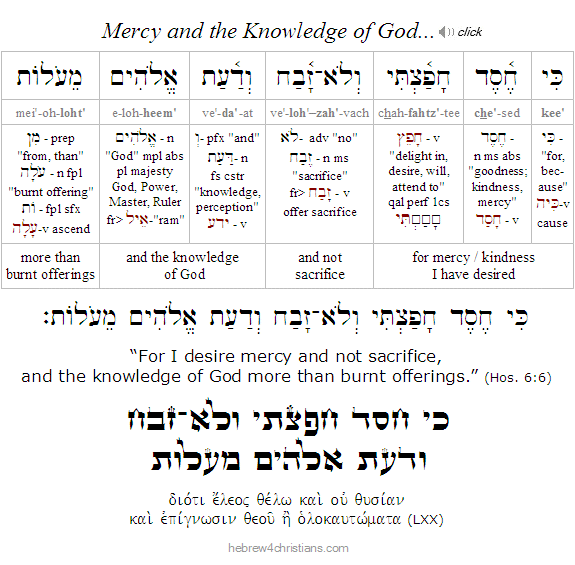
When Yeshua rebuked the "holier-than-thou" attitude of some people, he said: "Go and learn what this means, 'I desire mercy, and not sacrifice.' For I came not to call the righteous, but sinners" (Matt. 9:13). The pattern therefore abides: First you realize you are broken, impoverished of heart, and you mourn over your sinful condition (Matt. 5:3-4); then you hunger and thirst for God's righteousness, that is, for his healing and deliverance, and finally you learn to trust the mercy of God, that is, you come to accept that you are accepted despite your unacceptability (Matt. 5:5-6). As you begin "suffer yourself" and forgive your own evil, you are enabled to extend this mercy to others (Matt. 5:7). In this way you begin to see God in your relationships and obey the heart of truth (Matt. 5:8; 1 Sam. 15:22).
Though we love and honor truth, we must be careful never to use it as a weapon to judge or wound others. The failure to extend mercy, to demand your "rights" or hold on to grudges, implies that you are relating to God as Judge rather than as Savior (James 2:13). If we condemn what we see in others, we have yet to truly see what is within our own hearts; we have yet to see our desperate need for God's mercy for our lives. If you don't own your own sin, your sin will own you. Being merciful is a response to God's love and therefore is essential to genuine teshuvah (repentance).
Walking in love is the deepest expression of truth, since love heals untruth and embraces hope for what is presently broken (1 Cor. 13:7). In light of this, take a moment to ask the LORD to help you relinquish the pain of your past by being full of mercy toward yourself and others. Honor God's love for you by forgiving yourself and showing compassion and mercy to others in your life...
Hebrew Lesson
Hosea 6:6 Hebrew reading (click):
Truth and God's Salvation...
07.01.26 (Tammuz 16, 5786) The Scriptures teach us that it is forbidden to be afraid of the future because we are to live in the presence of God today and trust him to take care of us. "Sing to the LORD! Bless His Name! Proclaim His salvation from day to day" (Psalm 96:2).
"There is no fear in love," and therefore over and over the Spirit of God says, al tira' - "don't be afraid..." When we are afraid, we are believing the lie there is something beyond God's control or reach, and therefore God is "not enough"...
In times of testing you must remind yourself of what is true and real. When you know the truth, you will be set free from the power of the lie (John 8:32). God formed you in your mother's womb, breathed into you nishmat chayim, the breath of life, and numbers all your days... Every breath you take, every heartbeat in your chest is ordained from heaven, and indeed, there is not a moment of your life apart from God's sovereign and sustaining grace.
So what, then, are you afraid of? Dying? Judgment in the world to come? Being left unloved, bereft of home, abandoned, consigned to outer darkness? King David said, "If I make my bed in Hell, behold, you are there" (Psalm 139:8). Understand that the LORD God is not only present in your "happy moments," when you feel "put together" and respectable, but he is present in your desperate moments, in your hunger, your thirst, and in your secrets. May we never lose sight of God's love, especially in times of distress and trouble, since we trust that he is always working all things together for our ultimate good (Rom. 8:28).
The Name of the LORD (יהוה) means "Presence" and "Love" (Exod. 3:14; 34:6-7). Yeshua said, "I go to prepare a place for you," which means that his presence and love are waiting for you in whatever lies ahead (Rom. 8:35-39). To worry is "practicing the absence" of God instead of practicing His Presence... Trust the word of the Holy Spirit: "For I know the plans I have for you, declares the LORD, plans for healing peace and not for evil, to give you a future and a hope (Jer. 29:11). The Word always speaks hope.
Take comfort that your Heavenly Father sees when the sparrow falls; he arrays the flower in its hidden valley; and he calls each star by name. More importantly, the Lord sees you and knows your struggle with fear. Come to him with your needy heart and trust him to deliver you from the burdens of your soul (Matt. 11:28). Shalom means being free from fear.
This is a word for the exiles of every age: Be not afraid - al-tira' – not of man, nor of war, nor of tribulation, nor even of death itself (Rom. 8:35-39). If God be for us, who can be against us? Indeed, Yeshua came to die to destroy the power of death "and to release all those who through fear of death were subject to lifelong slavery" (Heb. 2:14-15). The resurrection of the Messiah is the focal point of history - not the "dust of death." Death does not have the final word. Indeed, because Yeshua is alive, we also shall live (John 14:19). May your chesed, O LORD, be upon us, as we wait for You (Psalm 33:22).
Nachman of Breslov once is reported to have said that "The whole earth is a very narrow bridge (כָּל־הָעוֹלָם כֻּלּוֹ גֶּשֶׁר צַר מְאד), and the point of life is never to be afraid." Likewise we understand Yeshua to be the Bridge to the Father, the narrow way of passage that leads to life. He calls out to us in the storm of this world, "Take heart. It is I; be not afraid" (Matt. 14:27). When Peter answered the call and attempted to walk across the stormy waters, he lost courage and began to sink, but Yeshua immediately reached out his hand and took hold of him, saying, "O you of little faith, why did you doubt (lit., think twice)?"
We must be careful not to let the light in us become darkness (Luke 11:35). The love and acceptance of God is the answer to our fear, not the thought of being judged by Him or attempting to merit his favor through religion. God's love is our hope, and this hope gives us courage to persevere the storms of the day... As it is written: "Be not afraid of sudden terror, nor of the destruction of the wicked when it comes. For the LORD shall be your confidence, and he shall keep your foot from being caught" (Prov. 3:25-26). Amen, may your chesed, O LORD, be upon us, as we wait for You.
"Greater is He that is in you than the one that is in the world" (1 John 4:4). Let us therefore walk in the Spirit of Truth, friends, and thereby overcome the devil and his noisome lies....
Hebrew Lesson
Psalm 96:2 reading (click for audio):
June 2026 Site Updates
Joy at the End of it all...

"Joy is at the end of it, after all. Astonishment and joy are what our faith finally points to, and even Paul ... after he had come through his years of suffering, and at the end, licking his wounds in a Roman lock-up wrote: "Rejoice in the Lord always. Again I will say, rejoice" (Phil. 4:4). But it is at the end that he wrote it. Rejoice is the last word and can be spoken only after the first word." - Frederick Buechner
06.30.26 (Tammuz 16, 5786) The Torah teaches that a personal, all-powerful, and all-loving God exists and solely created the universe "yesh me'ayin" (יֵשׁ מְאַיִן), or out of nothing. As his crowning creative achievement, God created free moral agents - both angels and man - who could choose to do what is good or what is evil. For reasons that are not entirely clear, however, some of the angels chose to rebel against God (chief among them Lucifer, later renamed Satan), and these angels, in turn, conspired to seduce human beings to do likewise. When Adam and Eve disobeyed God's moral law, they effectively joined the angelic rebellion. The consequence of this was catastrophic, and the mankind "fell" away from God as their King into a state of alienation and exile called "spiritual death."
Since God had created man to exercise lawful dominion over the earth (שׁגח), however, as the steward and "federal head" of creation, the effect of his apostasy affected not only his life, but also that of the entire created order itself, as Satan then usurped the authority given to man and began his reign of terror upon the earth. With the spiritual and moral order usurped, mankind was under the hegemony of Satan, and anarchy resulted. The natural order likewise broke down and dissipated. The original transgression of man therefore affected not only his relationship with God but also that of the entire created order itself. Natural evils and chaos erupted as the earth became a rebel outpost from the original Kingdom of God. Satan enthroned himself as the "god of this world" (ὁ θεὸς τοῦ αἰῶνος τούτου) and humanity has subsequently suffered under his tyranny of deception and malice ever since.
Now this general account of the origin of evil can be considered philosophically, and indeed it inevitably is discussed that way, since the main objection to the idea that an all-powerful and all-loving Creator exists is the concurrent existence of evil, and in particular, pain and suffering that seems to be omnipresent in the world. How could such a God allow evil in his creation? And doesn't the prevalence of such evil impugn faith in God?
The contrary challenge being made here is that the following four propositions: 1) God exists; 2) God is all-powerful, 3) God is all-loving, and 4) evil exists are together logically incompatible and therefore one (or more) of them must be false. So the first order of business regarding this critical challenge is to consider each proposition (and its negation) to determine its credibility (or lack thereof), and then, after better understanding the meaning of the propositions, to decide if they are really inconsistent or not.
As for the first proposition, namely, that God "exists," we need to consider various rational arguments for the existence of God, for instance, the cosmological argument (argument from cause), the teleological argument (argument from design), the ontological argument (the a priori argument), the argument from intuitions of beauty, morality, and logic, the argument from mystical experiences, arguments from fulfilled prophecies, evidences for the historical reliability of the Scriptures, and so on. Working through these arguments is beyond the scope of this short article, since my goal here is to briefly explore how "evil" and the existence of God are not only compatible, but are in indeed complementary to sound theology.
Regarding the second premise that God is all-powerful, we must consider the definition of "God" and then the definition of "omnipotence." First we can define God as "that being than which no greater can be conceived," which implies that God is maximal in all perfections, and that includes the idea that God is unlimited in his power and capabilities. God's omnipotence means that no other being can thwart or surpass his will or desire. Moreover, whereas other forms of being are "contingent," that is, they can pass out of existence, God is a "necessary" being that cannot not exist, since existence itself is an inherent good.
The truth that God is almighty or all-powerful is further attested by the witness of the Jewish Scriptures which collectively affirm that the LORD alone is the Sovereign Creator over all that exists (Gen. 1:1). God is regarded as the "potentate" or owner of reality (1 Chron. 29:11; 1 Tim. 6:15) and that nothing is beyond his power to accomplish (Psalm 115:3; Jer. 32:17; Luke 1:37). God is also omniscient, or all-knowing (Psalm 139; 147:5; 1 John 3:20) and omnipresent, or everywhere present and fully conscious (Psalm 139:7; Jer. 23:24; Isa. 6:3; Matt. 28:20). These attributes imply that God is one, and that there is no other god or power apart from the LORD (אֵין עוֹד מִלְבַדּו), who alone is the Master of the universe (ריבונו של עולם), the peerless and supreme authority over all (Deut. 4:35; 4:39; 32:39; Isa. 43:10; 44:6; 45:18, etc.).
Furthermore, God is rationally understood (or defined) to be "that being than which no greater can be conceived," that is, the Supreme Being, the Source of all that exists, and the consummate power that originated the universe. By definition this implies that God is "maximal" in his perfections, unlimited in his capabilities and designs, and utterly sacred, that is, entirely unique and without rival. Therefore God's omnipotence, omniscience, omnipresence, and other attributes, are intrinsic to his essence (מַהוּת אֱלהִים) and cannot be separated or diminished. God is therefore YHVH (יהוה), the LORD who is ehyeh (אהיה), the great "I am" whose consciousness transcends all of space-time and sustains it by the word of his power.
The third premise is that God is all-loving or "omnibenevolent." This again follows from the axiom that the Supreme Being is maximal in his perfections, and that includes all the moral perfections intuited by the human heart. Affirming that God is all-loving implies his agency as the source and meaning of goodness and love. As we will consider later, it is possible for the universe to exist without evil, but it is impossible for evil to exist without goodness, since goodness is intrinsic to being in itself. A perfect being includes the attribute of being good.
The Torah describes the LORD as morally perfect and upright in all his ways: The LORD is "the Rock, his work is perfect, for all his ways are justice. A God of faithfulness and without iniquity, just and upright is he" (Deut. 32:4). Moreover, again rationally understood, if God is not all-good, then there must be some limitation of his being, something that constrains his will, some defect or deficiency in his character, which violates the condition that God is than which no greater can be conceived.
Some atheistic philosophers, such as Friedrich Nietzsche, have made the claim that God is "beyond good and evil," a sort of "pantheistic" promiscuity that transcends limiting categories of consciousness. God is likened to a cosmic force that cannot be defined using any analogy to human experience. This implies that moral truths are relative and, in an absolute sense, illusory. The Scriptures attest, to the contrary, that God is good, and that we can know what is good (and what is evil) because we have intuitions of conscience and the logic of transcendental values as part of being created in God's "image" and likeness.
The last premise is that evil exists, which is considered self-evident to common sense. Pain, suffering, and loss cannot be rationalized as some sort of an illusion or theologically justified as part of the "will of God." To say that evil is only "apparently" so, or that what we call "evil" is a misinterpretation of a "deeper" reality, is an affront to human pathos, suppressing the voice of suffering and pain and relegating it to meaninglessness. On the contrary, with common sense we affirm that evil exists, and indeed its reality is the essential objection that God is all-powerful and all-loving. After all, if God is all-powerful, then he can do anything, and if he is all-good, then he will do what is best. Why, then, does evil exist?
The problem for the skeptic or unbeliever is nevertheless defining what evil is, and perhaps more tellingly, defining what "good" means. If God is "beyond good and evil," or an impersonal cosmic force that is indifferent to moral values, then on what grounds can the objection be made that God is not good? The skeptic might just as well take up the argument with brute nature and its "evolutionary carnage" than with God... No, the unbeliever wants to blame God for creating (or allowing) evil by appealing to some sort of "super-transcendental" value of cosmic justice, yet this is another appeal to a standard that is esteemed as "good." C.S. Lewis addressed this problem for the skeptic this way: "My argument against God was that the universe seemed so cruel and unjust. But how had I got this idea of just and unjust? A man does not call a line crooked unless he has some idea of a straight line. What was I comparing this universe with when I called it unjust?"
I might add here that those theologies that emphasize God's power over his other attributes of goodness, justice, and so on, regard him as an "impassive" and unstoppable power or mind that foreordains and predestines all things -- both good and bad -- without compassionate regard to the will and welfare of his creatures. This Stoic idea ultimately makes God into a form of "Fate," an irresistible force that decrees all things. A theology that stresses divine sovereignty over his other attributes (such as empathetic awareness) violates the unity of God's perfections. While it is true that God is sovereign and omnipotent, he "empties himself" to allow human choice and responsibility to have a real influence in his providential designs.
So, in light of the forgoing considerations it seems evident that we can rationally affirm that: 1) God exists; 2) God is all-powerful, 3) God is all-loving, and 4) evil exists, and that there is no logical inconsistency in affirming all four propositions together.
That said, the existence of evil is still problematic, though not in a way that impugns or questions God's existence, power, or goodness, and it is this problematic tension that evokes the mystery or "riddle" of life, since it rejects both a fatuous optimism that regards this to be the "best of all possible worlds" as it also rejects a dejected pessimism that regards life as a senseless nightmare. To paraphrase Chesterton, neither extreme aligns well with reality, since it is evident that "not everything is right; not everything is wrong, and not everything is both right and wrong, but what is wrong has no right to be so" (Everlasting Man).
If we know what ought to be, if we have some intuition of goodness, beauty, justice, truth, and so on, yet we live to the contrary, then the more fundamental problem comes from our disregard of the moral order of reality, and not from the consequences of such disobedience. If "what ought to be" should constrain "what is," and "what is" does not conform to the ideal, the inner contradiction is a problem of the will.
Evil, then, is not intrinsic to reality, but is an "invasion" and a perversion of what is real. The world is "fallen" and infected with evil because of the sin of Adam and Eve, and before that, the sin of Satan who turned away from God to become the "prince of darkness." Satan seeks to "devour" the souls of people by blinding their eyes through deception "so they will not receive the love of the truth in order that they might be saved" (2 Thess. 2:10). Apparently it is Satan's great desire to enslave people and consign them to partake of his own dreadful fate. As it is written: "If the gospel is veiled, it is veiled to those who are perishing, whose minds the god of this age has blinded, who do not believe, lest the light of the gospel of the glory of Messiah, who is the image of God, should shine on them (2 Cor. 4:3-4).
In this connection we note that there is another category of person who both willfully does what is evil and disregards the existence of God as his Creator and moral Lawgiver. This is a person who does not care about morality and who has abandoned himself to pursuing selfish pleasure as his "highest good." For such a pragmatically debased soul, evil becomes a "lifestyle choice" (or a demand, as it is usually expressed), and defiance of God is its "religion" and existential posture. The evil person calls good evil and evil good; he is so lost to moral truth that he no longer cares to know the difference between what is right and what is wrong. Everything is "excused" as he casts himself away from the light of the divine Presence...
The subject of what is evil is complex, of course. It should be noted that those who most often complain against evil in the world are often oblivious of their own moral failures and evil actions. People tend to overlook their own evil because they want to deny their sinful condition and ignore their responsibility to do what is good. This "oversight" is the work of the devil who lures people into passivity and blaming others. The devil seeks to instill a sense of hopelessness over the evil and injustice that he incites, hardening people's hearts so that they feel powerless to protest. The devil also provides ready-made excuses for suppressing the voice of conscience by offering historical, impersonal, and "scientific" explanations for their bad behavior, often using a medical model that is decidedly naturalistic in its biases.
As people listen to the devil's lies, they grow numb inside, slowly drifting away from what is real. Perversions are tolerated as "normal"; values are vitiated and disregarded. Everything is "relative" and any truth claim is cynically regarded with suspicion. Anarchy and nihilism fill the void of God's direction and love. The devil "loves" people and has a plan for their lives... And this is why we must fight against evil - resisting it with all our heart, soul, mind, and strength. Passivity in the face of evil makes us accomplices of it presence.
We overcome evil by loving the truth and doing good (Rom. 12:21). The truth here refers to knowledge of moral and spiritual reality, not merely empirical descriptions. The truth includes the language of "oughtness" and the pursuit of ideals, not just a report of the supposed "facts." "When evil things have become evil, good things really become good. There are some men who are dreary because they do not believe in God but there are many others who are dreary because they do not believe in the devil" (Chesterton).
Ironically enough, the real danger is not just unbelief in God, but unbelief in the devil as well. The two go together, for without consciousness of evil and its existential threat, most people will never look for the truth of goodness and the realm of the divine. Indeed evil jolts us awake to the reality of the devil and turns our hearts to God for deliverance. As Yeshua taught us to pray: "Our Father in Heaven ... deliver us from the evil one" (Matt. 6:13).
The blind spot of the devil is that his wickedness indirectly testifies to the goodness, glory, and salvation of God. And undoubtedly this is by God's own design as he takes hold of the tongue of the "dumb donkey" to make him confess God's truth (Num. 22:28-ff). Like the evil fool Haman the Agagite, the devil will be hung on the gallows of his own making (Esther 7:10). "The LORD has made everything for a purpose; even the wicked for the day of evil" (Prov. 16:4). As the LORD said to Pharaoh: "For this purpose I have raised you up, to show you my power, so that my name may be proclaimed in all the earth" (Exod. 9:16). The judgment of God upon evil vindicates his righteousness and truth. As Louis Berkoff once wrote: "God is holy in everything that reveals Him, in His goodness and grace as well as in His justice and wrath."
But again, evil is not necessary but accidental (and parasitical) to reality. The world can happily exist without evil, though it cannot exist at all without the good. A divided house shall not stand, and therefore God allows the envy and malice of Satan to bring about his own destruction. And indeed, the day is coming when evil will finally be separated and removed from God's creation like chaff that is threshed from the wheat.
This world is not our home, and God's salvation is vast in its scope. Not only does Yeshua save us from our blindness of heart and our slavery to sin, not only does he free us from the verdict of the law, from the "legal" argument of the devil, he liberates us so that we belong to God and he promises us a joyful future that will be eternally free from the very presence of evil itself. In this life we may still sometimes sin as we learn to "put on the new nature" that comes from above (Eph. 4:21-24), but our essential spiritual identity has radically changed, and we made partakers of eternal life. The day draws near when our redemption will be complete and the lost paradise of Eden will be forever restored: "For, behold, I create new heavens and a new earth: and the former shall not be remembered, nor come into mind" (Isa. 65:17). Amen, therefore "according to his promise we are waiting for new heavens and a new earth in which righteousness dwells" (2 Pet. 3:13). Halevai. May that come speedily, and in our days.
Hebrew Lesson
Isaiah 65:17 reading (click for audio):
Feeding God's Heart...
The following entry concerns this week's Torah reading, parashat Pinchas...
06.30.26 (Tammuz 16, 5786) As I've discussed elsewhere on the H4C over the years, the climax of the revelation at Sinai was not the giving of the Ten Commandments (עשרת הדיברות) to Israel but was instead the vision of the Altar of the sanctuary (מזבח המשכן). However -- as our Torah portion this week makes clear -- the "central sacrifice" upon this altar was the daily sacrifice (i.e., korban tamid: קרבן תמיד) of a defect-free male lamb with unleavened bread and wine. The LORD calls this "my offering" (קרבני) and "my bread" (לחמי) [Num. 28:1-8]. In other words, the service and ministry of the Temple constantly foretold the coming of the great Lamb of God (שה האלהים) who would be offered upon the altar of the cross to secure our eternal redemption (John 1:29; Heb. 9:11-12).
The sacrifice of the lamb represents "God's food," a pleasing aroma (ריח ניחחי), for it most satisfied the hunger of God's heart (Eph. 5:2). Indeed, Yeshua's offering upon the cross represents God's hunger for our atonement, our healing from the sickness of death, since it restored what was lost to Him through sin, namely, communion with his children. God could never be satisfied until He was able to let truth and love meet (Psalm 85:10).
Sometimes we say that we "hunger for God," but it is vital to remember that it is God who first hungers for us. God desires our love and fellowship. He comes to seek fruit among the trees - but does He find any? He walks in the cool of the day, calling out to us, but are we attuned to hear His voice? Do we accept the invitation to be in His Presence? When God "knocks on the door of your heart" to commune with you, what "food" will you be serving? (Rev. 3:20). Every day we are given an opportunity to "feed God" through expressing faith, hope, and love. Ultimately it is our obedience to the truth is what "feeds" Him: "Behold, to obey is better than sacrifice, and to hearken than the fat of rams" (1 Sam. 15:22).
Hebrew Lesson
1 Sam. 15:22b reading (click for audio):
 |
We "feed God" by offering heartfelt prayer, by walking in faith, by yearning for Him, by studying Scripture, by participating in corporate worship, by giving tzedakah, by performing acts of kindness (gemilut chasadim) for others, and so on (Heb. 13:15-16). Expressing our love for God is the deepest meaning of teshuvah, which is an "answer" or response to His great love for us (1 John 4:19). Just as God feeds and sustains us through His love, so we "feed Him" by our yearning, our prayers, our praise, and our worship...
For more on this subject, see "The Hunger of God's Heart."
Outshine my Darkness...

06.29.26 (Tammuz 15, 5786) "If I say, surely the darkness shall cover me, even the night shall be light about me, for the darkness cannot hide from You, but the night shines as the day: nothing escapes your radiance" (Psalm 139:11-12).
The heart of faith confesses that the light of God overcomes all the darkness, even the darkness of our own hearts, and furthermore it furthermore affirms that we can trust that God is in our darkness, in the silence, in the unknown... Yeshua was covered by the dark cloud as He suffered on the cross and there interceded on your behalf. You come out of the shadows when you admit the truth that you need God. You need help. You need a miracle to help you to truly love. You may find excuses for many things, but you cannot escape the "wretched man that I am" reality that is grounded in your fears.
God sees in the darkness and is present there, too. When you feel alone, like an unbridgeable gulf lay between you and all that is good; when you feel like you want to scream but are afraid that even then no one would hear, may the LORD shine His light upon you... Amen, may His light shine upon you.
Hebrew Lesson
Psalm 139:11 reading (click):
 |
Revelation and Decision...

06.29.26 (Tammuz 15, 5786) Every one of us is a teacher of sorts, proclaiming through our personal choices what we believe to be true. False teachers are those whose choices "teach" that there is no God, no eternal life, no meaning to life, and ultimately, no real hope... It cannot be any other way, for we all teach by our choices; we communicate by our assumptions of what we regard is of "ultimate concern."
Speculative philosophy never successfully answered any of the haunting existential questions of life, such as: What is reality? Why is there something rather than nothing? What is the purpose of life? What happens when we die? Who am I? Do moral choices matter? and so on, but instead merely reinterpreted the hunger for meaning to be about power and control... Nonsense! People may evade the great questions of life by pretending they are unknowable, but Scripture attests that all people are created in God's image and are intuitively aware of God's reality and power: "For His invisible attributes, namely, his eternal power and divine nature, have been clearly perceived, ever since the creation of the world, in the things that have been made; so they are without excuse" (Rom. 1:20).
The Scriptures insist that we are responsible to walk in truth and to reject what is false (1 John 4:6). This implies that we have a moral and spiritual duty to think clearly and not to abuse our minds (Phil. 4:8; Rom. 12:2). The LORD our God will help us to do this, as Yeshua promised: "I will ask the Father, and he will give you a Helper (παράκλητος, someone "called to one's side"), to be with you forever, even the Spirit of Truth (רוּחַ הָאֱמֶת), whom the world cannot receive, because it neither sees him nor knows him" (John 14:16-17).
The Spirit of Truth helps us "discern what is the will of God, what is good, acceptable, and perfect" (Rom. 12:2) and empowers us to take "every thought captive" to the reality of the Divine Presence (2 Cor. 10:4-5). Truth is bound and connected to memory - both in our personal histories as well as the history of God's redemptive actions performed on our behalf. Hence the great Shema commands us to remember what God has done for us and to "diligently repeat" the truth of reality to our children (Deut. 6:4-9). Similarly, the Spirit of Truth brings to remembrance the words of Yeshua to our hearts (John 14:26).
The "ministry of reconciliation" is defined as "the word of truth, by the power of God, through weapons of righteousness" (see 2 Cor. 6:7). Indeed, the word of truth (τὸν λόγον τῆς ἀληθείας) is a synonym for the "gospel of salvation" itself (Eph. 1:13; Col. 1:5; James 1:18). We are saved by Yeshua, who is the "way, the truth, and the life" (John 14:6). God commands all people to believe this truth (Acts 17:30-31; 1 Tim. 2:4). People perish because "they refuse to love the truth and so be saved" (2 Thess. 2:10-12; Hos. 4:6). Therefore we see that the issue of truth is central to salvation itself....
Genuine teshuvah (repentance) implies that we will change our thinking in order to be transformed by God's truth. The follower of Messiah "cannot do anything against the truth, but only for the truth" (2 Cor. 13:8). Amen, and may God help us all to think clearly and to turn our thoughts to Him. May He protect us from the vanity of a darkened mind and from all distractions that attempt to seduce us away from Him. May the LORD give us the purity of heart to know and do His will in the truth.
Hebrew Lesson
Psalm 46:10 reading with audio:
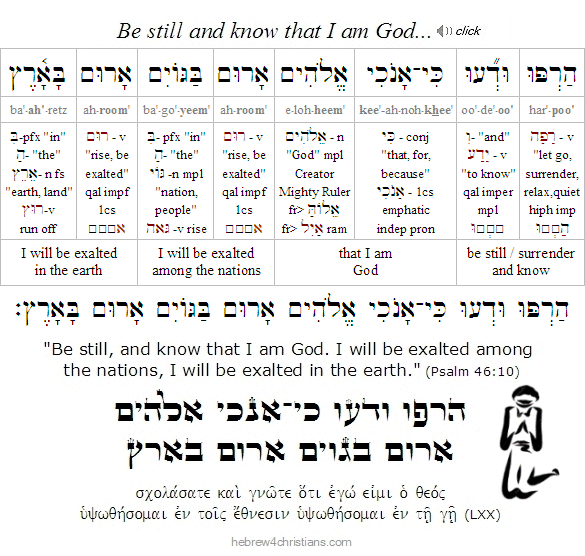 |
This week's Torah:
Parashat Pinchas - פינחס

06.28.26 (Tammuz 13, 5786) Shavuah tov chaverim! If you recall, last week's Torah portion (i.e., parashat Chukat-Balak) introduced us to a man named Phinehas (i.e., "Pinchas"), the son of Eleazar the priest and grandson of Aaron, who, during the tragic rebellion at Baal Peor, zealously removed evil from Israel by driving a spear through a tribal prince who was brazenly cavorting with a Midianite princess in defiance of God's law. On account of Pinchas' zeal for the truth of Torah, God stopped the plague and Israel was delivered from great destruction... This week's Torah portion (i.e., parashat Pinchas) begins with the LORD rewarding Pinchas by granting him a "covenant of peace" (ברית שׁלום) and an everlasting priestly line in Israel (ברית כהנת עולם). As I hope you will see, Pinchas pictures the Messiah Yeshua, and the covenant of priesthood given to him is a picture of the greater priesthood after the order of Malki-Tzedek.
Jewish tradition says that when Aaron and his sons were commissioned as the exclusive priests of Israel (Exod. 40:12-15), the office applied only to themselves and to their future descendants. Since Aaron's grandson Pinchas had already been born at the time the promise was given, however, he did not automatically receive this honor, especially since his father Eleazar (the son of Aaron) was married to an "outsider" -- namely, the daughter of Yitro (also called Putiel, Exod. 6:25). This explains Rashi's statement about why the other tribes mocked Pinchas. How dare this "son of an outsider" kill a nassi (prince) of Israel (i.e., Zimri), especially since Pinchas' mother was regarded as an idol worshipper! The LORD honored Pinchas' zeal, however, and overruled the uncharitable tribalism of the Israelites, and he was therefore elevated to be a priest with special honor before the LORD.
God looks at the heart, chaverim, and is able to make those who have zeal for Him true priests of the LORD! You don't have to be born Jewish to be chosen by the LORD God of Israel, since He's "no respecter of persons" (Rom. 2:11). Not only can He create spiritual children of Abraham "from the stones of the ground" (Matt. 3:9; Luke 3:8), but He can turn someone considered a non-Jew (by the rabbis, anyway) into a highly honored priest of Israel (1 Pet. 2:9-10). Indeed, according to tradition, many descendants of Pinchas later became the most faithful of the High Priests of Israel during the First Temple period.
Note that according to one midrash, when Zimri and Cozbi (the Midianite princess) were cavorting, they actually ran inside the Tabernacle compound itself, directly past Moses and the people who were there weeping at its entrance (Num. 25:6)! Pinchas then took a spear from the Tabernacle guards and courageously followed after them. When he caught up with them within the Tent of Meeting itself, he pierced them through with the spear (Num. 25:7-8). After this, thousands of men from the tribe of Simeon ran in after him, seeking to kill him. Pinchas was in such a state of terror that "his soul left him" and he was reborn as a Kohen.
Parashat Pinchas (like parashat Emor in Leviticus) also mentions of all of the (sacrifices of the) mo'edim (holidays) given to the people Israel (Num. 28). These include the daily (tamid), weekly (Shabbat), monthly (Rosh Chodesh) sacrifices, as well as the sacrifices assigned to the special holidays: Passover, Shavuot, Rosh Hoshannah (Terumah), Yom Kippur, Sukkot and Shemini Atzeret. The sages said that remembering the joys of the Temple and the special celebrations of the Jewish people promote the call to do teshuvah during the otherwise somber time of the Three Weeks of Sorrow.
Look to the LORD...
06.26.26 (Tammuz 11, 5786) Yeshua told us: "Blessed are those who have not seen and yet have believed" (John 20:29). Despite the struggle of this life - our sorrows, pains, and even death itself - we believe in God's love and promise for us, even if we do not presently see the fulfillment of our hope, just as Abraham believed the promise that he would be the father of an innumerable multitude long before he saw any sign of its fulfillment.
Abraham "believed the impossible" and "hoped against hope" (παρ᾽ ἐλπίδα ἐπ᾽ ἐλπίδι), meaning that hope kindled within him even though there was nothing to see in the realm of the natural -- he believed in an unseen good; he trusted in the One who gives life to the dead and who "calls into existence the things that do not exist" (Rom. 4:17).
The Scripture comments: "He did not weaken in faith when he considered his own body, which was as good as dead (since he was about a hundred years old), or when he considered the deadness of Sarah's womb. He did not stumble over the promise of God through unbelief but was strong in faith, and gave glory to God, fully persuaded that God was able to do what he had promised, and that is why his faith was counted to him as righteousness" (Rom. 4:19-22).
Likewise we are called to believe in an unseen good, an unimaginably wonderful destiny for our lives, as it says, "Things no eye has seen, nor ear heard, nor mind imagined, are the things God has prepared for those who love him" (1 Cor. 2:9). Faith does not use natural reason or the evidence of the senses to see the unseen, but it "believes to see" through "eyes of the heart" to know the hope of God's calling and to attain the blessing (Eph. 1:18).
Faith in God's love comes from a different source and has a different means of apprehension than human wisdom, so that no matter how things might appear in this fallen world, the LORD God may be known and trusted to work all things for our ultimate good. "Blessed are those who have not seen and yet have believed." Amen.
Hebrew Lesson:
Psalm 27:14 reading (click):
Uncovering of Eyes...

06.26.26 (Tammuz 11, 5786) From our Torah portion this week (i.e., parashat Balak) we read: "Then the LORD uncovered Balaam's eyes and he saw..." (Num. 22:31). This implies that the great "seer" had been walking "sightlessly" – blind to reality, closed off, unable to get past his own narrow perspective... Indeed the Hebrew verb for "uncovered" (i.e., galah: גָּלָה) implies captivity and exile (i.e., galut: גָּלוּת), being enslaved to the superficial. Like the man born blind who needed a miracle to see the world around him, so we are delivered from our blindness only when God reaches down and touches us so we can see (John 9). True seeing is receiving revelation from God... "Amazing grace... I once was lost, but now am found; was blind, but now I see."
Hebrew Lesson
Psalm 69:17 reading (click):
This is such an important appeal – to be enabled by the miracle to see God's presence in all things, in every person we encounter, and in every experience we have... Amen.
Note that the Hebrew word for "reality" is metziut (מְצִיאוּת), from the root matza' (מָצָא) meaning to find or discover. Reality is not simply something we encounter, it is something disclosed to us as a form of revelation. Therefore in Hebrew we do not say "I have x" but rather "there is to me x." In other words, reality is something we obtain from God. This idea is summarized by Abraham Heschel: "To the Western man, reality is a 'thing in itself,' but to the biblical man, it is a 'thing through God.' Looking at a thing his eyes see not so much form, color, force and motion, as an act of God. The world is a gate, not a wall" (Heschel: 1955).
Curses turned to Blessings...

The following entry is related to this week's Torah reading, parashat Balak...
06.26.26 (Tammuz 11, 5786) Our Torah portion for this week (Balak) tells the comical story of how a Moabite king named Balak hired a "prophet" named Balaam to curse the Jewish people. After summoning Balaam to do his sorcery, Balak quickly realized that something was wrong, and that the renowned "seer" was an impostor. His scheme to curse Israel was doomed from the start. In one comical mishap after another, Balak finally realized that "there is no evil incantation against Jacob, and no sorcery against Israel" (Num. 23:23).
In this connection note that the antics of Balak and Balaam took place "out of view" of the Israelites, which teaches us the "moral of the story," namely that the LORD will always protect his people - even when they are unaware of the danger - for their blessing and ultimate good... No weapon formed against God's children shall prosper, and every tongue that speaks in judgment shall be made to "stammer out" praise (Isa. 54:17). "He who vindicates us is near; who will contend with us?" Indeed, "who shall bring any charge against God's elect? It is God who justifies. Who is to condemn? Yeshua the Messiah is the one who died -- more than that, who was raised -- who is at the right hand of God, who indeed is interceding for us" (Rom. 8:33-34). Those of faith understand history - including the End of Days - as the expression of God's sovereign and providential hand. The gracious Savior always works "all things together for the good" of those who are trusting in Him.
God can and does turn curses into blessings... For example, Joseph was blessed despite the ill-will of his brothers: "You devised evil against me, but God devised it for good" (Gen. 50:20). Note that the same verb for "devised" (i.e., chashav: חשׁב) is used to describe both the evil intent of the brothers and the good intent of the Lord. This teaches us that God overrules the malice of men to effect his own good purposes, and therefore we can rightfully affirm gam zu l'tovah (גַּם זוּ לְטוֹבָה), "this too is for good" (Rom. 8:28). Like the story of Haman and the ironic holiday of Purim, we celebrate how God confounds the schemes of the wicked and protects his people...
Underlying the surface appearance of life (chayei sha'ah) is a deeper reality (chayei olam) that is ultimately real, abiding, and designed for God's redemptive love to be fully expressed. Resist the temptation, therefore, to judge by mere appearances. Forbid your troubles to darken the eye of faith. Do not unjustly judge God's purposes or try to understand His ways. As the story of Balaam shows, God makes even the wrath of man praise Him (Psalm 76:10). "Then God opened Balaam's eyes, and he saw the Angel of the LORD (מַלְאַךְ יְהוָה) standing in the way, with his drawn sword in his hand. And he bowed down..." (Num. 22:31). Indeed, every knee will bow to the LORD our God and Savior (Isa. 45:22-23; Phil. 2:10-11).
The schemes of the wicked are subject to the sovereign purposes of the LORD. Ein od milvado (אֵין עוֹד מִלְבַדּו) - there is no power that can be exercised apart from God's consent and overarching will... Indeed all authority on heaven and earth belongs to Yeshua, the "the Ruler of the Kings of the earth" (עֶלְיוֹן לְמַלְכֵי־אָרֶץ). As it is written, "All the nations you have made shall come and worship before you, O Lord, and shall glorify your name" (Psalm 86:9).
Hebrew Lesson
Psalm 47:2 reading (click):
The Breaking of Moses...

06.26.26 (Tammuz 11, 5786) In our Torah for this week (i.e., parashat Chukat), we read that after Miriam had died, the people yet again complained about the lack of water, though this time God instructed Moses to "speak to the rock" to satisfy their thirst. Moses, however, perhaps still grieving the death of his sister, then rebuked the people, saying: "Hear now, you rebels: shall we bring water for you out of this rock? And he lifted up his hand and struck the rock with his staff twice, and water came out abundantly, and the congregation drank, and their livestock" (Num. 20:10-11). The LORD, however, was not pleased by this representation and rebuked Moses and Aaron saying: "Because you did not believe in me (יַעַן לא־הֶאֱמַנְתֶּם בִּי), to reveal me as sacred in the eyes of the people of Israel, therefore you shall not bring this assembly into the land that I have given them" (Num. 20:12).
Jewish commentators have long struggled to understand this tragic episode, wondering whether it was because Moses had lost his temper with the people, or whether he had arrogantly claimed to be able to bring forth water by himself, or whether he had simply failed to obey God's explicit instruction to speak to (rather than to strike) the rock... We desire a straightforward explanation, a clear reason why God punished Moses and Aaron, but we are left wondering, questioning, struggling... Yet perhaps this is the point of the narrative – that there are reasons known only to God, and we must surrender our need to resolve the ambiguity of the outcome by means of trust.
We might resist or object to this solution, this great "cloud of unknowing," and we may continue searching, asking questions, and wondering; but often enough we will discover there are no definitive answers, and even if we should accept a tentative one, our solution will inevitably lead to even further questions. As it is written: "One thing God has spoken, two things I have heard" (Psalm 62:11), which means that the Torah leads us to think, to enter into dialog, to search for truth. With one word, we often hear two things, which suggests the process of understanding in light of trust. Indeed we often hear and only later are able to listen to what was heard.
The Scriptures do not command us to believe "on cue," but rather reveal a world of questions for our hearts to ponder. Indeed, instead of regarding the Bible as a "Book of Answers" for our questions, it is worthwhile to think of it as a "Book of Questions" for our answers. As we listen, God questions us so that we can know him by means of the dialog within our hearts. As any good teacher knows, when a student earnestly wrestles with a question he learns more than if he were given a straightforward answer.
The Lord allows us to be without answers so that we will be free to seek, to struggle, and to "own" what we come to understand through our relationship with him... That way our learning will be real, substantive, and born from the urgency our own inner need. Indeed, God's very first question to man is always, ayekah: "Where are you?" (Gen. 3:9), which appeals for us to acknowledge how we hide from the truth. "Where are you?" is the poignant call of the Seeking Father for his lost child, and the question only becomes "our own" when we are willing to look at how we've come to be at this place in our lives. God's question to our heart is meant to lead us out of hiding to respond to his loving call...
Our God is "rachum ve'chanun" (רַחוּם וְחַנּוּן), merciful and gracious, and there is a happy ending to the story. Moses did eventually enter into the Promised Land, as revealed in the account of the "transfiguration" of Messiah given in the Gospels (Matt. 17:3-4; Mark 9:4-5), and therefore the prophetic reason that he was unable to enter the land after the Exodus from Egypt may have been to foretell the need for Yeshua to arise for Israel.
Hebrew Lesson
Mark 9:4 reading (click for audio):
Our Daily Deliverance...

"How does God save His people from the pleasure of sin? The answer is, by imparting to them a nature which hates evil and loves holiness. This takes place when they are born again, so that actual salvation begins with regeneration. Of course it does; where else could it commence? Fallen man can neither perceive his desperate need of salvation, nor come to Christ for it, till he has been renewed by the Holy Spirit" - Arthur W. Pink
06.26.26 (Tammuz 11, 5786) "Lead us not into temptation, but deliver us from evil" (Matt 6:13). Just as we ask God for our daily bread (לֶחֶם חֻקֵּנוּ), so we ask him for our daily deliverance. Note that the term translated "evil" in many translations ("deliver us from evil") is a substantive rather than an adjective: τοῦ πονηροῦ, the evil one... "Give us this day our daily deliverance from the evil one...."
Our daily bread and our daily deliverance are connected with our decision to "choose life" (בַּחַרְתָּ בַּחַיִּים) -- and to always choose life -- even in moments we find difficult, distressing, and even when we might wish that we were no longer living... Choosing life means refusing to escape reality by evading the significance of our choices; it means finding the will to regard life as worthy; it implies that we will eat our bread in trust that the Lord is at work even in the darkest of hours (Passover occurred at midnight)...
"The descent to hell is easy and those who begin by worshiping power, soon worship evil." Choosing life means refusing to eat the fruit of death and to seek Yeshua, the Tree of Life. We live one day at a time; we only have today: We are given daily bread for this hour of our need. Today is the day of your deliverance - if you are willing to walk in it. Therefore, the Spirit of the Living God cries out, "Choose life and live!"
"Do not be grieved [even over yourself], for the joy of the LORD (חֶדְוַת יְהוָה) is your strength" (Neh. 8:10). Affirming the love, faithfulness, compassion, and salvation of God is a powerful way to defeat the enemy of our souls, who regularly entices us to despair. King David constantly asked God to help him in his spiritual struggles. "Though I walk in the midst of trouble (בְּקֶרֶב צָרָה), you preserve my life; you stretch out your hand against the wrath of my enemies, and your right hand delivers me" (Psalm 138:7). "For the enemy has pursued my soul; he has crushed my life to the ground; he has made me sit in darkness like those long dead. Therefore my spirit faints within me; my heart within me is appalled" (Psalm 143:2-3).
Despite whatever struggle we may face, "the LORD is near to the brokenhearted and saves the crushed in spirit (Psalm 34:18). Indeed, the Lord God is far greater than your heart's sin and will one day entirely deliver you of sin's effect and influence. Amen.
Hebrew Lesson
Psalm 34:19 reading (click):
Finding Inner Peace...
"Victory over fear is the first spiritual duty of man." - Nikolai Berdyaev
06.26.26 (Tammuz 11, 5786) It is written in our Scriptures (2 Tim. 1:7) that "God has not given us the spirit of fear (πνεῦμα δειλίας), but of power, and love, and a sound mind" (the term "sound mind" comes from the word saos (σάος) "safe," or under the restraining influence of the Spirit of God). Understand the connection between fear and confusion, then, and note further the connection between having a sound mind and a heart of peace (Isa. 32:17).
A fearful or shameful attitude, then, weakens your resolve, quenches your love, and introduces pain to your thinking. It is the old ruse of the enemy of our souls to lead us to despair, the exile of shame, and cruel bondage to untruth.
As always the answer is the same, namely doing teshuvah, that is, turning to God and embracing the grace and love given in Yeshua as our deepest reality, our power, our heart, and our mind. May we be set free from all our fears by the wonder of his unfailing love!
Hebrew Lesson
Isa. 32:17 reading (click for audio):
 |
Trust in Difficult Days...

06.25.26 (Tammuz 10, 5786) When theologian Andrew Murray (1828-1917) was bedridden and sick, he consoled another sufferer using these words: "In time of trouble say: "First, He brought me here. It is by His will I am in this straight place; in that I will rest. Next, He will keep me here in His love, and give me grace to behave as His child. Then, He will make the trial a blessing, teaching me the lessons He intends me to learn, and working in me the grace He means to bestow. Last, In His good time He can bring me out again – how and when He knows. [Therefore] let me say I am here, (1) by God's appointment; (2) in his keeping; (3) under His training; and (4) for His time." Of course this applies not only to physical sicknesses but to emotional pain and afflictions of the soul.
Deep within I discover that I can bless the Lord, losing sight of myself and my fears as I affirm my deepest purpose and heritage: "My lines have fallen to me in pleasant places; indeed, my inheritance is beautiful to me" (Psalm 16:6). Though I might have felt bereft and even tempted to lament my estate, by God's grace I am made able to give thanks and to bless, even in the midst of my troubles and pain: "I will bless the LORD who has counseled me; my conscience disciplines me in the night" (Psalm 16:7). Therefore שִׁוִּיתִי יְהוָה לְנֶגְדִּי תָמִיד - "I have set the Lord always before me" – especially in desperate moments when I feel overwhelmed – since I have learned that "because he is at my right hand, I shall not come undone" (Psalm 16:8). God gives me strength to renew my hope: therefore "my heart is made glad, my whole being rejoices, and my body rests in trust" (Psalm 16:9).
 |
When I feel hopeless, I seek hope; when in pain, I seek strength; when in despair over besetting sins, I yearn again for a place I can call home... In the midst of these things, my heart wonders whether my suffering has come because I deserve it or somehow "need" it. I reason that it may make sense that God extends special care for his favored ones, for those who are righteous and who seem free from the vexation of despair, but does it make sense for me, one who is undone, broken, alone, and unworthy? My heart protests that this is not the whole story of my life, and that more is to be said. I need God and I know that he cares for me. I recall his promises to heal, to bind up the broken of heart, and extend his comfort for our afflictions. Might pain herald the advent of something new to come? Might there be a deeper beauty and surpassing grace going "through the wound" instead of objecting to it?
Saved from Death's Sting...

06.25.26 (Tammuz 10, 5786) Shalom chaverim. Where it says, "All Scripture is breathed out by God and profitable for teaching, for reproof, for correction, and for training in righteousness" (2 Tim. 3:16), we note that the "Scriptures" referred to are the words of Torah, since the New Testament had not yet been compiled when Paul had written these words. Paul further said: "These things (i.e., the stories recounted in the Torah) happened to them as examples for us. They were written down to warn us, who are living at the end of the age" (1 Cor. 10:11). "The deeds of the fathers are signs for the children," meaning that the narratives of the Bible serve as allegories for us.
From our Torah portion this week (i.e., Chukat) we read how the people became discouraged along the way and complained against God and Moses, saying: "Why have you brought us up out of Egypt to die in the desert? For there is no food and no water, and our soul loathes this worthless bread (i.e., לֶּחֶם הַקְּלֹקֵל, lit. "cursed bread," referring to the heavenly manna). So the LORD sent venomous serpents (i.e., ha'nechashim ha'seraphim: הַנְּחָשִׁים הַשְּׂרָפִים, i.e., bronze colored snakes that gave a burning bite) among the people, and they bit the people and many of the people of Israel died. Then the people came to Moses and said, "We have sinned, for we have spoken against the LORD and against you. Pray to the LORD that He take away the serpent (ha'nachash: הַנָּחָשׁ) from us." So Moses prayed for the people and the LORD then said to him, "Make a fiery serpent (i.e., saraf: שָׂרָף), and set it on a pole (i.e., nes: נֵס); and it shall be that everyone who is bitten, and who looks upon it shall live" (Num. 21:4-8).
The "fiery serpent" – the venomous sting of which brings death – is what must be looked upon, confronted, and confessed. We must look at that which kills us, and by seeing it, we can then see God's miracle (i.e., nes: נֵּס) that delivers us... Therefore we are to look to the cross – to the place where Yeshua clothed himself with our sickness and sin – and behold God's remedy for our eternal healing. As Yeshua explained to Nicodemus, "As Moses lifted up the serpent in the wilderness, so must the Son of Man be lifted up, that whoever believes in him may have eternal life" (John 3:14-15). Humanity as a whole has been "bitten by the snake" and needs to be delivered from its lethal venom. And just as the image made in the likeness of the destroying snake was lifted up for Israel's healing, so the One made in the likeness of sinful flesh (Rom. 8:3) was to be lifted up as the Healer of the entire world. In Yeshua the miraculous exchange takes place: "For our sake he made him to be sin who knew no sin, so that in him we might become the righteousness of God" (2 Cor. 5:21). This is the essence of the gospel message itself...
Hebrew Lesson
Numbers 21:8b reading (click):
The sickness of sin is lethal, and there is no remedy apart from turning to behold Yeshua, the "fiery serpent" lifted upon a stake, the One crucified for our deliverance (Num. 21:8; John 3:14; Gal. 3:13). The teshuvah of God is to turn away from yourself to behold the miracle of God's righteousness given for your sake, and therefore it is a matter of radical faith. Today is the day to choose life; may you turn to behold Him now...
Beauty for Ashes....

"Should pain and suffering, sorrow, and grief, rise up like clouds and overshadow for a time the Sun of Righteousness and hide Him from your view, do not be dismayed, for in the end this cloud of woe will descend in showers of blessing on your head, and the Sun of Righteousness shall rise upon you to set no more forever." - Sadhu Sundar Singh
06.24.26 (Tammuz 9, 5786) The ashes of the red heifer represented the death and sacrifice of something extremely rare, valuable, and precious. The ashes were mixed with "living water" (מַיִם חַיִּים) to reveal the truth that though the end of all flesh is but "dust and ashes," the Spirit of God gives cleansing and life.
Indeed the word ashes (אֵפֶר) may be rearranged to spell both cure (רַפֵא) and beauty (פְאֵר). The author of the book of Hebrews argues from the lesser to the greater: If the sprinkling of water mixed with the ashes of a red heifer purify the flesh from contamination with physical death, then how much more does the blood of Messiah purify the soul from the deeds that cause spiritual death? (Heb. 9:13-14).
Amen, because of Yeshua's sacrifice we are given "beauty for ashes, the oil of joy for mourning, the garment of praise for the spirit of heaviness," that we may be called oaks of righteousness, the planting of the LORD, that He may be glorified (Isa. 61:3).
Hebrew Lesson
Psalm 30:11 reading (click):
Healing from Secret faults...

"Above all, don't lie to yourself. The man who lies to himself and listens to his own lie comes to a point that he cannot distinguish the truth within him, or around him, and so loses all respect for himself and for others." - Fyodor Dostoevsky
06.24.26 (Tammuz 9, 5786) We all have unhealed parts, "hidden faults" (נסתרות) of which we are not fully aware. "Blind spots." Therefore king David prayed, "Who can discern his errors? cleanse me from secret faults" (Psalm 19:12). We are cleansed by confession (וִדוּי), that is, by looking within our hearts to uncover deeper motivations... If we are honest with ourselves we may discover, for example, that we are fearful or angry, despite how we otherwise wish to regard ourselves. If you find yourself unable to let something go, for instance, some pain or failure of the past, remind yourself that you must do so if you want to move on with your life. Focusing on how things could have been different is to be enslaved to the past. The goal of teshuvah (repentance) is to turn us back to God for life, but to do this, we must be be willing to let go of what makes us sick.
Note that the Hebrew word translated "errors" (i.e., שְׁגִיאוֹת) comes from a root word (שָׁגָה) that means to wander, stray, or transgress. The question raised by David is rhetorical: "Who can discern his errors?" No one – apart from divine intervention... David asked to be cleansed from his "secret faults," which are not those that were performed by him "in secret," but rather those that were unknown, unseen, and unconscious to his own sense of awareness. These are "mindless" sins, unthinking offenses, hidden dispositions, character defects and actions that a person unwittingly performs, perhaps because of deep forces of which he was oblivious. These are the "secret sins" set in the light of God's face (Psalm 90:8); the "sluggish darkness" of the human heart that leads to death and ruin: "The heart is deceitful above all things, and incurably sick; who can understand it?" (Jer. 17:9).
How many of us, after all, are fully aware of what we are doing when we are doing something? How many of us are completely transparent both to ourselves and before God, with no unclear motives, etc.? We must always be vigilant... "You are the man!" (2 Sam. 12:7). There is always the force of habit, or the subconscious desires or conflicts of the inner life, that work on us, not to mention the trauma of our past and the present devices from the enemy of our souls. May the LORD give us the willingness to be healed, even if there are parts of ourselves that seem to resist that healing. Amen.
Hebrew Lesson
Psalm 19:12 reading (click):
The Secret Kingdom...

"I have come," said a deep voice behind them. They turned and saw the Lion himself, so bright and real and strong that everything else began at once to look pale and shadowy compared with him. - C.S. Lewis (The Silver Chair)
06.23.26 (Tammuz 8, 5786) When the disciples asked Yeshua how they should pray, he began with the words: "Our Heavenly Father, sacred is your Name; may your kingdom come, may your will be done..." (Matt. 6:9-10). These words imply that God's kingdom is not naturally within us, and indeed, as Yeshua taught elsewhere, what is "naturally" within the heart is just the opposite: "For from within, out of the heart of a person, come "evil reasonings" (οἱ διαλογισμοὶ οἱ κακοι), adultery, fornication, violence, thievery, covetousness, wickedness, deceit, lewdness, an evil eye, blasphemy, pride, foolishness. All these evil things come from within and defile a person" (Mark 7:21-23). So when Yeshua told the Pharisees that the kingdom of God is "within you," he meant that the kingdom is a matter of a heart that has been reborn by the Spirit - not that people are naturally endowed with a divine "spark" (i.e., nitzot: נִצוֹץ) within them or that through "wisdom" a man may find God. No, the default condition of the heart is one of selfish autonomy that refuses to submit to God's right to reign (Rom. 8:7). Its creed is: "I am the master of my fate: I am the captain of my soul" (Henley). The natural man is a rebel against God; a usurper of the prerogatives of God, and therefore he "eats from the apple" to define "good" and "evil" in his own self-serving terms (Isa. 5:20-21).
This "default" condition of the soul is called "spiritual death," a semblance of life that is "cut off" or alienated from the truth of God, and is therefore devoid of eternal life. As Yeshua told Nicodemus, "unless a person is born again (i.e., γεννηθῇ ἄνωθεν, "born from above"), they cannot see the kingdom of God" (John 3:3). The spiritual seed of the kingdom must be planted within the heart by the Spirit of God. "That which is born of the flesh is flesh, and that which is born of the Spirit is spirit. Do not marvel that I said to you, 'You must be born again.' The wind blows where it wishes, and you hear the sound of it, but cannot tell where it comes from and where it goes. So is everyone who is born of the Spirit" (John 3:6-8).
The miracle of new life comes through a supernatural conception, "from above" (ἄνωθεν), which means that we are entirely powerless in our natural state to impart life to ourselves. And that, of course, is the essential problem of human nature -- that despite our natural desire to be "godlike," we are monstrous in our estate, and therefore what we most need is "deliverance from ourselves," that is, salvation from the horrors of selfish existence.
The Scriptures declare that all our supposed acts of righteousness are "as filthy rags" before the LORD God (Isa. 64:6), so again, we need divine intervention, an "external healing" that comes from Yeshua alone, an entirely new existence that does not derive from "blood, nor the will of the flesh, nor of the will of man" (John 1:13). Only those who are reborn by God's Spirit are given "power to become the children of God" (John 1:12). Interestingly the Greek word translated "power" is eksousia (ἐξουσία), a compound word formed from the preposition ek- (ἐκ), meaning "out of," and the noun ousia (ουσία), meaning "being," thereby suggesting something ontologically different than "natural" reality. Indeed, the word points to the indestructible life of the resurrection of the Lord himself.
From our point of view, the agency of experiencing newness of life is a matter of the "mustard seed" of faith, a humble image that from something seemingly insignificant will come forth blessing and abundant life. This is how the kingdom of God grows - from the "bottom up," or from our brokenness and humility. Recall that when David prayed, "Create in me a clean heart O God," he did not use the word "yatzar" (יָצַר), meaning to "form" or "shape" something into being, but he instead used the word "bara" (בָּרָא), the same word used to describe God's sovereign creation of the universe (Gen. 1:1; Psalm 51:10).
We may say: "I can do all things through God who strengthens me," but we must understand what "all things" means... We can love the unlovely; we can bless those who curse us; we can suffer more than we know; we can endure in our desperation; we can thank God despite our afflictions, and we can do all these things because we have been crucified with Messiah, and that the life we now live is grounded in our relationship with the indwelling Spirit of God. Paradoxically, the Christian life is a dying life, and our union with the death of Yeshua is also the gateway to the power of the resurrection life. We gain ourselves when we lose ourselves: "Not I, but Christ lives in me." By faith we are "incorporated" into Messiah: the 'old man' (i.e., unregenrated nature) has been crucified with him, and the 'new man' (i.e., regenerated nature) is created to know him as the central reason of life.
The kingdom of God reigns "within you" only when the true King lives within your heart, though this is hidden from the "eyes of the flesh" of the natural man (1 Cor. 2:14). Consider the focus of our Lord. Yeshua did not esteem the things man regards as important; he was detached from the dramas and affairs of the political world. He pointed to flowers, birds, seeds, yeast in dough, fish, and other simple matters to illustrate the principles of the kingdom of God. Moreover his disciples were "nobodies" in the world; the people he healed were outcasts, strangers, unknown... And even our Lord himself was disguised in poverty and insignificance: "He sprouted up like a twig before God, like a root out of parched soil; he had no stately form or majesty that might catch our attention, no special appearance that we should desire him" (Isa. 53:2). God Almighty emptied himself of heavenly glory to become "baby Jesus" for us; he was born in a manger, in poverty and obscurity.
The "mustard seed" of faith... the hidden miracle of life that grows by God's power into a place of refuge and grace. It may seem like a slow or even tedious process, but the fruit of the Spirit is produced according to his will: "like a tree planted by the rivers of water that brings forth its fruit in its season" (Psalm 1:3). The process of spiritual growth is ultimately mysterious and divine: "The Kingdom of God is like someone who spreads seed on the ground. He goes to sleep and gets up, night and day, and the seed sprouts and grows, though he does not know how. By itself (αὐτομάτη, "automatically") the soil produces a crop, first the stalk, then the head, then the full grain in the head. And when the grain is ripe, he comes in with his sickle because the harvest has come" (Mark 4:26-29).
In light of all of this, be patient and continue to trust that the Lord to do the impossible within your heart (Matt. 19:26). "For I am sure of this very thing, that the one who began a good work in you will perfect it until the day of Yeshua the Messiah" (Phil. 1:6). "He will strengthen you to the end, so that you will be blameless on that day" (1 Cor. 1:8). "Now to Him who is able to keep you from stumbling, and to present you faultless before the presence of His glory with exceeding joy, to God our Savior, Who alone is wise, be glory and majesty, Dominion and power, Both now and forever" (Jude 1:24-25). Amen.
Hebrew Lesson
Jeremiah 24:7 reading (click):
Keeping your Focus...

"It is funny how mortals always picture us as putting things into their minds: in reality our best work is done by keeping things out." - C.S. Lewis (The Screwtape Letters)
06.23.26 (Tammuz 8, 5786) One of the primary strategies of the devil is to induce a sense hopelessness within your soul... The devil seeks to distract you so that you will lose sight of what is ultimately real and who you really are. The truth of God is your weapon against the cascade of lies that pours forth from the world system and its various princes (Eph. 6:11-18). The entire venture of teshuvah (repentance) presupposes that you are created "in the image of God," that you are related to him, and therefore your life has infinite value and inherent dignity. This is all the more evident in light of the awesome ransom that Yeshua gave to reconcile your soul with God (2 Cor. 5:21; 1 Pet. 2:24). Therefore hold fast to the truth, friends; da lifnei mi attah omed - "know before Whom you stand!" Turn to what is real, refuse the lies and despair of this fallen world, and review what will abide the test of Eternity...
Amen, where it is written: "For your lovingkindness is before my eyes and I have walked in your truth" (Psalm 26:3), we note that the verb translated "I have walked" (i.e., הִתְהַלַּכְתִּי) is "hithpael," a verb pattern used to express reflexive, intensive action done to oneself. Therefore we could translate this as "I earnestly choose to walk" in the truth, indicating decisiveness of intent, focus, purpose... As King Shlomo said: בְּכָל־דְּרָכֶיךָ דָעֵהוּ - "Choose to know Him in all your ways!" (Prov. 3:6).
If you forget the essence of your soul you begin to lose sight of your reason for being, the "why" that underlies all other whys... This essence, however, is not discovered by means of reason, but by revelation -- it is a divine disclosure that awakens you to newness of life. Teshuvah is a return to the arms of your Heavenly Father...
Hebrew Lesson
Psalm 26:3 Hebrew reading:
 |
The Foundation of Torah...

The following concerns the foundation of the Torah (yesod ha'Torah) and parashat Chukat...
06.22.26 (Tammuz 7, 5786) The commandments of God are usually divided between the rational laws (i.e., mishpatim) and the divine decrees (i.e., chukkim), though this distinction is somewhat artificial, since all of the commandments of Torah (and that includes the Torah of the New Covenant) are grounded in the mystery of God's will, which is to say that they are to be obeyed them simply because they derive from the Divine Authority itself...
When the people gathered before Moses to receive the covenant at Mount Sinai, they said: "All the LORD has spoken we will do and we will hear" (na'aseh ve'nishmah: נַעֲשֶׂה וְנִשְׁמָע). Note the order: first comes faith in God expressed in the decision to act (na'aseh), and then comes understanding (ve'nishmah). As Yeshua said, "If anyone's will is to do God's will, he will understand" (John 7:17). The heart of faith is willing to do what God asks before hearing (or understanding) what is required. Many people operate the other way round, sitting in judgment of God's word, demanding to understand why they should obey.
You cannot understand apart from faith, however, and that is categorically true of all forms of knowledge, which is usually defined as "justified true belief." We are to be "doers of the word and not hearers only, deceiving ourselves" (James 1:22). The Greek verb used in this verse is emphatic: "Be doers!" (γίνεσθε) means "be born!" "Come alive!" "Do, live, and exist before God!" This is a call to creative action, to newness of life...
Hebrew Lesson
Exodus 24:7 reading (click):
 |
The Scriptures state that "if anyone is a hearer of the word and not a doer, he is like a man who looks intently at his natural face in a mirror. For he looks at himself and goes away and at once forgets what he was like" (James 1:23-24). If we just hear the truth but do not act upon it, we are comically likened to someone who looks his face over in a mirror but then promptly forgets what he looks like after he steps away... Likewise those who only hear the word but do not "bring it to life" in their deeds forget who they are and why they were created (Eph. 2:10; Titus 2:14; Col. 1:10). When we look into the mirror of truth we see our need for teshuvah and turn to God for the healing miracle he provides (Heb. 4:12).
It's not about doing but being, though being is revealed in doing... If your actions do not align with your values, then back up and recover who you really are in Messiah, understand what your new nature truly is. That is what it means to "take up the yoke" of Messiah, for his yoke is easy (kal) and burden is light, and the task is to repeatedly practice allowing Him to carry your pain, shame, and sin far, far away from your heart.
There is a deeper law, however, a "mirror" that reveals something beyond our passing image. When we look intently into the "perfect law of liberty" (תּוֹרַת הַחֵרוּת וּמַחֲזִיק) - the law of faith, hope, and love for our Savior - we find blessing in our deeds (James 1:25). Note that the verb translated "look into" the law of liberty is the same used when John stooped down to "look inside" the empty tomb of Yeshua (John 20:5). The deeper law reveals the resurrection power of God's invincible love. The Torah of the New Covenant also has many mitzvot, though these are based on the love God gives to us in Yeshua: "This is my Torah: that you love one another as I have loved you" (John 13:34).
Related Content:
Overruling the Wicked...

06.22.26 (Tammuz 7, 5786) As mentioned below, this week we have a "double portion" of Torah, and our second reading for this week, called Balak, is named after a fretful Moabite king (בָּלָק) who sought to curse the Jewish people by hiring the services of a wicked Midianite "prophet" named Balaam (i.e., bil'am: בִּלְעָם). King Balak's plan was to employ Balaam's sorcery (כַּשָׁפוּת) against the Israelites to prevent them from entering the Promised Land. Similar to the delicious irony that befell the villain Haman in the Book of Esther, however, King Balak's scheme was upended, and the curse he sought to put on the Jewish people was repeatedly pronounced as a blessing by Balaam instead. After several foiled attempts to curse the Israelites, Balak finally dismissed the prophet from his service, but before departing from the dejected king, Balaam ironically prophesied the destruction of the Moabites and the establishment of Israel. The shameful story of Balaam reveals that "there is no enchantment against Jacob, no divination against Israel" (Num. 23:23). Ein od milvado (אֵין עוֹד מִלְבַדּו) - no weapon or scheme devised against God will ever prosper (Isa. 54:15-17). Amen.
But who was this mysterious prophet named Balaam? According to Jewish tradition, Jacob's wicked uncle Laban had a son named Be'or (בְּעוֹר), who became the father of Balaam. In other words, the "cursing prophet" Balaam was none other than the grandson of Laban:
 |
Note that the name "Beor" first appears in connection with a king of Edom (Gen. 36:32), which suggests that Balaam might have once been a king of the Edomites (i.e., the descendants of Esau). Further note the phonetic similarity to Peor. If Beor and Peor are the same, then Balaam was actually a prophet of Baal Peor, a local Semitic god.
Balaam was regarded as a great seer, magician and an adept in the occult. He had an "evil eye" and drew the spirit of demons to anything he gazed upon (Avot 5:22). His notoriety made him famous, and powerful people asked him to invoke curses on their enemies. The Talmud (Sanhedrin 106a) states that Balaam became so famous as a magician that he later became a chief advisor to Pharaoh. It was Balaam who advised the new Pharaoh to enslave the Israelites and to afflict them with brutal taskmasters (Exod. 1:8-11). For more information about the identity of Balaam, see the entry entitled, "The Curses of Balaam."
Mystery of the Red Heifer...

06.21.26 (Tammuz 6, 5786) Shavuah tov, friends. This week we have a "double portion" of Torah and will read both parashat Chukat and Balak... In the first portion (i.e., Chukat), the LORD gives the "law of the red heifer," a special whole-burnt offering whose ashes were used to purify someone contaminated by contact with a dead body. The red heifer had to be a perfect specimen that was completely red, "without blemish, in which there is no defect." The sages interpreted "without blemish" to refer to the cow's color, that is, it was to be without a single white or black hair. This is the only sacrifice in the Torah where the color of the animal is explicitly required. Moreover, the cow was never to have had a yoke upon it, meaning that it must never have been used for any profane purposes.
Unlike other sacrifices offered at the altar at the Tabernacle, the red heifer was taken outside the camp to be slaughtered before the priest, who then took some of its blood and sprinkled it seven times before the Tabernacle. Then the heifer would be burned in its entirety: its hide, flesh, blood, and even dung were to be burned (unlike other sacrifices). Also unlike other offerings, the blood of the sacrifice was to be completely burned in the fire.
Hyssop, scarlet yarn, and a cedar stick would then be thrown upon the burning heifer, which were the same items used to cleanse from tzara'at (skin disease). These items, along with the blood of the red heifer, were therefore assimilated into the ashes of the sacrifice, which were gathered and mixed with living water to create what was called the "waters of separation" for the community. Anyone that came into contact with death (i.e., a corpse) was required to be cleansed using these waters. The purification procedure took a full seven days, using three stalks of hyssop dipped into the water and shaken over the defiled person on the third day and then again on the seventh day. After the second sprinkling, the person was immersed in a mikvah and was declared "clean" the following evening.
The Red Heifer ritual is considered "chok" within the tradition, meaning that it defies rational sense. In fact, the Talmud states that of all the taryag mitzvot (613 commandments), this is the only one that wise King Solomon could not fathom. The mystery of the red heifer sacrifice suggests profound truth about the sacrificial death of Yeshua our Savior, however. The kohen (priest) who sprinkled the ashes of the red heifer became tamei (unclean) himself, even though the defiled person became tahor (pure). The picture of the priest here is one of sacrificial love - the giving up of one's own spiritual purity so that another person can regain his purity... "Sprinkle me with hyssop, and I will be clean" (Psalm 51:7). Just so, Yeshua willingly became unclean on our behalf - through our contact with sin and death - so that we could become clean (Isa. 53:4, 2 Cor. 5:21, Gal. 3:3, Eph. 5:2, Titus 2:14). Because of Yeshua, the impure become pure, even though He became impure through His offering. Because of Him, we have been cleansed from our sins "by a better sprinkling" than that which the Tabernacle of Moses could afford (Matt. 26:28, Heb. 9:14, 12:24, Eph. 1:7, 1 Pet. 1:2,18-19, Rom. 5:9; Col. 1:14, 1 John 1:7, etc.).
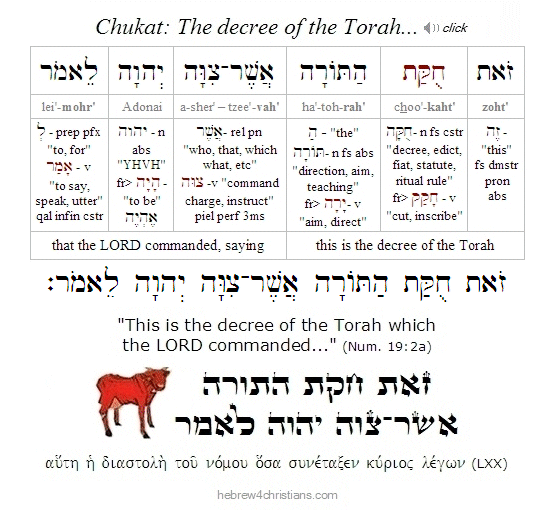 |
Choosing to Believe...

06.19.26 (Tammuz 4, 5786) Since everything is under God's supervision (הַשׁגָחָה) and providence, it is forbidden to regard actions and outcomes as the result of accident, chance, "luck," or happenstance... Those are all pagan ideas, based in ignorance and superstition. Faith in the LORD God Almighty is grounded in unqualified trust that He is also Adonai Ro'i, the LORD your Shepherd, the one who restores your soul, and that conviction provides the framework for apprehending the truth of Torah. A lost faith regards the events of life as random, based on "fortune" and blind chance; it no longer sees God's hand in the affairs of daily life, but consigns the Divine Presence to a place of functional exile. For this the "like for like" judgment is given: those who regard life to be the product of random forces will be unable to discern God's hand in their daily life.
We trust that "all things work together for good" (Rom. 8:28) and therefore we bless God for perceived evil as well as for perceived good, since all circumstances of life come from the providential hand of the LORD our God. We believe in an all-powerful, supreme LORD who has not abandoned the world, but who actively sustains and upholds it with benevolent intent (Col. 1:16-17). When difficult things happen to the righteous, we trust in God's personal care for their ultimate good, despite their present troubles. "Though he slay me, I will trust in Him" (Job 13:15). What is perhaps most heroic about Job is that he never turned away from hope, despite the crucifixion of his world. As Soren Kierkegaard noted, "the moment the LORD took everything away, he did not say, 'The LORD took away,' but first of all he said, 'The LORD gave..." (Upbuilding Discourses). This is the heart and meaning behind the Kaddish (קדיש), the mourner's prayer, that expresses thankful acceptance of God's world, despite bereavement, pain, sorrow, loss, and so on.
Therefore may God "teach us to number our days aright that we may get a heart of wisdom" (Psalm 90:12). The sages say on the day of death, one considers one's life as if it had been a single day... Life goes by so quickly, and we never know when our personal "Rosh Hashanah" will come. "No one knows the day or hour..." That's why it is so vital to be healed and to turn to God while there is still time. So turn to him today and bacharta ba'chayim – "choose life!" "For this commandment (of turning to God in faith) is not hidden from you, and it is not far away. It is not in heaven... nor across the sea.... Rather, the matter is very near you – in your mouth and your heart – to do it" (Deut. 30:11-14; Rom. 10:8-13).
Hebrew Lesson
Psalm 90:12 reading (click):
Gathering your Treasures...

06.19.26 (Tammuz 4, 5786) In the parable of the "rich fool" (Luke 12:15-21), Yeshua tells the story of a certain man who had acquired such worldly prosperity that he decided to store it all up so that he could retire in luxury and comfort. However, after he made his preparations God said to him: "You fool! This very night your soul will be collected from you. The things you have prepared, whose will they be?' Yeshua then warned: "This is how it will be for anyone who stores up treasure for himself but is not rich toward God."
We have to be on guard not to insulate ourselves with foolish faith that says we can provide for ourselves or create a hedge against future trouble. This is why Yeshua told his disciples to let go of their possessions, to give away their wealth, for then they would be rich toward God. "For where your treasure is, there will be your heart also" (Luke 12:34).
To live otherwise is to be a fool, that is, someone who misses the point of life. In this passage, the Greek word for "fool" is ἄφρων, which refers to an unthinking or thoughtless person -- someone who does not reflect on the purpose and end of life. In Hebrew the word for such a fool is "kesil" (כְּסִיל), from a root that means to be obtuse and indifferent to matters of spirituality (Prov. 1:22; 17:16). The fool despises words of wisdom (Prov. 23:9) and has no real objective in life other than that which is found in the immediacy of the moment (Prov. 17:24; 21:20, etc.).
Note that a fool is not a person of low or deficient intelligence but rather someone who is decidedly indifferent to spiritual reality. The fool says in his heart that God doesn't matter and that the goal of life is to gain carnal pleasures. He is egocentric, hedonistic, and blind to the real significance of life. He focuses on this passing world and its vanities and not on the world to come. עֵינֵי כְסִיל בִּקְצֵה־אָרֶץ - "The eyes of a fool are in the ends of the earth" (Prov. 17:24). He is someone who "stores up treasure for himself but is not rich toward God."
On the other hand, as the late Jim Elliot said, "He is no fool who gives what he cannot keep to gain what he cannot lose." That's gathering treasure toward God. The Hebrew word for love, "ahavah" (אַהֲבָה), means to give (הב) in sacrificial kindness or compassion. And indeed this is the heart of God revealed in the sacrificial life of Yeshua. When we reciprocate by giving of ourselves to God, we are made rich in the blessing of his love.
Clinging to worldly "riches" is dangerous because it creates a false sense of security that robs us of a close relationship with the Lord. Being rich toward this world makes you a fool before God. As Yeshua taught us, "Whoever desires to save his life will lose it, but whoever loses his life for my sake will find it. For what profit is it to a man if he gains the whole world, and loses his own soul? Or what will a man give in exchange for his soul?" (Matt. 16:25-26). "What is highly esteemed among men is an abomination in the sight of God" (Luke 16:15). "Until you have given up yourself to Him, you will not have a real self" (C. S. Lewis). Indeed worldly power and prosperity are no indicators of spiritual success...
Unlike the rich fool who sought his security by storing his "treasures" into larger barns, Yeshua told us not to be anxious and to trust in God alone for our security. He pointed to the birds of the air that "neither sow nor reap nor gather into barns." God provides and cares for them; won't he also therefore take care of you? (Luke 12:24). And he continued by asking "which of you by being anxious can add a single hour to his span of life?" The Greek word for "anxious" in this verse is μεριμνάω, from μερίζω, meaning to be inwardly divided or "double-minded." We are not to be "cross-eyed" in the way we look at things. Keep your mind set on the Lord and his care (Psalm 16:8). As Yeshua said to Peter after he sank in the waters, "O you of little faith, why did you doubt?" (i.e., διστάζω, lit., "think twice").
When we worry about things beyond our control we are acting like the rich fool who falsely assumed that he was in control of his life and that his security was to be found in his own resources... We build our lives upon the sand rather than the rock of God's truth; we focus on this world more than in the presence and promises of God.
Being "rich toward God" means partaking in the heavenly treasures of eternal life now, and investing the worldly treasures of temporal life for our everlasting blessing and the glory of God. It is a reversal of the "wisdom of the rich fool" because it values what God values over ourselves.... "Seek first the kingdom of God and his righteousness" (Matt. 6:3). True life is not to be found in the comforts and vanities of this world, but in earnest relationship with the Living God who is the Source and End of all enduring meaning, life, and happiness. Our treasure, our "riches toward God," is Yeshua, and that is where we will find our hearts.
Hebrew Lesson
Psalm 31:19 reading (click for audio):
 |
Lessons of Rebellion...

The following is related to our Torah reading for this week, parashat Korach...
06.19.26 (Tammuz 4, 5786) Is there anything we can learn from rebellion? Is there anything redeemable about protesting the status quo, objecting to the state of the world, refusing to accept reality, even if that has theological implications? In Dostoevsky's great novel the Brothers Karamazov, a character named Ivan takes issue with his devout brother Alyosha's unquestioning faith in God. Even though Ivan would like to believe that this is the "best of all possible worlds," and that God indeed works "all things together for good," he stumbles over the ongoing presence of moral evil in the world. For instance, Ivan insists that nothing could possibly justify the torture of a five year old girl who was chained to an outhouse and left to die in the Russian winter. He objects that somehow this awful suffering may be part of God's great plan for the ages. The same sort of objection may be expressed regarding the rise of Hitler and the Nazi Holocaust and other obvious cases of grotesque moral evil in our world. A person like Ivan cannot "accept such a universe," even if it is true that one day God will wipe away every tear from the eyes of everyone.
But is there anything to learn here? Can the rebel teach us anything or impart to us any wisdom? Well, for one thing, we observe that the rebel lacks patience and refuses faith in the idea that God is ultimately good. He sees the cup as "half-empty" rather than "half-full." His lack of trust, however, serves as a warning for us. Doubt cries out, "Let's put truth to the test," though the truth eventually swallows up doubt and brings to silence the rebel's protest. This was the solution given in the Book of Job, after all, when God overwhelmed Job from the midst of the whirlwind. As Kierkegaard wrote: "Speak, raise your voice, cry out. God can speak even louder: all the thunder is at His disposal. And thunder is the answer, it is the explanation: firm, trustworthy, primordial. God's answer, even if it smashes man to pieces, is superior to all the chattering of human wisdom."
In my own darkest moments of despair and doubt, I have been jarred back to reality after personally encountering radical evil - either that which arose from within my own heart or that which was committed by others in this world. After all, how can we explain the inexplicable cruelty and madness of human beings - war, murder, assault, abortion, genocide, the breakup of families over selfish desires, and so on - without invoking the category of real moral evil? Yet evil, by itself, is entirely senseless apart from real moral truth and goodness, and therefore the rebel's cry is really the call for transcendental justice... Nonetheless the rebel can't have it both ways; he can't consistently object to the existence of moral evil in the universe apart from appealing to God's righteousness and the existence of moral truth. It's been said that while the man of faith must must wrestle with the "problem of evil," the faithless man must wrestle with the "problem of goodness."
Often a disease must "declare itself" to be identified, treated, and hopefully cured. Likewise with our struggle with sinful impulses and the disease of our own divided hearts. Sin "forces the hand" of truth by revealing our own ambivalence, our own inner darkness, our own fears, doubts, lusts, and so on. The rise of sinful impulses and rebellious desire serve as warning signals... Indignation, disgust, and even shame are the voice of protest from our intuitive love of the ideal, appealing to the greater truth that we are God's children, called to walk with God, to mirror His character, and to exist on a different level. We see this in the case of Korach, whose rebellion ultimately revealed God's truth, and whose name was later surprisingly associated with twelve great Psalms in the Scriptures. In one of these Psalms we read how the sons of Korah learned the meaning of the gospel itself by considering God's love despite the sins and failures of the past: "Steadfast love and truth have met; righteousness and peace have kissed" (Psalm 85:10).
חסד־ואמת נפגשׁו
צדק ושׁלום נשׁקו
"Love and truth have met,
justice and peace have kissed."

So again, can any good comes from rebellion? Only to serve as a warning, and sometimes we need to be warned (1 Cor. 10:6-12; 2 Pet. 2:2-26). The fire pans of the rebels who followed Korah and died in the fire were hammered and made into part of the altar of sacrifice. God took the very means of their rebellion (the fire pans) to serve His purposes. Moreover, the "blessed fault" of our sin and rebellion helps us to profoundly understand our great (and ongoing) need for God's grace and forgiveness. Only the rebel who turns to God in teshuvah can understand the deepest expression of God's love (Luke 7:47).
Korach serves as a warning to us all. He took the hard road, and his followers learned the hard way... He was a "taker," and being a taker means that he was a slave, in bondage to the yetzer hara (evil impulse). Takers see the world as something "out there" to be exploited, consumed, and used. To deal with the "Korah within" each of us - the rebel, the complaining child, the cynical one, etc., - we must first confess the truth about the damage we've done by our own "taking," that is, by making our own selfish demands on others, and so on. To be healed, we have to revisit the depths of our hell to acknowledge and confess the impulse of our own "inner rebel." In the end, only the LORD our God can deliver us from evil.
|
Endurance and Hope...

"Being a good steward of your pain involves being alive to your life, keeping in touch with the pain as well as the joy of what happens because at no time more than at a painful time do we live out of the depths of who we are instead of out of the shallows."- Frederick Buechner
06.19.26 (Tammuz 4, 5786) Though we are optimistic about the purpose and end of reality, and though we believe that God providentially"works all things together for good" (Rom. 8:28), we are not "monistic idealists," that is, those who say that "God is One" essentially means that evil is not real or that it is actually a "part of God." Reductionistic answers are always too simplistic, whether they come from science, theology, or philosophy...
The Spirit of God says: "Woe to those who call evil good, and good evil; who put darkness for light, and light for darkness; who put bitter for sweet, and sweet for bitter! Woe to those who are wise in their own eyes, and prudent in their own sight!" (Isa. 5:20-21).
It is woeful to confound the moral truth of God with sophistical categories of human arrogance: "language games" intended to subvert and pervert all the great principles of truth, wisdom, and of righteousness... And it is woeful to "sanctify crimes with the names of virtues," to pillage the truth of language for illicit or perverse gain. And yet again it is woeful to abuse the mind by confounding the role of conscience, to disparage intuitions of moral reality, to impugn logical reasoning, and therefore to make a "pretend form" of knowledge.
The Holy Spirit states that the difference between good and evil, and of sin and righteousness, is as evident as the difference between the most obvious of contrary qualities discovered by the senses, such as the benefit of light over darkness and of seeing over being blind.... Throughout the Scriptures, "darkness" symbolizes ignorance, error, deception, and crime, whereas "light" connotes truth, knowledge, and heartfelt piety. Likewise bitterness is associated with evil and sin: "Your own wickedness will correct you, and your backslidings will rebuke you. Know therefore and see that it is evil and bitter (רַע וָמָר) that you have forsaken the LORD your God, and that the fear of Me is not in you (וְלֹא פַחְדָּתִי אֵלַיִךְ)," declares the Lord GOD of hosts" (Jer. 2:19; see also Jer. 4:18), just as sweetness is associated with goodness and righteousness: "How sweet are Your words to my taste! Sweeter than honey to my mouth" (Psalm 119:103); "Taste and see that the LORD is good; blessed is the person who trusts in Him" (Psalm 34:8). The commandments of God are more to be desired than gold, yea, than much fine gold: sweeter also than honey and the honeycomb; moreover by them is thy servant warned, and in keeping of them there is great reward" (Psalm 19:10-11).
Alas, the majority of people in every generation love darkness more than light, as our Lord attested: "This is the condemnation, that light has come into the world, but people love darkness rather than light, because their deeds are evil. For every one that does evil hates the light and does not come to the light, so that his deeds would be exposed. But the person who does truth comes to the light, that his deeds may be made manifest that they done by God's power" (John 3:19-21). In this connection Charles Elliot wrote: "Deliberate perversion is in all ages the ultimate outcome of the spirit that knows not God, and therefore neither fears nor loves Him, whether it shows itself in the license of profligacy, or the diplomacy of Machiavellian statesmen, or the speculations of the worshipers of mammon."
We are given "exceedingly great and precious promises," yet in this world we suffer and experience real pain, heartache, and troubles. Yeshua said "in this world you will have tribulation," though that is not the end of the story, of course, for there is the cheer of God's' victory, even if we must repeatedly ask God for grace to endure our troubles without murmuring or kvetching (John 16:33; Heb. 4:16). I realize that is often difficult, and some of you might be within the fiery furnace even now. You might be asking, "Where are you, Lord, in all of this? Why don't you bring me out of these troubles?" In such testing you need endurance (ὑπομονή) to hold on to hope, believing that God uses affliction to refine you for good. As Paul said, "We rejoice in our sufferings, knowing that suffering produces endurance, and endurance produces refined character, and refined character produces hope" (Rom. 5:3-4). Each of us is still upon the "Potter's wheel," and God's hand continues to shape us into vessels that one day will reveal his glory and honor. "The LORD will give strength to his people; the LORD will bless his people with peace" (Psalm 29:11).
Hebrew Lesson
Psalm 29:11 reading (click):
Let's keep holding on, friends, and never give up. Though these are indeed perilous times, the Lord our God is faithful and true. He will never leave nor forsake us, whatever may come. The Lord gives us acharit ve'tikvah (אַחֲרִית וְתִקְוָה), "a future and a hope" (Jer. 29:11).
The Breath of His Life...

The greatest blessing you've been given is the gift of existence, partaking in the image of God and being endowed with the breath of his life...
06.19.26 (Tammuz 4, 5786) A verse from this week's Torah (i.e., Korach) reveals another great Hebrew name for God: Elohei ha'ruchot lekhol basar (אֱלהֵי הָרוּחת לְכָל־בָּשָׂר), which can be translated "the God of the breath (or spirit) of all flesh" (Num. 16:22). The LORD is the Source of your breath, the One who exhales to you nishmat chayim (נִשְׁמַת חַיִּים), the "breath of life" that enables you to live (Job 12:10).
The sages used the analogy of a glassblower who creates a glass vessel. Just as the glassblower blows into a tube to form a vessel from molten glass, so the breath (i.e., neshamah: נְשָׁמָה) that comes from the LORD functions as spirit (i.e., ruach: רוּחַ) that forms and fills the human soul (i.e., nefesh: נֶפֶשׁ). Note that the Name YHVH (יהוה) first appears in this connection (Gen. 2:7), a Name that means "God is Present" (Exod. 3:14) and "God is Mercy" (Exod. 34:6-7). Note also that each letter of the Name YHVH represents a vowel sound (i.e., breath), suggesting that God's Spirit is as close as your very next breath. Like the wind that cannot be seen, so is the spirit the essential part of your identity. Yeshua breathed on his followers and said, "Receive the Holy Spirit" (John 20:22).
The special Name Elohei ha-ruchot lekhol basar appears only one other place in the Torah. After accepting the fact that he would soon die and therefore be unable to finally lead the people into the promised land, Moses prayed: "Let the LORD (יהוה), 'the God of the spirits of all flesh' (אֱלהֵי הָרוּחת לְכָל־בָּשָׂר), appoint a man over the congregation who shall go out before them and come in before them, who shall lead them out and bring them in, that the congregation of the LORD may not be as sheep that have no shepherd." So the LORD said to Moses, "Take Joshua the son of Nun (יְהוֹשֻׁעַ בִּן־נוּן, lit. "son of life"), a man in whom is the Spirit (רוּח), and lay your hand on him" (Num. 27:16-18).
The Talmud notes that the word Nun (נוּן) means "fish," a symbol of activity and life. Joshua, the chosen one who succeeded Moses and led the people into the Promised Land, was the "Son of Life" - a clear picture of Yeshua our Messiah, the "spirit-filled good Shepherd" who would lay down His life for the sheep (John 10:11). Amen. The LORD is indeed the "God of the breath of all flesh." When Yeshua cried out, "It is finished" and breathed his last breath as He died for our sins upon the cross, the greatest exhalation of the Spirit occurred, the greatest sigh, the greatest utterance was ever declared. The sacrificial death of Yeshua for our deliverance was God's final word of love breathed out to those who are trusting in Him.
Hebrew Lesson
Job 12:10 reading (click):
Wounded Healers...

"Contradictions can bring us into touch with a deeper longing, for the fulfillment of a desire that lives beneath all desires and that only God can satisfy." - Henri Nouwen
06.18.26 (Tammuz 3, 5786) Someone once said, "Pray that you may never have to endure all that you can learn to bear." Yes, though we must also remember that God "will not let us be tested beyond what we are able to bear, but with the test will also provide the way of escape so that we may be able to endure it" (1 Cor. 10:13). Indeed, in light of providential suffering what we really need is perseverance, or what the New Testament calls hupomone (ὑπομονή), a word that means "remaining [μένω] under [ὑπο]" the Divine Presence while being tested (the English word "suffer" comes from the Latin word sufferre, from sub- (under) + ferre, to carry, and therefore denotes "bearing under" difficulty).
Suffering people do not need moral platitudes or correction from others, but rather the will to believe, the strength to stay constant, and the rise of hope that gives life to simple prayers that focus the heart upon the Lord's Presence: "God have mercy..." "Help me, O God..." "I need Thee, O Lord..." When we receive grace to faithfully suffer, we hear the Spirit whispering back to us: "Be not afraid..." "Live in me..." "Walk in the light..." "I am with you always..." "You are loved..."
We learn to walk with God this way - through the valley of the shadow of death. "The more God gives, the more he makes us desire, until he leaves us empty that he may fill us with his blessings." (St. John of the Cross). God weans us from life until we learn that nothing ultimately belongs to us... We must make peace with our sorrows and disappointments, to let go of them and to accept that this day, despite its frailty and trouble, is a precious gift from above. "My peace I give to you" (שלי שלום אני אתן לך), said Yeshua, "not as the world gives, I give to you" (John 14:27). Not as the world gives... When we let go, when we put everything in God's hands, we acknowledge that all we have is a gift from God.
Living before God makes us into what psychologist Henri Nouwen called "wounded healers," as God lets us experience suffering in order to comfort and heal others. After all, this is what our Savior has done for us, emptying himself to taste the horrors of death so that we may be healed (Isa. 53:5). In our case, however, we do not have to be "perfect" before we can likewise become a healer, for God's grace comes not only from His strength but from our weakness and frailties (2 Cor. 12:10; Phil. 4:13). Indeed it from God's wounded healers that come the witness of divine hope and healing...
We are "jars of clay," ordinary and flawed people, but we nonetheless are vessels that the partake of the surpassing glory and power of God. Therefore even though we are earthly vessels, troubled and at times vexed by suffering, we are able to stretch out our hands to others and say "be healed" in God's name. It may seem a paradox that the sick can be used by God to heal the sick, but in spite of trouble we can bring life and hope to others. I've spent time with dying and hurting friends, listening to their hope of soon being with Jesus, and from their weakness beheld great strength...
Soren Kierkegaard wrote in his journals about incurable sorrow he carried from the time he was a small child. He wrote: "The majority of men, if they find that from their earliest years to be their lot to bear one suffering or another, begin by hoping, or as they say, believing that things will go better, that God will make all things all right, etc., and then at length, when no change occurs, come little by little to rely upon the help of eternity, i.e., they resign themselves and find strength by contenting themselves with the eternal... The deeper nature, or he whom God has fashioned on a more eternal plan begins at once by understanding that this is a thing he must bear as long as he lives, and he dares not require of God such an extraordinary and paradoxical help. But God is perfect love just the same, and nothing is more certain to him. So he is resigned and inasmuch as the eternal lies close to him he thus finds repose, blessedly assured all the while that God is love."
Kierkegaard went on to say that over the course of time, after he had become more and more involved in life as a temporal being, he found it difficult to live only with the reflection of the eternal, and the question arose whether he would believe by virtue of "the absurd" (i.e., beyond logic) that God would nevertheless help him temporally. Faith no longer was a reflective consolation but an urgent matter the heart's passion and need for God's Presence, and consciously living in this tension and dependency is to become a wounded healer...
Hebrew Lesson
Psalm 34:19 Hebrew reading (click):
The Sophistry of Korah..

The following entry concerns this week's Torah reading, parashat Korach...
06.18.26 (Tammuz 3, 5786) This week we read the dramatic story of Moses' cousin Korah who led a rebellion against Moses after the Israelites were turned away from the promised land and sentenced to wander forty years in the desert of Sinai. God quickly judged Korah's rebellion and vindicated the laws of the priesthood and Moses' leadership of Israel.
This story is a sober one that raises several provocative questions about our responsibility to submit to God's authority. On the one hand, the example of Korah teaches that we should obey God's direction for our lives and accept his will, lest we too should incur divine judgment. As it is written in the Scriptures: "For rebellion is as the sin of witchcraft, and stubbornness is as iniquity and idolatry" (1 Sam. 15:23). The essence of rebellion is pride...
When Korah questioned Moses' role as the divinely appointed leader of Israel, he was actually doubting God's plan of the redemption itself. Apparently Korah thought there was nothing special about his cousin, and indeed any Jew could be a leader. He asked: "Who is Moses? All of the people are holy!" (Num. 16:3). Now Moses likely didn't blame Korah for his wonder. After all, he knew he was a lowly and broken man whom God called during his exile in the land of Midian. God chose him to be his mediator, however, precisely because of this powerlessness and humility. Recall how Moses protested at the vision of the burning bush, reminding God that he was not worthy to lead Israel out of their slavery in Egypt. He even begged the Lord to send someone other than him to be his ambassador to Pharaoh (see Exod. 3:1-4:17).
Moses repented of his fear and submitted to be God's ambassador to the people, though he wrestled with his own inadequacies. Later, after the Exodus, he remained broken and surrendered as he interceded on behalf of the people and proclaimed God's will, both at Sinai - where he was given the Torah and the pattern of the Tabernacle - and later as he communed with God and faithfully directed the journey of the people to the promised land. So it should be clear that Korah's problem with Moses wasn't really about Moses after all. No, it was a problem he had with God. Like the faithless spies, Korah had trouble trusting God. Despite everything he had seen with his own eyes - the miracles of Moses and Aaron, the wonders of the Exodus from Egypt, the deliverance of the people as they crossed the sea, the manna that fell from heaven, the fiery glory at Mount Sinai and the audible witness of God from the midst of the Cloud - despite all this, Korah still questioned: "Is the LORD among us or not?" (Exod. 17:7).
It seems almost incomprehensible that Korah failed to trust in God after all he had seen, which again teaches us that seeing isn't believing, but the other way around. But perhaps he was suffering from post traumatic stress. Maybe many were in shock after all they had been through. The sudden displacement and loss of their homeland in Goshen; the suffering they witnessed during the judgments of the plagues, the terror of the Passover judgment, the frenetic activity to flee from the land of Egypt, and the insanity they must have felt as they saw the dead bodies of Pharaoh's army silently floating in the very waters that they had walked across during their nighttime flight to freedom... Perhaps Korah had trouble accepting Moses' leadership because he was unable to understand all that had happened...
Nevertheless, as difficult as it is to fathom Korah's mindset and lack of faith, it is clear that he wrestled with a desire to control things and to be a "man of power." The Torah introduces us to him by succinctly saying "Korah took..." suggesting the essential character of the man. The Midrash Rabbah notes that Korah was quite wealthy in Egypt, a nobleman accustomed to being respected among his people. The Exodus completely uprooted and changed his life, and perhaps he was anxious that he was no longer a man of worldly prominence. He no longer understood himself or his place in the new world order. Korah's envy was dangerous not because he honestly wanted to serve the Lord and his people, but because he wanted recognition as leader who would significantly contribute to the direction and destiny of the people of Israel....
Eventually Korah appealed to others who likewise felt dejected and displaced. He protested the social order, saying it was unjust and oppressive. He gained the audience of the disaffected crowd and others who fellt marginalized. Eventually Korah and his sympathizers decided it was time to take action and to openly revolt. "Then they united themselves against Moses and Aaron and said to them, 'You take too much upon you, for all the congregation is holy, every one of them, and the LORD is among them. Why then do you exalt yourselves above the congregation of the LORD?" (Num. 16:3). Moses' reaction revealed his surrendered character: "When he heard this, Moses fell on his face" in intercession before the Lord.
The madness of Korah led him to play the part of a "social justice warrior" who wanted to "deconstruct" the status quo that was governed by Moses and to give the "power to the people." Korah became a political opportunist who sought to "democratize" God's will by giving each person the right to vote on matters of the community. His apparent assumption was that the people have the collective wisdom to guide themselves, and that God's voice is disclosed by the will of the people. "Vox populi vox populi," the voice of the people is the voice of God...
The problem with Korah's political philosophy or theory, however, was that "democracy" often reduces to a matter of "majority rule" that leads to "might makes right" decisions... Minorities are often its victims. In many cultures today slavery is still considered "right" by the majority. Prejudice and intolerance for those regarded as "different" has often led to violence, persecution, and even genocide. This is sometimes called the "tyranny of the majority."
The error of thinking that the "majority" can define (or legislate) what is true should be obvious enough. Truth is not something decided by consensus or a popular vote. It is not a construct of social convention but a matter of what is ultimately real. Often it takes a good deal of effort to discern what is true, but the crowd is often lazy and wants quick answers to complex questions. Moreover the crowd can be manipulated by shrewd students of human nature who understand people's weaknesses, for instance, their self-serving interests, their fears, their susceptibility to flattery (the "Barnum Effect"), their willingness to deny or ignore unpleasant facts, and so on. Moreover the crowd is often influenced and controlled by social pressure, by propaganda, by the need to belong ("groupthink"), by misdirection and disinformation, and by other strategies used to cajole and entice them to accept statements without evaluating them.
The logical fallacy known as "argumentum ad populum," or the appeal to popularity, occurs when a something is claimed to be true or good simply because so many people believe it to be so (e.g., "McDonalds has sold billions of hamburgers, so they must be good!"). Common sense realism, however, regards truth as objective and independent of whatever the majority believes. In the Middle Ages, for example, the majority believed the earth was flat and that the sun revolved around it, but neither of these things were true. It was also once thought by that blood "humors" affected people's moods, that personality types were determined by the shape of the skull (or the color of one's skin), that people got sick from cold air, and so on. It was "common knowledge" that that the five elements of earth, fire, water, air and space made up the elements of entire universe. Alchemy, astrology, and magic potions were regarded as valid science, and so on. What's right isn't always popular, what's popular isn't always right.
I don't want to belabor the point, but saying that truth is a matter of majority rule would imply that the report of the faithless spies that the people could not inherit the promised land was "reality," and that Joshua and Caleb's minority report was therefore illusory and false... But again truth is not decided by consensus or popularity, particularly regarding matters of morality, theology and spirituality. For example saying "everybody's doing it" -- taking mind-altering drugs, fornicating, lying, stealing, etc., says nothing about the moral truth of the matter. The Lord is not a "presiding officer" over the consensus of the people but the King before whom every knee shall bow and every soul shall give account. Korah's "idealism" was a form of godless humanism, elevating the interests and desires of the people above that of God himself, and therefore his challenge was met with God's direct intervention and judgment.
The story of Korah raises some other things to consider, however, particularly regarding the question of God's seeking direction for our individual lives. In this connection note that the Torah says that the earth opened up and swallowed Korah and his followers, and that their fire pans were then beaten into "coverings for the altar." There is a hint of redemption here - not simply retributive justice - first because of the connection with the altar, and second because Korah was honored in Jewish tradition by having his name associated with several psalms in the Scriptures (e.g., Psalms 42-48, Psalms 84-88). And though Korah and his co-conspirators were swallowed up by the earth in judgment, in Numbers 26:11 we read that "the line of Korah, however, did not die out," and indeed the teshuvah of his children was later celebrated in Israel.
Some of the sages have said that Korah was honored because of the passion of his conviction. Instead of privately complaining about Israel's plight, he wanted to bring his questions out in the open to be settled. Korah wanted an answer regarding God's right to rule. Rather than letting his doubts fester, he sought to put the question to the test. Does God really "pick favorites" or establish an aristocratic caste system in Israel? If all the people are indeed holy, then why can't anyone offer incense before God's altar? Why were the priests only allowed to do so? Is not every Jew a priest in the eyes of heaven (see Exod. 19:6) ? In this way Korah perhaps sought for a resolution to what he regarded as an offense against egalitarian ideals of justice...
It is difficult to surrender to God's will when we are fearful people. Some people hide their fear by suppressing their questions and doubts, but then their "surrender" to God is not authentic. Doubt, however, is an inherent aspect of faith, since faith involves trusting what is presently not manifest (Rom. 8:24). We believe in the promise of unseen good; we walk in hope that fear will not ultimately destroy us. "Bad faith" refuses to engage doubt and answer its challenge. An honest faith overcomes doubt not by suppressing it but by wrestling its underlying concern.
There is a place for respectfully questioning God's apparent will. After all, did not our father Abraham intercede before the Lord, asking "Would you also destroy the righteous with the wicked? Far be it from You to do such a thing as this, to slay the righteous with the wicked, so that the righteous should be as the wicked; far be it from You! Shall not the Judge of all the earth do right?" (Gen. 18:23-25). And did not Job lament his afflicted estate and make his case before God? "Lo, even if he slays me, I will hope for him; yet I will appeal my ways before him" (Job 13:15). To his "godly" comforters woebegone Job said: "God forbid that I should say you are right; until I die I will not put away my integrity from me" (Job 27:5).
There is also place for lamentation, for anger, and even for reverential protest before God, though we must be careful here, for there is an invisible line that can be crossed that can lead to outright blasphemy. At "Meribah" the people provoked God by asking "Is the Lord with us or not?" They "hardened their hearts," a Hebrew phrase that means they became "kashah" (קָשָׁה) or "difficult." Therefore the psalmist speaks for God saying: "Harden not your heart, as in the provocation (מְֽרִיבָה), and as in the day of provocation (וֹם מַסָּה) in the desert: When your fathers tempted me and challenged me, though they saw my work. Forty years long was I grieved with this generation, and said, 'It is a people that do err in their heart, and they have not known my ways. So I swore in My wrath, They shall not enter My rest'" (Psalm 95:8-11).
In our mourning and in our lament, we appeal to God for solace and consolation; in our questions about God's justice in the face of evil, we return to his essential goodness. But if we fail to make our way back to trust we may accuse God of evil and harden our hearts. This is a real risk, a perilous movement into bitter darkness and sorrow. We do not need to defend or make excuses for God's sometimes inscrutable will, though we must make our way back to knowing the truth of his love and tender mercies. "For I know the plans I have for you, says the LORD, plans for blessing and not for evil, to give you a future and a hope" (Jer. 29:11).
So the moral of the story of Korah is a bit more complex than then the warning not to defy God's will (though of course that is one application). No, the drama compels us to better define and understand God's righteous authority and will for our lives. But again we must be careful. Our fears and desires drive our convictions; we can fall into self-deception by believing that we are infallibly "in the right"; we can lose sight of God's care and blessing for our lives. The essence of Torah, after all, is mercy, which is to say that God's truth is grounded in his love (Psalm 86:11; Hos. 6:6; Matt. 23:23). The fire pans of zeal must be melted down into coverings for sacrifice...
"Korah took..." These are the opening words of the parasha, but there is no grammatical object given, no mention of what he took. His was an undefined "taking," a greed of the will that did not know what it wanted or really needed. Because of this, his radical questioning and discontent was intolerable and "unlivewithable" - a sort of suffering from which he needed healing. Korah was driven by fear that he was missing something though he didn't know what it was...
Part of teshuvah is realizing how our fears are destructive to both ourselves and to other people. Recall that after the earth swallowed up Korah and his co-conspirators into the pit of "Sheol" (a word that means "to ask or question," from לִשְׁאוֹל), the people complained and God sent a plague that was only remedied when the High Priest stood between the dead and the living, representing God's intervention and care for his people. "And he stood between the dead and the living (וַיַּעֲמֹד בֵּין־הַמֵּתִים וּבֵין הַחַיִּים); and so the plague was stopped" (Num. 16:48).
As a final test to vindicate God's will, each of the twelve tribal heads of Israel, as well as Aaron himself, were instructed to bring their staffs to Moses. Moses then inscribed their tribal names on each staff and brought them into the sanctuary before the Ark of the testimony to leave overnight. "And the staff of the man whom I choose shall sprout. Thus I will make to cease from me the grumblings of the people of Israel, which they grumble against you" (Num. 17:5).
The following day Moses went into the Mishkan ("Tabernacle") and "behold, the staff of Aaron for the house of Levi had sprouted and put forth buds and produced blossoms, and it bore ripe almonds." He then brought out all the staffs and gave them back to each of the tribal leaders. The LORD then told Moses to return Aaron's staff to the Mishkan as a memorial and testimony for the generations to come.
"The fruit of the Spirit is love, joy, peace, longsuffering, kindness, goodness, faithfulness, gentleness, self-control, against such there is no law" (Gal. 5:22-23). Aaron and Moses learned to walk before the Lord. Unlike Korah, they did not seek to take power for themselves but instead humbled themselves before God saying, "Thy will be done," and their surrender was revealed by the marvel and beauty of their fruits. The blessing we find in the story of Korah is that the final test of godly power is whether it is truly life-giving and healing. The power of the Holy Spirit blossoms and brings forth fruit that reveals the sacredness of true life. Amen.
Hebrew Lesson
Zechariah 4:6b reading (click):
On Life and Death...

"And now brothers, I will ask you a terrible question, and God knows I ask it also of myself. Is the truth beyond all truths, beyond the stars, just this: that to live without him is the real death, that to die with him the only life?" - Buechner
06.17.26 (Tammuz 2, 5786) We read in our Torah portion for this week (i.e., Korach) the terrible fate of Korah and his co-conspirators: "And the earth opened its mouth and swallowed them up" (Num. 16:32), which the sages say metaphorically refers to being consumed by this world, its desires, and its end...
Life is a serious business, an irrepeatable opportunity. Many trifle their way to the grave, fully unprepared for the shock of the world to come... How few make it the great business of life to prepare themselves "until their change comes" (Job 14:14); how few consciously number their days to obtain a heart of wisdom (Psalm 90:12)? We mustn't fool ourselves by thinking we have a long road ahead before we face who we are at the time of our death (Luke 12:19-21). "No one knows the day or hour," yet it is certain to come, and wisdom bids us be prepared. All must die; there is no escape (Heb. 9:27). "No man has power to retain the spirit, or power over the day of death. There is no discharge from this war, nor will wickedness deliver those who are given over to it" (Eccl. 8:8).
In light of this somber truth, do you reflect on its significance? Have you taken time to consider how it will be for you at your death? Allow such thoughts to awaken you from your careless and unwatchful state. Lay up treasure in heaven (Matt. 6:20). You are not saved by doing ma'asei tovim (good works) but they evidence genuine faith (Eph. 2:10). Good works validates the presence of faith, and its absence is a sign of "Laodicean" apostasy (Rev. 3:14-22). Considering the vastness of eternity, human life is likened to a mere vapor that quickly passes away (Psalm 103:15-16). It is madness to put off that which is of ultimate concern until the last moment. Therefore "repent one day before you die." Live each day as if it might be your last before your judgment (Heb. 9:27), and may our blessed God help you to "seek the LORD while He may be found; call upon Him while He is near" (Isa. 55:6).
כי־ידעתי מות תשׁיבני
ובית מועד לכל־חי
"For I know that you will bring me to death,
and to the meeting place for all the living."
(Job 30:23)

 |
Of course dying "in the LORD" assumes that you are really "in Him," that is, that you are a person whose heart is known by Him (1 Cor. 8:3). You can't die in him if you have never lived in him. In this world we learn to die, and as we die in Him, so we will live in him. Resolve this within your heart: אַשְׁרֵי הַמֵּתִים אֲשֶׁר מֵתִים בָּאָדוֹן - "Blessed are the dead who die in the Lord," כִּי מַעֲשֵׂיהֶם הוֹלְכִים אַחֲרֵיהֶם - "for their works follow them (Rev. 14:13).
Concerning the prospect of death we are full of great confidence because Yeshua has overcome death for us and secured our place in heaven (John 11:25; Heb. 2:9-10). "We must all die; we are like water spilled on the ground, which cannot be gathered up again. But God will not take away life, and he devises means so that the banished one will not remain an outcast" (2 Sam. 14:14). Though physical life inevitably returns us to dust (Heb. 9:27), death does not have the final word, since God wonderfully "devises the means by which the banished are brought back home." If you belong to the Lord, your death is the day of precious homecoming to be with your beloved Savior: "For me to live is Messiah, and to die is gain" (Phil. 1:21). As it is written, "just as we have borne the image of the man of dust, we shall also bear the image of the man of heaven" (1 Cor. 15:49). Amen.
|
Humility and Healing...

"In a controversy, the instant we feel anger, we have already ceased striving for truth and have begun striving for ourselves." - Abraham Heschel
06.17.26 (Tammuz 2, 5786) When Korah asked, "Why then do you exalt yourselves above the assembly of the LORD," Moses "heard it and fell on his face" (Num. 16:4). Moses' first thought was that perhaps Korah was sent by God to deliver a rebuke - that Moses was indeed guilty of pride – and therefore he immediately fell on his face and began searching his own heart... In the face of criticism, Moses did not seek to defend or justify himself but instead looked within himself to ensure that his heart and his way was right before the LORD...
How do you react when you are criticized or rebuked? Do you seek to defend yourself or blame the other person for the same failure? The moment you sense pride taking hold of your heart, stop and turn to God. Even if you must turn 70 x 7 times, there is hope, since even the desire of "being willing to do God's will" refines the heart. It is far better to be repeatedly turning to God in brokenness than it is to live under the pretense that you have no need for ongoing deliverance. It has been wisely said that "you cannot widen the narrow way of surrender." Religious leaders are perhaps most at risk here, since often enough they fool themselves into believing that passionate commitment requires they know everything about God, or that they are walking in joy and victory, when the truth is that they are often lonely, hurting, and sometimes unsure of themselves...
I wonder why people are afraid to admit they don't know something, or that they are confused, or sad, or troubled, etc. Any religion that demands its adherents to always be "up" and is simply untrue to the human condition. Reread the Psalms or consider the dark walk of faith that many of our forefathers and foremothers underwent. God wants all our hearts, chaverim, not just the parts we think he wants.... "By the grace of God I am what I am" (χάριτι δὲ θεοῦ εἰμι ὅ εἰμι). "Face the facts of being what you are, for that is what changes what you are" (Kierkegaard).
"O LORD our God, grant us the serenity to accept the things we cannot change; the courage to change the things we can, and the wisdom to know the difference..." Amen.
Hebrew Lesson
Proverbs 14:30 reading (click):
Awake to His Presence...

"Take care then how you hear, for to the one who has, more will be given, and from the one who has not, even what he thinks that he has will be taken away." - Yeshua
06.16.26 (Tammuz 1, 5786) Some people regard spirituality in religious terms, as a matter of tradition, reciting accepted prayers or creeds, singing traditional hymns, listening to sermons, performing prescribed rituals, and so on. And while none of these things are bad in themselves, without an existential sense of urgency, a passion of "inwardness" wherein the weight of eternity is felt within the heart, they are merely an outward show or even a facade that can distract and suppress the inner need of the soul.
"Find God or die" is the cry of earnestness, whereas the superficialities and conventions of religion can sometimes seem alienating and even absurd. Kierkegaard regarded much of the synchronized pageantry of religious practice to conceal despair, not in the sense of a "mood" of sadness or hopelessness, but in the sense of a "misrelation" of the self to what is real, that is, a matter of confusing religiosity with authentic engagement with God.
A person may be productive, respected, and outwardly happy yet still be in despair if they lack the radical consciousness of their utter dependency on God for life. Emotional states are subject to fluctuation, but the urgency of faith as the soul's ultimate concern is found in a sense of existential desperation for God's healing. Personal prayer, the inner groan of the heart, is the essence, because it is the true confession of our need for God.
Prayerlessness, on the other hand, may indicate an illusory sense of autonomy, either that of defiance or of hopelessness, but more commonly that of self-assurance where the truth of life's urgency is suppressed. When prayer is considered "optional" or unnecessary, we are in danger, for spiritually speaking there is no greater danger than to "forget" your need for God.
When we forget how much we need God, when we forget our heart's desperate condition, we become two-souled and fragmented. We become a "divided house" that cannot stand because we forget that the ground of our existence is found in our relationship with God.
The core issue is the desire to "control" or to be in charge of our lives. We are not tempted to control the world at large, nor even the closest friends and people in our families, but we reserve the "right" to decide what we want for ourselves. This is part of the reason why many people are tempted to measure themselves in worldly terms, and why one of the more dangerous things in life is to "successful," capable, and self-sufficient while being in a state of spiritual exile. The devil is happy to give you "good success" in worldly matters (including matters of worldly expressions of Christianity), in exchange for your soul...
Someone might ask, how do we stop being "double-minded"? This is the essence of the problem, isn't it? How do we stop being of "two minds," experiencing that ambivalence of both wanting and not wanting something? In other words, how do we repent - both in the sense of "changing our minds" (metanoia) and in the sense of practically turning to God (teshuvah)? How do we find that purity of heart that wills one thing?
The antidote for having a "double-mind" is given in the Scriptures: "Draw near to God and He will draw near to you (ἐγγίσατε τῷ θεῷ καὶ ἐγγιεῖ ὑμῖν), cleanse your hands, you sinners, and purify your hearts, you double-minded" (James 4:8). Note that the verb used in this verse ("draw near!") means to come close enough to touch someone or something. Understood in this light, we are encouraged to come so close to God that we are able to "touch" Him -- and to be touched by Him as well. Drawing near to God is God's way of drawing near to you; as you draw near to God, so He will draw near and touch you.
Simply pray and earnestly cry out to God for help. Prayer aligns the soul before God in absolute dependence. "Lord I believe; help Thou my unbelief" (Mark 9:24). The LORD is not indifferent to our suffering and has promised to give us the Holy Spirit to help us. But genuine prayer requires honesty and confession (ὁμολογία), which means agreeing with the truth about your condition. This means, among other things, identifying the ways you have withdrawn from your relationship with God. Indeed, the word homologeo (ὁμολογέω) literally means "saying the same thing" - from ὁμός (same) and λόγος (word). There's little use trying to pretend before God or to rationalize your own double-mindedness before Him. God knows the number of hairs on your head; He surely knows the condition of your heart!
We must challenge ideas that attempt to seduce us away from the truth and thereby divide our affections. We must learn to take "every thought captive" to Messiah and be on guard for subtle appeals to compromise (2 Cor. 10:5). If you find yourself in a state of recurring temptation, examine the underlying assumptions at work in your thinking. If you dig deeper, you are likely to discover that you doubt that God cares for you, or you are fearful that God will not meet your needs. We must therefore counter such assumptions with God's revealed truth, and that means regularly studying the Scriptures to remind ourselves about what is real rather than what is illusory. We then can learn to look at life as it really is - a spiritual world, a "valley of decision," a corridor that irresistibly leads to the world to come. Each soul is on a journey to meet with God for judgment... God does not leave us comfortless. He has promised to never leave nor forsake those who trust in Him. We can set the LORD "always before us" (Psalm 16:8) and walk with Him during our sojourn here in this temporal world.
On a spiritual level what ultimately changes the heart is God's power of salvation, of course. "It is the Spirit who gives life; the flesh is of no avail" (John 6:63). This salvation is not simply freedom from the penalty of sin but freedom from its power. Often, however, we are slow to realize this, and God allows us to revisit the various "waste places" of our own lusts until we have become sick of ourselves -- "to the bones." We have to be willing "to give up our sickness." Usually that means that we must experience repeated failures until we have "learned from the heart" that the LORD - and the LORD alone - is our Healer and Deliverer. Heartache and despair can lead to "godly grief (λύπη) that leads to genuine repentance in our lives (2 Cor. 7:10).
"Salvation is from the Lord," and brokenness of our spirit is God's gift to us... "Blessed are the poor (πτωχός) in spirit." This word pictures someone crouching as a helpless beggar, totally dependent on God for help. If you are struggling, ask God to help you surrender your "heart sickness" to Him.... It's HIS work, not your own, that saves... God alone truly changes the heart. Repentance is a miracle from heaven given to you, personally...
 |
Healing of the Self...
06.16.26 (Tammuz 1, 5786) "Wherever you go, there you are..." You can't escape from yourself; you can't run away from who you are, and therefore your relationship with yourself is as inescapably eternal as your relationship with God. Indeed how you relate to yourself expresses your relationship with God (Luke 15:17).
If you are self-abusive, if your life is a "living hell," you must first of all face yourself and quit denying the condition of your heart. The LORD delivers through the wound; he does not offer you "Nirvana" to extinguish who you really are... If you have a critical spirit, if you cast eyes of suspicion upon others, then understand this reveals your own self-rejection and leads to the hell of never accepting yourself... "From him who has not, even what he has will be taken away" (Matt. 25:29). If you bury your life -- if you don't face, among other things, your pain -- your life shrinks. It is in a way diminished. It is in a way taken away" (Frederick Buechner).
Perhaps you learned to reject yourself through your earliest experiences, or from your family's secret pain, but regardless you must be delivered from the fear of who you are, and only God in his mercy can heal you from that wound...
Only when we are rightly related to God in the truth are we able to become a healed self; only by God's power can we know the truth of God's redeeming love.
Hebrew Lesson
Psalm 51:10 reading (click):
Seeing with Heart...
06.16.26 (Tammuz 1, 5786) "We walk by faith, not by sight" (2 Cor. 5:7). This is true for all people, since every soul lives by faith of some kind or another. The Torah mentions the heart first and then the eyes to indicate that the eyes follow the heart. We see as we believe with our heart: "According to your faith be it done unto you." When the spies said, "We are not able to go up (לא נוּכל לעלות)... for they are stronger than us" (Num. 13:31), they revealed their unwillingness to believe in God's promise, or, to put it another way, they revealed their faith in God's inability to deliver on his word.... Indeed, the Hebrew word for "than us" (i.e, ממנו) can also mean "than Him," suggesting that the spies believed that even God would be unable to uproot the Canaanites! According to their faith, so it was done; by believing that it was impossible, they lost the possibility of God's promise...
Faith sees what is possible and refuses to yield to the artificiality of mere appearance. Indeed, appearances are often a test of our courage. We may never know how often a test was given and - just before victory was manifest - the heart grew faint and was lost to fear. "According to your faith" (על פי אמונתך) is a spiritual principle that applies to everyone. In that sense, it is not that we have faith that matters (since we all do), but whether our faith is grounded in the promises and power of the LORD God of Israel, or something else....
Hebrew Lesson
Psalm 16:2 reading (click for audio):
Trust in Dark Hours...

06.16.26 (Tammuz 1, 5786) The Spirit of God encourages the downcast: "Let him who walks in darkness and has no light trust in the Name of the LORD (יִבְטַח בְּשֵׁם יְהוָה) and lean upon on his God" (Isa. 50:10). Spiritual darkness is permitted by God for his own sovereign purposes, perhaps as a means to teach us to abandon ourselves to his care. Trusting in God (i.e., bittachon - בִּטָּחוֹן) does not mean that we are obligated to affirm that this is "the best of all possible worlds," though it does mean we believe that eventually God will wipe away every tear and make all things right.
Bittachon is a word for this world, which says, "Though he slay me, I will trust in him..." We do not need to trust for what is seen in this world but for an unseen good (Rom. 8:24). Those who call upon the LORD can trust not only in concealed good behind ambiguous appearances ("all things work together for good") but also in a future, real, substantive good that will one day be clearly manifest for us all... We fight the "good fight" of faith, which is a worthy struggle that eventually is realized for blessing. Meanwhile, we pray to God to be kept from such depth of sorrow that leads to sickness, darkness and despair.
Hebrew Lesson
Isaiah 50:10 reading (click for audio):
 |
If you ask for bread, your heavenly Father will not give you a stone... Only God can deliver us from our "disordered loves" to take hold of what is truly essential. All we can do is ask, and keep on asking - even as we struggle on, despite ourselves, despite our losses... And we often revisit our sins over and over until we become "sick of our sickness," that is, until we begin to understand what our heart really needs. It's as if we are constantly being asked, "Is this what you want?" and our choices confess the truth... Only God does the miracle of real change within the human heart - only God can give life from the dead!
Marks of False Teachers...

The following entry concerns this week's Torah reading, parashat Korach...
06.15.26 (Sivan 30, 5786) In this week's Torah portion we encounter Moses' cousin "Korach" who agitated the people to reject the Torah in favor of a more "populist" approach. The reading begins with Korach and a group of leaders of Israel confronting Moses and Aaron saying: "You have gone too far! (רַב־לָכֶם, lit., "(too) much for you!"). All the community are holy, all of them, and the LORD is in their midst. Why then do you raise yourselves above the LORD's congregation?" (Num. 16:3). Korach made an appeal to the crowd, in effect saying that everyone could make up their own mind regarding the meaning of God's law. Now this was matter that required careful discernment and revelation. Was Korach teaching the truth when he said that following God was a matter of personal opinion and preference?
False teachers (מורי שקר) tend to be "people pleasers." They seek the applause of the crowd, the praises of men, and therefore appeal to the murmurings of the unregenerate heart: "Do not prophesy to us what is right; speak unto us smooth things, prophesy deceits" (Isa. 30:10). They flatter people by "tickling their ears"; they offer either platitudes or "new revelation" based on their own imagination. Consequently, they tend to be grandiose and quick to disparage God's faithful servants. Thus Korach accused Moses of wanting to exalt himself when this only disclosed the evil lurking within his own heart (Num. 16:3).
The Scriptures warn that false teachers speak in their "own name" and presume to be something when they are nothing (Gal. 6:3). "The prophets prophesy lies in my name: I sent them not... they are prophesying to you a lying vision, the deceit of their own minds" (Jer. 14:14). They secretly deny that Yeshua is LORD (יהוה), though they offer "lip service" about his importance (2 Pet. 2:1). Instead of focusing on the central message of the gospel and the greatness of salvation found in Messiah, they "major in minors," passing over the weightier matters for the sake of divisive doctrines (Matt. 23:23). They crave to be teachers of the law, but they have no idea what they are talking about (see 1 Tim. 1:7). Often such deceivers have natural charisma, charm, "good hair," and an ability to bewitch people through buttery oratory or clever presentation (Col. 2:4,8). Many focus on their supposed special revelation rather than the truth of the heart, and they often are more concerned with being vindicated than with calling others to repentance annd receive the grace of God. Finally, they tend to exploit people to promote their own self-serving agenda (1 Pet. 2:1-3). They make "merchandise" out of the gullible, regarding them as the means to support their "ministry" rather than as souls in need of God's love and care...
False teachers inevitably "twist the Scriptures" by unsound interpretations contrary to the ruach, or spirit of the Hebrew prophets, and by evading the commandment to "rightly divide" the word of Truth according to basic logic and the rudiments of clear thinking (2 Tim. 2:15; 2 Pet. 1:20-21; 3:16). In Christian circles, they often come in the name of the law (legalism) or in the name of grace (licentiousness), but rarely do they take the trouble to carefully (and equitably) work through the paradoxical tensions. False teachers are uncomfortable humbly confessing they don't know or understand something, and therefore they are quick to style themselves as an infallible prophet or source of authoritative wisdom...
There is no substitute for taking the time and energy to humbly study Torah, friends, and we should be suspicious of those who claim special insight when it is evident that they have not really labored working through the Scriptures... All disciples of Yeshua are called "students," or talmidim (תַּלְמִידִים), a word that comes from lamad (לָמַד) meaning "to learn" (the study of Scripture is called talmud Torah (תַלְמוּד תּוֹרָה) from the same root). Among other things, then, following Yeshua means becoming a student of the Jewish Scriptures that he both loved and perfectly fulfilled (Matt. 5:17-18; Luke 24:44-45). Only after learning the truth of the Scriptures will you be equipped to "go to all the nations and teach" others (Matt. 28:19). This is accomplished not merely by explaining (propositional) doctrine but by kiddush HaShem -- sanctifying the LORD in our lives (1 Pet. 1:15-16). "Know them by their fruits."
Yeshua brings the kingdom of God "at hand," that is, into the realm of this fallen world. False teachers are emissaries of evil, commissioned by the devil to seduce, deceive, and ensnare souls; they disguise themselves as an "angel of light" (2 Cor. 11:14). God allows false teachers to justify the desires of the unregenerated heart, for such teachers find their audience among those who want to be deceived (Matt. 13:24-30; 15:14). "For there must also be false teachers among you, that those who are approved may be recognized among you" (1 Cor. 11:19) .This implies that there can be no false teachers apart from false believers who go along with the ruse. In light of this possibility, we should be careful to honestly examine our hearts. What are your motives for faith? What draws you to Yeshua? Do you accept the message of the gospel or are you trusting in something else? Are you really one of his "sheep"? Do you hear his voice, or are you heeding something contrary to the truth of the Holy Spirit?
Just as the easiest way to spot a counterfeit bill is to know the various details of the original, so our best defence against false teaching is to know the details of doctrine and to use discernment as the LORD helps us "test the spirits" (1 John 4:1). This implies that we "build ourselves up in the most holy faith" by carefully (i.e., humbly) studying the word of God - especially the Torah, since the Torah is the foundation of all that follows (Jude 1:20). In this way we will be able to accurately wield the Sword of the Spirit (2 Tim. 2:15-16, 2 Pet. 1:19-20).
In order to grow, we must have "good soil" for the seed of the word to take root. We "get rooted by knowing the roots" of our faith! Studying the Scriptures and praying in the Spirit of Truth keeps us securely in the love of God as we wait for the mercy of Yeshua who gives us eternal life (Jude 1:21).
Hebrew Lesson
Psalm 138:6 reading (click):
 |
Testing in desert places:
The Rebellion of Korah...

06.14.26 (Sivan 29, 5786) Shavuah tov, chaverim. Last week's Torah portion (Shelach Lekha) told the tragic story about the "sin of the spies" (חטא המרגלים) and the divine decree that the generation rescued from Egypt was sentenced to die in the exile of the desert. In this week's portion (parashat Korach), the hard truth of their condition began to sink in, and the people bemoaned their fate and rebelled further by attempting to overthrow God's designated leadership and return to Egypt. This rebellion was instigated and organized by Moses' cousin Korach, who – along with a band of co-conspirators – was swiftly judged and put to death, thereby vindicating the Aaronic priesthood and Moses' leadership of Israel.
Korach was the cousin of Moses and a Kohathite who was honored to be one of the carriers of the Holy Ark (ארון הברית). He was a wealthy man of influence - a nassi (prince) of the people. Despite all this privilege, however, Korach rationalized that he should be the head of the Kohathite clan (instead of his cousin Elzaphan), since he was the firstborn of Kohath's second son, whereas Elzaphan was not even a firstborn son. Indeed, because he felt slighted by Moses' choice, Korach went even further and brazenly questioned whether the office of the High Priest should not have been given to him – rather than to Aaron.
 |
Korach's co-conspirators were two brothers named Dathan and Abiram from the tribe of Reuben, Israel's firstborn son. Together, they put together a force of 250 men to confront Moses and to challenge his exclusive claim to leadership: "You have gone too far! For all in the congregation are holy, every one of them, and the LORD is among them. Why then do you exalt yourselves above the assembly of the LORD?" (Num. 16:3).
In response to their challenge, Moses proposed that Korach and his followers bring firepans to offer incense at the Tabernacle to determine whether they were indeed chosen to serve as priests. The following morning, when Korach and his 250 followers assembled at the gate of the Tabernacle to offer incense, God threatened to destroy them all instantly. Moses begged God not to destroy all the people, but only the rebels. He then warned the congregation to stand clear of the dwellings of Korach, Dathan, and Abiram. The earth then opened up and swallowed them alive, and a fire consumed the 250 men who illegitimately offered the incense...
Korach's rebellion introduced outright mutiny and chaos within the leadership of the camp that brought swift and terrible rebuke from the LORD. Nevertheless, the very next day the entire congregation of Israel audaciously began to accuse Moses and Aaron, saying: "You have killed the people of the Lord." When the people looked toward the Tabernacle, however, the Glory of the LORD appeared, where God descended to tell Moses and Aaron that he was going to destroy the Israelites for their treason. Despite Moses and Aaron's fervent intercession, however, a deadly plague broke out among the people. Moses then instructed Aaron to take his firepan with incense and to bring it in the midst of the congregation to make atonement for them. Aaron did so, "and he stood between the dead and the living; and the plague was stayed." The Torah tells us that 14,700 Israelites died because of the plague, not including the deaths of those involved in the rebellion of Korach.
As a final test to vindicate Aaron as God's chosen priest, each of the twelve tribal heads of Israel, as well as Aaron himself, were instructed to bring their staffs to Moses. Moses then inscribed their names on each staff and brought them into the sanctuary before the ark of the testimony. "And the staff of the man whom I choose shall sprout. Thus I will make to cease from me the grumblings of the people of Israel, which they grumble against you." The following day Moses went into the Tabernacle and "behold, the staff of Aaron for the house of Levi had sprouted and put forth buds and produced blossoms, and it bore ripe almonds." He then brought out all the staffs and gave them back to each of the tribal leaders. God then told Moses to return Aaron's staff to the Tabernacle as a testimony for generations to come.
Faith's Projection...

06.12.26 (Sivan 27, 5786) In our Torah reading for this week (i.e., Shelach-Lekha) we read the account of the men who were commissioned to scout out the promised land and report back to Moses. When they returned, the men described the land as a beautiful and fruitful, flowing with "milk and honey," but they openly expressed doubt that the Israelites would be able to conquer the land. They justified their fear by saying that the inhabitants were formidable, their cities were well fortified, and that there were giants living in there. "We were in our eyes as grasshoppers (וַנְּהִי בְעֵינֵינוּ כַּחֲגָבִים), and so we were in their eyes" (Num. 13:33). Here the sages note the subtle - yet profound - connection between how we see ourselves and how we suppose that others see us... "We were in our eyes as we were in their eyes..." This sort of "projection" is common enough in everyday life. However, while it may be valid for you to sometimes feel small, inadequate, and even "grasshoppery," it is not valid to claim that this is how others see you or that this is how you really are. After all, how do you know how you appear to others? And, moreover, what difference does that make in light of who God says you are? Remember David and Goliaith?
Who or what defines you? Do you need the approval of man to exist, or the approval of God? Worrying about how others see you, seeking your self worth among the fickle passions of men, is cowardly, carnal and self-centered. When the spies said that "the land devours it inhabitants" (Num. 13:32), they projected their own hidden fears. Instead of seeing God at work, preparing the way for the Israelites to more easily conquer the land, the spies saw only themselves, and that led to the irreparable sin of unbelief... Here we see that faith is self-authenticating: "according to your faith be it done unto you" (Matt. 9:29).
For every reaction there is a counter reaction. As the Kotzker Rebbe wisely said, "If I am I because I am I, and you are you because you are you, then I am I and you are you; but if I am I because you are you and you are you because I am I, then I am not I and you are not you." The Kotzer's saying reminds me of a story I once heard. A man went to a rabbi and said, "I know I am a fool, rabbi, but I don't know what to do about it. Can you help me? The rabbi replied in a complimentary way, "Ah my son, if you know you're a fool, then surely you are no fool!" "Then why does everybody say I am fool?" complained the man. The rabbi regarded him thoughtfully for a moment and then said, "If you don't understand that you are a fool, but only listen to what other people say, then you surely are a fool!"
 |
Rabbi Hillel once said: "If I am not for myself then who will be for me? But if I am only for myself, what am I? And if not now, when?" (Avot 1:14b). Hillel notes that the language of "I am" (אָנִי) and "for me" (לִי) reveals that our relationship with ourselves must be sanctified and ordered before God. As Soren Kierkegaard once cryptically wrote: "The self is a relation which relates itself to its own self, or it is that in the relation that the relation relates itself to its own self; the self is not the relation but that the relation relates itself to its own self." In other words, the "self" - your inner life - is revealed as an inner dialog or conversation with yourself... An "authentic" self must relate itself to God as the Ground of existence, otherwise irremediable despair will result, that is, lethal sickness of soul...
The remedy for anxious confusion of heart is to turn to God and to find your value in God's love and blessing. "By the grace of God I am what I am" (1 Cor. 15:10), that is, I am made a person. As we come to believe that we are accepted and loved despite our many imperfections, inadequacies, and character defects, we find courage to accept ourselves, to "let go" and relax. As Yeshua said, "whoever does not receive the kingdom of God as a little child shall not enter it" (Luke 18:17).
We lose sight of what is real because we want the blessing on our own terms, apart from the miracle... The legalist is actually enslaved to the idea of God's conditional acceptance: "If you obey, then you belong." There is still some faith that the right religious scruples, the affirmation of a particular creed, and the practice of certain rituals will gain us access to His heart. The message of the cross scandalizes the religious because it boldly states, "if you believe, then you belong." As Kierkegaard rightly observed, "And this is the simple truth - that to live is to feel oneself lost. He who accepts it has already begun to find himself, to be on firm ground. Instinctively, as do the shipwrecked, he will look around for something to which to cling, and that tragic, ruthless glance, absolutely sincere, because it is a question of his salvation, will cause him to bring order into the chaos of his life. These are the only genuine ideas; the ideas of the shipwrecked. All the rest is rhetoric, posturing, farce."
Religious rituals devoid of a sense of crisis within the heart are little more than a sham. Anthony de Mello wrote: "I think of the times I tried to use him to make my life secure, and undisturbed, and painless. Also the times I was enslaved by fear of him, and by the need to protect myself against him through rites and circumstances." Ritualistic behavior is a poor substitute for trusting that His heart is forever present for you.
Hebrew Lesson
Psalm 18:25-26 reading (click for audio):
 |
Prayer for this hour...
06.12.26 (Sivan 27, 5786) Many of us are hurting, Lord, and often we feel alone in our struggle... This world seems so senseless, so brutal, and so evil at times; we feel powerless, overwhelmed, and even sick inside... We look to You, O God, and for your mercy and your power. Help us to accept what we cannot change and to completely trust in Your great healing to come -- despite the depravity of the world around us (and within us). Remind us that though we cannot change the world (or even ourselves), we are given grace to sustain our trust in You, our glorious and merciful Healer. And may we never be ashamed; may we never grow bitter; may our sorrows lead us from strength to strength. And may this time of testing lead us to greater wisdom, to deeper compassion, and finally back to You. Amen.
It is prophetically written in our Scriptures: "The path of the righteous is like the light of dawn, which shines brighter and brighter until full day" (Prov. 4:18). From the first glimmer of heaven-sent faith we detect the divine light, "the light of dawn," which continues to grow more and more until it becomes as radiant as the midday, an image of the full light of the World to Come. Amen. Praise God that more light is coming to you who are trusting in the LORD, even in your present darkness, for it is written: "He who began a good work in you will bring it to completion at the day of Yeshua our Messiah" (Phil. 1:6).
Hebrew Lesson
Proverbs 4:18 reading (click for audio):
The Will to Believe...
"When you have to make a choice and don't make it, that is in itself a choice." - William James
06.12.26 (Sivan 27, 5786) The central issue of your spiritual life is the willingness to do God's will, or the willingness to believe, since these amount to the same thing.... Believe what? That God is real, that He has (personally) called you by name, that he has particularly redeemed you by Yeshua's own blood poured out for your sins, and that therefore that your identity and life are bound up with his mercy and truth... Perhaps this message seems too good to be true, and yet it is the heart's duty to take hold of hope and to refuse to yield to despair, as it is written: "Let not love and truth forsake you; bind them around your neck; write them on the tablet of your heart" (Prov. 3:3).
The spiritual danger here is being "pulled apart" in opposite directions, dissipating the soul so that it will not be unified, focused and directed. Both loving and hating the good is a state of painful inner conflict, ambivalence, and self-contradiction. "Who can bring a clean thing out of an unclean? there is not one" (Job 14:4), yet this is our starting point: "I find it to be a law that when I want to do right, evil lies close at hand" (Rom. 7:21). We are often willing and unwilling, or neither willing nor unwilling, and this makes us inwardly divided, weak, fragmented, anxious, and "soulless." An honest faith that "wills one thing" binds the soul into a unity, or an authentic "self." As King David said, "One thing have I asked of the LORD, that will I seek after: that I may dwell in the house of the LORD all the days of my life, to gaze upon the beauty of the LORD and to inquire in his temple" (Psalm 27:4).
The way to be healed of a divided heart is to earnestly make a decision: "Draw near to God, and he will draw near to you" (James 4:8). There are no conditions given here -- other than your raw need to connect with God for help. "Purify your hearts, you double-minded ones" (δίψυχοι, lit. "two-souled ones"); make up your mind and be unified within your heart: "How long will you go limping between two different opinions?" (1 Kings 18:21). You are invited to come; God has made the way; your place at the table has been set and prepared...
Our Heavenly Father "sees in secret.." As William James once said: "The deepest thing in our nature is this region of heart in which we dwell alone with our willingnesses and our unwillingnesses, our faiths and our fears" (James: Is Life Worth Living, 1896). Or as Albert Camus later wrote, "There is but one truly serious philosophical problem, and that is suicide. Judging whether life is or is not worth living amounts to answering the fundamental question of philosophy" (Myth of Sisyphus, 1942).
It is there, in the secret place of the heart, that the sound of the "knock" is either heard or disregarded (Rev 3:20); the stakes are nothing less than everything. May the Lord give us the willingness to do His will and the courage to believe in His love. And may God deliver us from doubt and from every other fear. May we all be strong in faith, not staggering over the promises, but giving glory to God for the miracle of Yeshua our LORD. May we all be rooted and grounded in love so that we are empowered to apprehend the very "breadth and length and height and depth" of the love of God given to us in Messiah, so that we shall all be filled with all the fullness of God (Eph. 3:14-19). Amen.
Hebrew Lesson
Proverbs 3:3 reading (click):
 |
Note: The Hebrew for Christians web site will be undergoing a "migration" to a more capable server, but that means there may be some connectivity issues over the next few days. I apologize in advance and ask for your prayers that this will be worthwhile upgrade. Shalom!
Note: June 2026 updates continue here.
Follow the site's progress:
Site Updates for 2026
Site Updates for 2025
Site Updates for 2024
Site Updates for 2023
Site Updates for 2022
Site Updates for 2021
Site Updates for 2020
Site Updates for 2019
Site Updates for 2018
Site Updates for 2017
Site Updates for 2016
Site Updates for 2015
Site Updates for 2014
Site Updates for 2013
Site Updates for 2012
Site Updates for 2011
Site Updates for 2010
Site Updates for 2009
Site Updates for 2008
Site Updates for 2007
Site Updates for 2006
Site Updates for 2005
Site Updates for 2004
Hebrew4Christians Forum
|