|
|
 |
|
|
In the seventh month, on the first day of the month, you shall observe a day of solemn rest,
a memorial proclaimed with blast of trumpets, a holy convocation. - Lev 23:24
|
|
|
|
|
|
Introduction
|
|
|
|
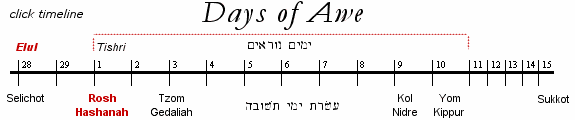
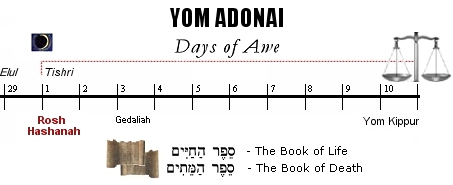
In traditional Judaism, Rosh Hashanah (lit. "the head of the year") is celebrated as "Jewish New Years Day." The holiday is observed on the first two days of the Hebrew month of Tishri (i.e., the seventh "new moon" of the year), which usually falls in September or October, and marks the beginning of a ten-day period of prayer, self-examination and repentance (aseret yemei teshuvah), which culminates on the fast day of Yom Kippur. These ten days are referred to as Yamim Norai'm (יָמִים נוֹרָאִים), the "Days of Awe," or the High Holy Days. Rosh Hashanah also commemorates the creation of the universe (בְּרִיאַת הָעוֹלָם) by God.
|
|
|
Elul and Selichot
|
|
|
|
|
|
|
On the week before Rosh Hashanah, at the end of the month of Elul, the atmosphere of repentance is intensified by the addition of selichot (סְלִיחוֹת). Selichot are special prayers for forgiveness recited in the early hours of the morning at the synagogue. The addition of selichot helps prepare us for the coming days of reflection and self-examination.
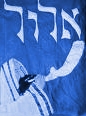
On the day before Rosh Hashanah, called Erev Rosh Hashanah, Orthodox men will undergo a mikveh (ritual bath). The parokhet (ark cover) in the synagogue is changed to a plain white cloth, indicating purity. It is traditional at this time to greet one another with L'Shanah Tovah Tikatevu! ("May you be inscribed (in the Book of Life) for a good year!") and to respond with gam lekha (same to you):
|
|
|
|
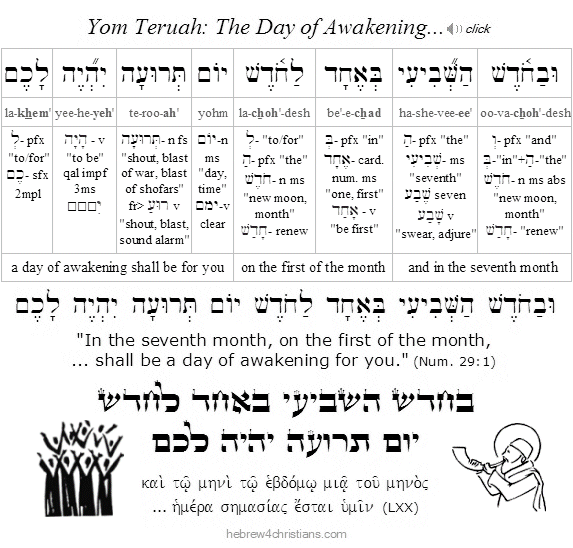
Rosh Hashanah is also known as Yom Teru'ah (יוֹם תְּרוּעָה), the "Feast of Trumpets" (the name was changed during Talmudic times, see below). Tradition stated that the universe was created by the LORD on Rosh Hashanah (or on Elul 25, so that Rosh Hashanah marks the sixth day of creation, when the LORD created Adam and Eve).
Note that Rosh Hashanah is also called "Yom ha-Zikaron," the "Day of Remembrance" (Lev. 23:24) in reference to the commandment to remember to blow the shofar (teruah) to coronate God as King of the Universe. The blast of the shofar is meant to jolt us from our sleep. We are to remember who we really are by remembering that the LORD is our King.
Click to listen and learn the Hebrew:
|
|
|
|
The Liturgy and the Theme of Rosh Hashanah
|
|
|
|
According to Jewish tradition, on Rosh Hashanah the destiny of the righteous, the tzaddikim, are written in the Book of Life (סֵפֶר הַחַיִּים), and the destiny of the wicked, the resha'im, are written in the Book of Death (סֶפֶר הַמָּוֵת). However, most people will not be inscribed in either book, but have ten days -- until Yom Kippur -- to repent before sealing their fate. Hence the term Aseret Yemei Teshuvah (עֲשֶׂרֶת יְמֵי תְּשׁוּבָה) - the Ten Days of Repentance. On Yom Kippur, then, everyone's name will be sealed in one of the books.
Consequently, many synagogue prayers are invocations to be made worthy to be written in the Book of Life. Sermons about the need for repentance and the themes of God's judgment are often delivered during this time. The Kingship of God is stressed throughout the services as well.
|
|
|
|
The Torah portion for the first day of Rosh HaShanah is about the birth of Isaac, and the portion for the second day is on the Akedah, or the binding of Isaac. The Musaf (additional service) includes extra benedictions added to the normal Amidah, emphasizing God's Kingship, the remembrance of our days, and the call of the shofar to usher in the Messianic Kingdom at the end of days.
|
|
|
|
Sounding the Shofar
|
|
|
|
The shofar (ram's horn) is the most-mentioned musical instrument in the Scriptures. It is blasted at least 100 times during a typical Rosh Hashanah service, thus satisfying the commandment to make Teru'ah ("noise") on this day. (There is a "darker" tradition that says the 100 blasts symbolize the the number of letters in Sisera's mother's lament for her son as recorded in the "Song of Deborah" (Judges 5:28). According to some of the rabbis, it is suggested that sounding the 100 blasts "nullifies" all of the letters corresponding to her thoughts but one -- the sorrow of a grieving mother.) The sound of the shofar, then, is meant to stir the heart to fear and to inspire teshuvah (repentance): "When the shofar is blown in the city, don't the people tremble?" (Amos 3:6).
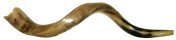
There are four primary types of shofar blasts:
- Tekiah (תְּקִיעָה) - A long single blast (the sound of the King's coronation)
- Shevarim (שְׁבָרִים) - Three short wail-like blasts (signifying repentance)
- Teru'ah (תְּרוּעָה) - Nine staccato blasts of alarm (to awaken the soul)
- Tekiah ha-Gedolah(תְּקִיעָה הַגְּדוֹלָה) - A great long blast (for as long as you can blow!)
The general custom is to first blow tekiah, followed by shevarim, followed by teruah, and to close with tekiah ha'gedolah:
|
|
|
|
|
|
Listen to the shofar
|
|
|
|
|
The order of the blasts may vary according to various Jewish custom, and they may be heard at different points in the Rosh HaShanah service (for example, at the start of the service, after the Torah reading, after reading parts of the Amidah blessings, etc.) If Rosh Hashanah happens to fall on a Shabbat, no shofar blasts will be heard (since carrying a shofar is considered work) but the shofar will be sounded on the Second Day of Rosh Hashanah (this holiday, like most Jewish holidays, lasts for two days because of the difficulty of determining the exact time of the new moon). An expert in blowing the shofar is called baal tekiah, by the way.
|
|
|
|
|
|
|
|
|
|
|
|
|
|
|
|
Minhagim (Customs) of Rosh Hashanah
|
|
|
|
Special customs (minhagim) observed on Rosh Hashanah include:
- Candle lighting and kiddush - As with all the Jewish holidays, candles are lit just before the start of the holiday. Kiddush is also said over the wine.
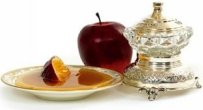
- Dipping apples (or challah) in honey before eating the holiday meal offers up the wish for a "sweet year" ahead.
- Round challah loaves are shaped like crowns to suggest the Kingship of God and as a reminder of the crown of righteousness that comes to those who obey the LORD. Often these "crown challah" loaves are sweetened with honey and raisons.
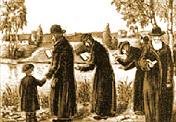
- Tashlikh - On Tishri 1, during the afternoon, many Jews perform the ritual of "tashlikh," or "casting off," a ceremony in which Jews symbolically cast their sins into a body of water. We walk to flowing water, such as a creek or river, and empty our pockets into the river, symbolically casting off our sins. Often Michah 7:18-20, Psalm 118:5-9, and Psalms 33 and 130 are recited during the Tashlikh ceremony.
|
|
|
 |
|
|
|
 |
|
|
|
|
|
"He will again have compassion on us; he will tread our iniquities under foot. You will cast (tashlikh) all our sins into the depths of the sea."
|
|
|
|
 |
|
|
|
The Ten Days of Repentance
|
|
|
|
As mentioned above, most people are neither entirely righteous (tzaddikim) nor entirely wicked (resha'im) on the day of Rosh Hashanah. The Aseret Yemei Teshuvah, or Ten Days of Repentance, provide a time for us to repent and turn whole-heartedly to the LORD in order to be sealed into the Book of Life. These days set the tone for the coming most holy Day of Atonement. Teshuvah, Tehillah, and Tzedakah - repentance, prayer, and charity - these are the spiritual virtues of the High Holidays, and the mood of the Tashlikh ceremony is based upon their heightened observance.
|
|
|
 |
|
|
|
Yom Teruah or Rosh Hashanah?
|
|
|
|
|
In the written Torah, the first day of the seventh month is to be commemorated as Yom Teruah (יוֹם תְּרוּעָה), sometimes translated as the "Festival of Shouting" or the "Feast of Trumpets" (Num. 29:1, Lev. 23:24). The word teruah means "shouting" or "raising a noise," and therefore this day was to be marked by making a joyful noise unto the LORD (Psalm 81:1-4). Of all the moedim (holidays), Yom Teruah is unique because 1) it's the only holiday that begins on a New Moon and 2) there is no explicit reason given in the Torah for its observance other than to "rest" and to offer sacrifice (Num. 29:1, Lev. 23:24). After the Second Temple was destroyed in 70 AD, however, the sages of the Mishnah redefined Judaism and associated Yom Teruah with the start of the Jewish civil year (based on the Torah's description of the "end of the year" as being the time of the fall harvest: Exod 23:16). Yom Teruah then became known as "Rosh Hashanah" (the head of the year).
Trumpets and Shofars
Silver trumpets (חֲצוֹצְרת, cha-tzotz-rot) were originally used to signal camp movements during the journey to the Promised Land (Num. 10:1-2). Later they were used by the Levites during various Temple rituals, especially during the offering of animal sacrifices (Num. 10:10). They were also sometimes used in times of warfare (Num. 10:9; 31:6; 2 Chr. 13:12-14).
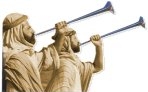
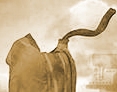
These silver trumpets are to be distinguished from the ram's horn trumpet (שׁוֹפָר, shofar) that was explicitly commanded to be sounded during Yom Kippur (Lev. 25:9) and during the Yovel (Jubilee Year). The common consensus among the sages was that the shofar, not the silver trumpet, was likewise used for Yom Teruah (Mishnah: Rosh Hashana 16a, 3:3). The shofar was a reminder of the exchange of the divinely provided ram as ransom for Isaac's life (the Akedah) and of the giving of the Torah to Israel at Sinai (Exod. 19:16).
Coming Judgment...
As mentioned above, on Rosh Hashanah the destiny of the righteous, the tzaddikim, are written in the Book of Life, and the destiny of the wicked, the resha'im, are written in the Book of Death. Most people, however, won't be inscribed in either book, but are given ten days -- until Yom Kippur -- to repent before sealing their fate. On Yom Kippur, then, everyone's name will be sealed in one of the two books. The ten days between Rosh Hashanah and Yom Kippur are therefore called Aseret Yemei Teshuvah - the "Ten Days of Repentance" - because personal repentance can affect the divine decree for good....
As Messianic believers, we maintain that Judgment Day has come and justice was served through the sacrificial offering of Yeshua for our sins (2 Cor. 5:21). He is the perfect fulfillment of the Akedah of Isaac. Our names are written in the Lamb's Book of Life, or Sefer HaChayim (Rev. 13:8). We do not believe that we are made acceptable in God's sight by means of our own works of righteousness (Titus 3:5-6), but that does not excuse us from being without such works (as fruit of the Holy Spirit in our lives). The Scriptures clearly warn that on the Day of Judgment to come, anyone's name not found written in the Book of Life will be thrown into the lake of fire (Rev. 20:15).
Yom Adonai - the Day of the LORD
The spring festivals (i.e., Passover, Firstfruits, and Shavuot) have been perfectly fulfilled in the first coming of Yeshua as Mashiach ben Yosef, and the fall festivals (i.e., Teruah, Yom Kippur, and Sukkot) will be fulfilled in His second coming as Mashiach ben David. Since the first advent fulfilled all of the spring mo'edim to the smallest of details, we believe that His second advent portends similar fulfillment as revealed in the fall mo'edim.
After the summer of harvest (John 4:35), the very first fall festival on the Jewish calendar is Yom Teruah (also called Rosh Hashanah), which is a picture of the "catching away" of kallat Mashiach (the Bride of Christ) for the time of Sheva Berachot (seven "days" of blessing that follows the marriage ceremony). Then will come the Great Tribulation and Yom Adonai - the Day of the LORD (יוֹם יְהוָה). The heavenly shofar blasts heard at Sinai will be reissued from Zion. First will be the gathering together of those who follow the Mashiach (i.e., those declared tzaddikim because of the merit of Yeshua's sacrifice), and then God's war against Satan and the world system will begin, culminating in the long-awaited coronation of the King of King of Kings - Melech Malchei Ha-Melachim (מֶלֶךְ מַלְכֵי הַמְּלָכִים).
Rosh Hashanah (or better, Yom Teruah) is therefore a sacred time that has prophetic significance for the Messianic believer, since it commemorates both the creation of the universe by Adonai as well as the "calling up" of the new creation at the behest of Yeshua, when the sound of the heavenly shofar inaugurates the anticipated End of Days (1 Cor 15:51-54; 1 Thessalonians 4:15-18). It also prefigures the coming Day of the LORD and Great Tribulation period that marks God's judgment on an unbelieving world...
With the appearance of the Great King comes great judgment. Let's be ready to appear before this awesome King, chaverim, by turning to Him now and trusting in His redemption and love for us...
|
|
|
|
|
God is King over all the Earth
|
|
|
|
The Mishnah (Sanhedrin 38b) states that Adam and Chavah were created on Rosh Hashanah (i.e., Tishri 1). But how did the sages determine this date? By transposing the Hebrew letters of the very first word of the Hebrew Scriptures:
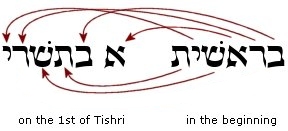
In other words, by rearranging the letters of the word bereshit ("in the beginning"), the phrase aleph b'Tishri ("on the 1st of Tishri") was formed, and therefore this date became associated with the anniversary of creation (or rather, the creation from Adam's perspective, i.e., the sixth day).
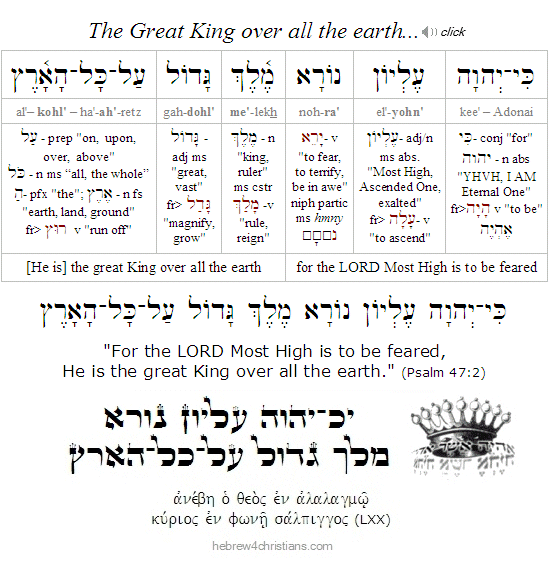
Rosh Hashanah therefore represents the day that God began to rule as King of the Universe. When Adam first opened his eyes and human consciousness was born, he immediately understood that the LORD created all things, including himself. According to midrash, Adam's first words were, "The LORD is King for ever and ever." God then said, "Now the whole world will know that I am King," and He was very pleased. The birthday of humanity is therefore the Coronation Day for the King of the Universe. Psalm 47 celebrates the Kingship of God that mentions the "shout" (teruah) and shofar blast of God's coronation:
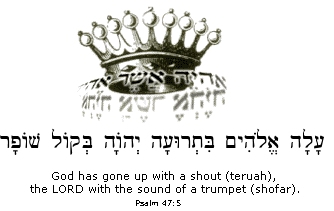 |
The sound of the shofar is meant to awaken our consciousness that the LORD is King of the Universe. "How blessed are the people who know the joyful sound (teruah), O LORD; they walk in the light of Your Presence" (Psalm 89:15).
|
|
|
The Christian and Rosh Hashanah
|
|
|
|
|
There are many things the Christian can learn from the Jewish observance of Yamin Nora'im and Rosh Hashanah that are helpful in our walk as talmidim (followers, students) of the Mashiach Yeshua:
First, the LORD God is indeed the King of all the earth, our Creator and Redeemer. He is Melech Gadol al-kol-ha'aretz, (מֶלֶךְ גָּדוֹל עַל־כָּל־הָאָרֶץ), a "great King over all the earth" (Psalm 47:2). Though Christians should acknowledge His righteous rule and Kingship at all times, Rosh Hashanah is a "sanctified reminder" of God's creative authority in our lives. Yeshua (Jesus) is called the Mashiach (מָשִׁיחַ), a term that denotes His Kingly dignity and royalty. He is also the Creator and Sustainer of all creation (Col. 1:16). He is coming to rule and reign from Jerusalem (Zion) in the near future. Christians will be judged according to their deeds of service (2 Cor. 5:10) and the world system (and Satan) will be judged during the Great Tribulation period that precedes the Second Coming. Just as the heavenly shofar was sounded from Sinai, so it will be one day sounded from Zion (Isa. 27:13).
As the only true King and Judge, God indeed has a Sefer HaChayim (Book of Life) as well as a Sefer Ha-Metim (Book of Death). The Scriptures clearly warn that on the Day of Judgment to come, anyone's name not found written in the Book of Life will be thrown into the lake of fire (Rev. 20:15).
Second, the month of Elul and the preparation for Rosh Hashanah reminds us to be ready for the soon appearance of King Yeshua our LORD. Though we do not know the exact day or hour of His return to possess His kingdom on earth, we are commanded to watch and be ready for His soon appearance. We ought, therefore, be in a constant state of repentance (teshuvah) as we seek to humble ourselves and walk with our God.
The New Testament links teshuvah with salvation (יְשׁוּעָה) itself. Yeshua's first message was "Repent and believe the gospel (בְּשׂוֹרָה)" (Mark 1:15), and Paul linked teshuvah with confession and trust in the saving work of the Messiah on our behalf (Rom. 10:8-13). Teshuvah implies a response to the Person of Yeshua that is demonstrated through confession that He is none other than YHVH, the LORD of Compassion and grace. The sound of the shofar is meant to awaken our hearts and to prepare for coming judgment.
Third, Rosh Hashanah itself, or rather Yom Teru'ah, has prophetic significance in the life of the Christian. The blowing of the shofar is prophetic of the rapture of the church, where those who are part of the Bride of Mashiach, the church, will experience everlasting transformation:
"Behold, I show you a mystery; We shall not all sleep, but we shall all be changed, in a moment, in the twinkling of an eye, at the last trumpet (shofar): for the trumpet (shofar) shall sound, and the dead shall be raised incorruptible, and we shall be changed." (1 Corinthians 15:51)
The Talmud states that on Rosh Hashanah the dead will be raised (Rosh Hashanah 16b). This corresponds to the "last trump" mentioned by the Apostle Paul (1 Cor. 15:52).
Fourth, the Tashlikh ceremony reminds us that our LORD is a God of new beginnings, and even if we have sinned and fallen away from Him, He is faithful to restore us and cast our sins away from us. After all, God sent His only Son Yeshua to be our Sin-Bearer and Kapparah, so we can take comfort in His forgiveness when we earnestly seek to repent from the harm we have done and begin anew with God.
Fifth, we should be grateful to the LORD for writing our names in the Lamb's Book of Life, or Sefer HaChayim. Of course we do not believe that we are made acceptable in the LORD's eyes by means of our own works of righteousness (Titus 3:5-6), but that does not excuse us from being without such works (as fruit of the Spirit in our daily life).
Sixth, the Akedat Yitzchak ("Binding of Isaac") is a major theme on Rosh Hashanah. According to Jewish tradition, God told Abraham that the ram's horn (shofar) should be blown on Rosh Hashanah to remind the people of the substitutionary sacrifice provided by the LORD Himself -- an echo of the First Sacrifice offered in Eden. How much more should we as believers in the greater sacrifice of Yeshua as our Lamb of God celebrate this day?
Finally, we anticipate the prophetic fulfillment of the LORD's covenant faithfulness to Israel when we understand that the Yamim Nora'im foreshadow the future repentance of national Israel in the days to come. This pictures the Great Tribulation and Yom Adonai - the Day of the LORD - that arrives just before national Israel's ultimate shuvah (return). Yom Kippur is the Holiday that pictures the full restoration of Israel to all her covenant promises with Yeshua as the recognized Kohen Gadol (High Priest) of the New Covenant. The Brit Chadashah will be embraced and Yeshua will be revealed as Israel's Savior, LORD, and Deliverer. Then "all Israel shall be saved" (Rom. 11:26).
|
|
|
|
Preparing for Rosh Hashanah
|
|
|
|
How do we prepare for Rosh Hashanah? Traditionally we prepare through three types of turning: 1) turning to God (teshuvah); 2) turning to others we've harmed or offended (mechilah), and 3) turning to those in need (tzedakah). In all three cases we can genuinely return to God only by choosing to embrace the truth about our lives.
Our prayers (tefillot) are offered in the plural, emphasizing that we are all interconnected. This is the idea of kol Yisrael arevim zeh bazeh: "All Israel is responsible for one another" (Talmud Shavuot 39a). We are all one "body" and should one member hurt, we all are diminished (1 Cor. 12:26). Avinu Malkenu - "Our Father, our King..." Our teshuvah means that we honestly examine ourselves and repair any breach we might have created in our relationships (James 5:16). And our tzedakah means that we turn away from ourselves entirely, considering the needs of others and their welfare instead of our own. May it please the LORD to help us all turn to Him for life!
|
|
|
|
Some Terms relating to Rosh Hashanah
|
|
|
|
- Teshuvah (תְּשׁוּבָה) - Literally: "returning"; a Hebrew term for repentance. Teshuvah means an "answer" to a shelah, or a question. It is a response to the call of God...
- Cheshbon ha-nefesh (חֶשְׁבּוֹן הַנֶּפֶשׁ) - Self-examination and soul searching for purposes of performing confession (viduy). We must recognize our sin as a sin (i.e., hakarat chata'ah [הַכָּרַת חַטָּאָה]). We must show remorse and regret for the sin (i.e., charatah [חֲרָטָה]). This is an emotional response in light of the harm our actions have caused others and ourselves.
- Mechilah (מְחִילָה) - The custom of first asking a wronged person's pardon in order to be forgiven by God on the Day of Atonement.
- Elul (אֱלוּל) - The month preceding the month of Tishri and set apart as a season of repentance and preparation for the Days of Awe.
- Selichot (סְלִיחוֹת) - Penitential prayers said during the last week of Elul. Often these prayers are found in a Rosh Hashanah Machzor (holiday siddur or prayerbook).
- Machzor (מַחְזוֹר) - High Holiday prayer book (like a siddur, but for the Holidays). The word machzor means "cycle."
- L'Shanah Tovah Tikatevu (לְשָׁנָה טוֹבָה תִּכָּתֵבוּ) - This phrase is a customary greeting before the Jewish New Year and means "May you be inscribed for a good year (in the Book of Life)!" and is often shortened to "Shanah Tovah" (שָׁנָה טוֹבָה):

Note that this phrase is sometimes lengthened to: L'shanah Tovah Tikatevu vetehatemu (לְשָׁנָה טוֹבָה תִּכָּתֵבוּ וְתֵחָתֵמוּ), "May you be inscribed and sealed for a good year (i.e. in the Book of Life). It is also common to bless others by saying, Ketivah Tovah (כְּתִיבָה טוֹבָה), "A good inscription (in the Book of Life)."
- Erev Rosh HaShanah (עֶרֶב ראשׁ הַשָּׁנָה) - The evening before Rosh Hashanah marked by additional services at the synagogue.
- Rosh Hashanah (ראשׁ הַשָּׁנָה) - "The Head of the Year." The Jewish New Year. Celebrated on Tishri 1 and 2.

According to the traditional Jewish sages, there are actually four "New Year's Days" in the Jewish calendar:
- Nisan 1 - The Biblical New Year, sometimes called New Years Days for kings
- Elul 1 - The New Years Day for tithes
- Shevat 15 (Tu B'shevat) - The New Years Day for trees
- Tishri 1 - The New Years Day for years and the beginning of the Days of Awe
- Yom Teru'ah (יוֹם תְּרוּעָה) - The "Feast of Trumpets" and progenitor of Rosh Hashanah. Teru'ah means a loud noise either by blowing a shofar (e.g. Lev. 25:9), silver trumpets (Numbers 10:5-6) or by shouting (Psalm 100:1).

The purpose of Yom Teru'ah was to shout unto the LORD in prayer -- similar to the idea expressed in the Psalms such as "Shout unto God with a loud voice!"
(Psalm 47:2).
- Yom Ha-Zikaron (יוֹם הַזִּיכָּרוֹן) - the "Day of Remembrance" (Lev. 23:24) in reference to the commandment to remember to blow the shofar (teruah) to coronate God as King of the Universe. The blast of the shofar is meant to jolt us from our sleep. We are to remember who we really are by remembering that the LORD is our King.
- Yom Ha-Din (יוֹם הַדִּין) - The "Day of Judgment" when all creatures stand before God. According to rabbinical tradition, on Rosh Hashanah God opens three books. In the first, the righteous are inscribed for life in the coming year; in the second, the wicked are inscribed for death; but in the third, the names of those who are not easily classified (i.e., most people) are temporarily inscribed. These people then have ten days to repent before their fates are sealed on Yom Kippur (Rosh Hashanah 16b).
- Shofar (שׁוֹפָר) - A ram's horn blown on the Jewish New Year and other special occasions. The shofar is also called keren ha-yovel (קֶרֶן הַיּוֹבֵל), "the ram's horn," or sometimes keren shel ayil (קֶרְן שֶׁל אַיִּל). There are four primary types of shofar blasts:
- Tekiah (תְּקִיעָה) - A long single blast (the sound of the King's coronation)
- Shevarim (שְׁבָרִים) - Three short wail-like blasts (signifying repentance)
- Teru'ah (תְּרוּעָה) - Nine staccato blasts of alarm (to awaken the soul)
- Tekiah ha-Gadol (תְּקִיעָה הַגָּדוֹל) - A great long blast
- Baal Tekiah (בַּעַל תְּקִיעָה) - One who is expert at sounding the shofar during the Rosh Hashanah services.
- Tekiat Shofar (תְּקִיעָת שׁוֹפָר) - The sounding of the shofar (ram's horn) at the beginning of the New Year services and at the conclusion of the Day of Atonement.
- Tashlich (תַּשְׁלִיךְ) - lit. "Casting off." A traditional ceremony in which individuals symbolically cast their sins into a body of water. We walk to flowing water, such as a creek or river, on the afternoon of the first day of Rosh Hashanah and empty our pockets into the river, symbolically casting off our sins.
- Aseret Yemei Teshuvah (עֲשֶׂרֶת יְמֵי תְּשׁוּבָה) - The Ten Days of Repentance from Rosh Hashanah to Yom Kippur, otherwise called the "Days of Awe" (Yamim Nora'im).
- Yamim Nora'im (יָמִים נוֹרָאִים) - The (ten) Days of Awe or the High Holy Days.
- Shabbat Shuvah (שַׁבָּת שׁוּבָה) - The Sabbath that falls during the Ten Days of Repentance, usually observed by listening to sermons about repentance in the synagogue. Shabbat Shuvah is called the "Shabbat of Return" because its special haftarah reading begins with the words Shuvah Yisrael "Return O Israel," from the prophecy of Hosea.
- Tzom Gedaliah (צוֹם גְּדַלְיָה) - the Fast of Gedaliah, one of the minor fast days, held during the Ten Days of Repentance before Yom Kippur.
- Al Chet (עַל חֵטְא) - The recitation of sin during the Yom Kippur service. Viduy (confession) is made in the plural ("we have…") enumerating every conceivable sin that may have been committed by the Jewish community. Chet () means "missing the mark" and is the general Hebrew term for sin.
- Yom Kippur (יוֹם הַכִּפֻּרִים) - The Day of Atonement and Judgment on Tishri 10.
|
|
|
|
"May you be inscribed and sealed for a good year!"
- To a man: לשנה טובה תכתב ותחתם - l'shanah tova tikkatev vetechatem
- To a woman: לשנה טובה תכתבי ותחתמי - l'shanah tova tikkatevi vetechatemi
- To a mixed group: לשנה טובה תכתבו ותחתמו - l'shanah tova tikkatevu vetechatemu
You might also add: "Immediately, for a good life and for peace."
- לאלתר לחיים טובים ולשלום - le'altar lechayim tovim ul'shalom
The most common form of Rosh Hashanah greeting is probably: l'shanah tovah umetukah! ("to a good and sweet year!") and the appropriate response is: Gam lekha! (same to you) or simply Gamzu! (also to you).
|
|
|
|
|
|
Related Discussion:
|
|
|