|
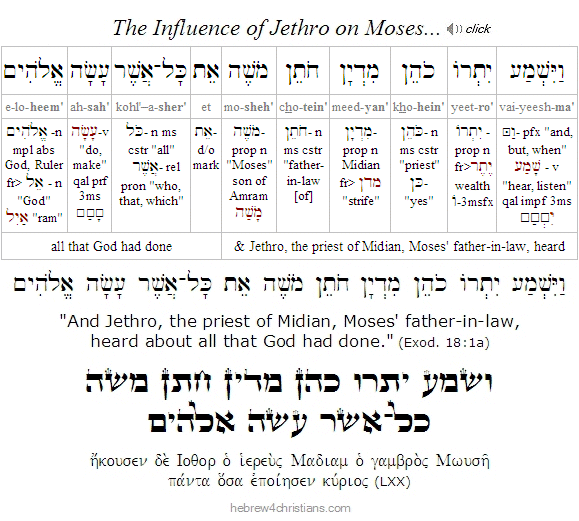
Moses' father-in-law Jethro (Yitro) had heard how God had blessed his son-in-law and his kinsmen by delivering them from their oppression in Egypt, and went to Rephidim to meet with him. Jethro also brought Moses' wife Zipporah and his two sons Gershom and Eliezer (all of whom had apparently returned to Midian before the exodus of the Israelites). Upon their reunion, Moses told his father-in-law all that the LORD had done to Pharaoh and to the Egyptians for Israel's sake, all the hardship that had come upon them in the way, and how God had delivered them. Jethro rejoiced, blessed the LORD, and offered sacrifices - which were then communally eaten with Moses' brother Aaron and the elders of the Israelites.
The following day, upon seeing Moses beset with the concerns of the people, Jethro wisely advised that a hierarchy of judges could help him bear the burden of governing the Israelites, thereby freeing Moses to be a more effective intercessor before the LORD. Moses agreed to his father-in-law's advice, and then Jethro returned to his home in Midian. (Jethro is highly revered in Jewish tradition as a Ger Tzedek (a righteous convert). According to Midrash, Jethro's original name was Yeter (i.e., יֶתֶר, "remainder") but was changed by God to Yitro (i.e., יִתְרו, "His abundance"). The extra Vav (ו) at the end of his name suggests that the entire episode involving the appointment of judges was added to the Torah to honor him (ironically, Yitro is considered the "father of the Sanhedrin" in Jewish tradition).
After the third new moon after leaving Egypt (i.e., the 1st day of the month of Sivan), the Israelites encamped opposite Mount Sinai, the place where Moses was initially commissioned. Moses ascended the mountain, and there God commanded him to tell the leaders that if they would obey the LORD and keep His covenant, then they would be mamlekhet kohanim ve'goy kadosh -- a "kingdom of priests and a holy nation."
Hebrew Lesson
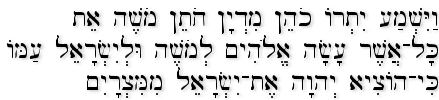
Exodus 19:5a Hebrew reading:
 |
Hebrew Lesson
Exodus 19:6 Hebrew reading:
After delivering this message, the people responded by proclaiming, kol asher diber Adonai na'aseh ("all that the LORD has spoken, we shall do"). Moses then returned to the mountain and was told to command the people to sanctify themselves before the LORD descended upon the mountain in three days. The people were to abstain from worldly comforts and not so much as touch (under penalty of death) the boundaries of the mountain. "Be ready for the third day; for on the third day the LORD will come down on Mount Sinai in the sight of all the people."
 |
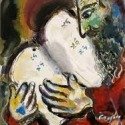
On the morning of the third day (the sixth of Sivan, exactly seven weeks after the Exodus), all the children of Israel gathered at the foot of Mount Sinai, where the LORD descended amidst thunder, lightning, billowing smoke, fire, and the voluminous blast of the shofar. Moses then ascended, but the LORD told him to go back down and warn the people - including the priests - not to set foot on the mountain lest they be consumed by the wrath of the LORD.
The LORD then declared the foundation of moral conduct required of the people,
the Ten Commandments:
- I am the LORD your God who delivered you from Egypt ...
- You shall have no other gods before Me ...
- You shall not take the name of the LORD your God in vain ...
- Remember the Sabbath day to keep it holy ...
- Honor your father and mother ...
- You shall not murder
- You shall not commit adultery
- You shall not steal
- You shall not bear false witness against your neighbor
- You shall not covet ...
אָנכִי יְהוָה אֱלהֶיךָ
אֲשֶׁר הוֹצֵאתִיךָ מֵאֶרֶץ מִצְרַיִם
מִבֵּית עֲבָדִים
a·no·khee · Adonai · E·lo·hey'·kha
a·sher · ho·tzei·tee'·kha · mei·e'·retz · meetz·ra'·yeem
mee·beit · a·va·deem

"I am the LORD your God,
who brought you out of the land of Egypt,
out of the house of slavery"
(Exod. 20:2)
Hebrew Study Card
Hebrew Lesson
Exodus 20:2 Hebrew reading:
 |
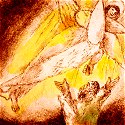
According to Jewish midrash, the sixth of Sivan was a Shabbat, and the Israelites awoke to loud claps of thunder, streaks of lightning, and smoky fire surrounding Mount Sinai. The sound of a shofar grew louder and louder until terror gripped the heart of the people. Moses called out for the Israelites to draw closer, and then the heavens were ripped open and the entire mountain was uprooted and suspended in the air. The dirt and rock of Mt Sinai were turned into sheer crystal and the Israelites were able to look up through the transparent terrain. Suddenly, the Voice of the LORD called out to the Israelites, "Either you will accept the Torah or be buried here!" The Israelites cried out in response: kol asher diber Adonai na'aseh ("all that the LORD speaks, we shall do"). The LORD then spoke, in a single utterance, all Ten Commandments at once. The heavens and earth trembled and rivers reversed their course. After the people regained their composure, the LORD slowly repeated the list of the commandments, beginning with the first one: "I am the LORD Thy God who took you out of Egypt." As the LORD began speaking the second commandment, however, the people began falling back in fear and begged Moses to be their "middleman" or mediator before God.
The parashah ends with the terrified Israelites beseeching Moses to be their mediator lest they die before the Presence of God. The people then stood far off, while Moses alone drew near to the thick darkness where God was.
|