|
|
 |
|
|
|
|
Weekly Torah Reading
|
|
|
|
Parashat Emor ("Say, Speak!")
|
|
|
Click on the links to display the Scriptures:
|
|
|
|
|
|
|
The Holiness Code of Israel...
|
|
|
|
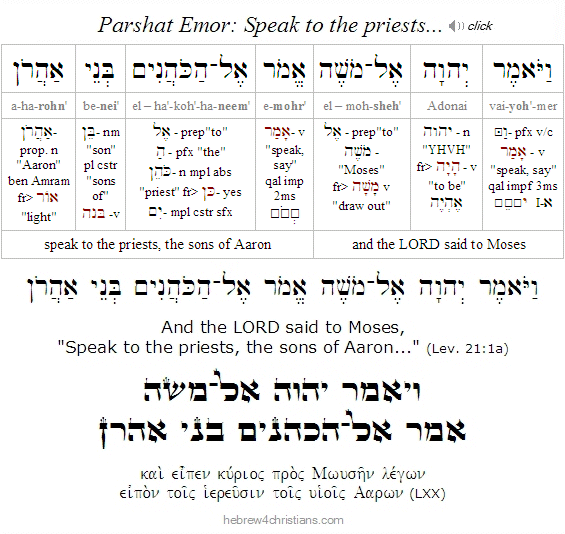
Parashat Emor opens with the commandment to Moses: emor el-haKohenim benei Aharon, "say to the priests, the sons of Aaron..." and then lists certain commandments regarding service in the Mishkan (Tabernacle), including restrictions about touching corpses, prohibitions regarding the customs of the pagan nations, and rules concerning the marriage of a kohen (priest). The function of these commandments is twofold: to promote holiness and to keep from profaning the Name of God.
The parashah begins:
|
|
|
|
|
|
And the LORD said unto Moses,
"Speak unto the priests the sons of Aaron, and say unto them,
There shall none be defiled for the dead among his people" (Lev. 21:1)
|
|
|
|
Meet the Kohens and the Levites
|
|
|
|
|
|
|
|
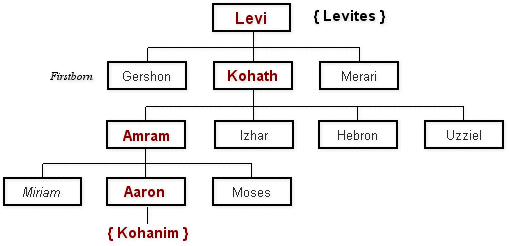
Jacob, of course, had 12 sons, who became the founders of the twelve tribes (shevatim) of Israel. His son Levi had three sons: Gershon, Kohath, and Merari (Gen. 46:11; Ex. 6:16-26) who became heads of the clans of the Levites. However, God exclusively chose Levi's great grandson Aaron and his descendants from among all the Levites to be His priests (Num. 17:1-10).
In other words, there are three "classes" within the structure of Jewish society: the Kohen, the Levi and the Israelite. Only the Kohanim are physical descendants of Aaron and assigned the priestly duties of offering korbanot (sacrifices). The other descendants of Levi were assigned roles to assist in the maintenance of the mishkan, such as carrying various vessels, assembling it when the LORD moved the camp, and so on. But only the Kohanim were allowed to perform avodah (priestly service) on behalf of Israel. The Kohanim, then, are a subset of the Tribe of Levi. Thus, while every Levite is an Israelite (a descendant of Israel), not every Levite (descendant of Levi) is a Kohen (descendant of Aaron):
|
|
|
 |
|
|
|
Why were they chosen?
|
|
|
|
In a word: loyalty to the LORD God of Israel. The shevat (tribe) of Levi was chosen to serve in the mishkan on account of their loyalty to the LORD during times of national peril. For example, they refused to contribute gold or partake in the sin of the Golden Calf, and were so zealous for the LORD that they slew 3,000 of the instigators of the rebellion. Moreover, according to the sages, the Levites continued the practice of circumcision while in Egypt, even when the other tribes of Israel had abandoned the practice. Aaron's descendants were rewarded with being kohanim on account of his faithful service with Moses during the time of yetziat mitzraim (the Exodus from Egypt).
|
|
|
|
|
Additional Restrictions on the Kohanim (priests)
|
|
|
|
Since the kohanim were set apart for direct service to the LORD, additional restrictions applied to them that did not apply to the rest of the clan of Levi (or to the Israelites in general). For example, they may not touch a dead body or they would be considered tamei (unclean) for service at the mishkan. The only exceptions were for a kohen's seven closest relatives: his wife, mother or father, son or daughter, and brother or (unmarried) sister. However, if a kohen buries any of these, he would be considered tamei and unable to serve in the mishkan until he was ceremonially purified by water mixed with ashes from a parah adumah (red heifer).
A kohen Gadol (High Priest) may not even bury his closest relatives, however, unless it is for meit mitzvah, burying an abandoned Jewish body when there is no one else who can do so. If the High Priest does this, he is likewise considered tamei and must undergo a purification process.
In addition, a kohen may not marry a woman who has been divorced or is a widow (a son born to such is called chalal and is unfit for service as a priest), and he must be physically free of any defect (called a mum).
The kohanim were supported by terumot (contributions) from the Israelite people. A Jewish farmer who harvest grains must give part of it to the priests (called Ma'aser Rishon), just as a Jewish rancher was to give a portion of his cattle (called Ma'aser behemah). Every kohen and his family could eat terumah if they were tahor (pure), but if they were tamei, they had to undergo ceremonially cleansing first.
All korbonot (sacrifices) offered at the mishkan must be defect-free. The sages listed over 50 mumim (defects) that would invalidate an offering, and it was the responsibility of the kohanim to ensure the quality of the sacrifices.
|
|
|
|
|
|
|
|
|
|
|
 |
|
|
|
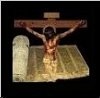
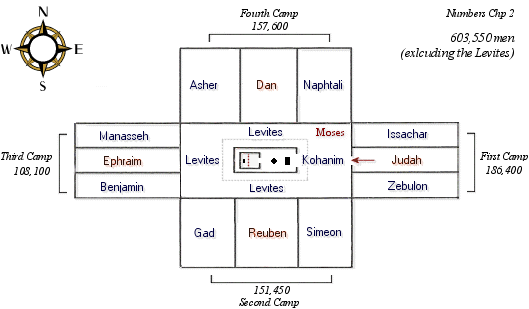
Though it is not explicitly mentioned in this portion of Torah, notice how the order of the camp of the Israelites resembled a cross, with the Kohanim next to the tribe of Judah, from whom would come Yeshua, our Kohen Gadol of the new covenant. Baruch HaShem - the camp of the LORD is itself a picture of the cross, the place of ultimate sacrifice, where the King of the Jews would lay down His life to ransom captive Israel!
|
|
|
|
Chillul HaShem - Kiddish HaShem
|
|
|
|
"Chillul Hashem" (pronounced khee-LOOL hah-SHEM: חִלוּל הַשֵּׁם) means "desecration of God's Name." Colloquially, it refers to anything that gives the LORD, the Torah, or the Jewish people a bad name or a bad reputation.
According to certain sages, chillul hashem refers to sinning in such a way as to desecrate the Name of the LORD (including murdering someone, serving other gods, or having sexual relations with someone who is forbidden). A Jew is required to die rather than to commit such sins, and those who commit these offenses dishonor the LORD by refusing to give up their lives. In other words, when a Jew is faced with the choice of committing one of these sins or being executed, then he should choose to die, or else he commits chillul haShem. Also, if a non-Jew commands a Jew to any sin before the presence of 10 or more other Jews, he also must let himself be killed rather than to obey the evil command.
Kiddush HaShem ("sanctifying the Name," קִדּוּשׁ הַשֵּׁם) means that we honor the Name of the LORD by giving up our lives. It is therefore the exact opposite of chillul HaShem. Every time a Jew recites the Shema, he or she affirms that they would rather die than to deny the great and glorious Name of the LORD. Note that the sages say that if a Jew is about to give up their life for God, he may not think, "God will save me from death in this case," but must expect to be killed. Thus when Shadrach, Meshach, and Abednego were faced with the fiery furnace of Nebuchadnezzar's evil design, they did not presume that the LORD would perform a miracle for them, but fully expected to give up their lives for the sake of kiddush HaShem (Daniel 3).
|
|
|
Appointed times of the LORD
|
|
|
|
The second part of the parashah lists the eight main mo'edim (מוֹעֲדִים) -- the appointed times of the Jewish calendar. These "set apart" times are also referred to as mikra'ei kodesh (מִקְרָאֵי קדֶשׁ), "times in which holiness is proclaimed" (Lev. 23:2). Colloquially, these are called yamim tovim (i.e., the Jewish holidays). Although there are some others mentioned in Torah (i.e., Rosh Chodesh), this portion lists the following "appointments" with the LORD (click on each for more complete description):
|
|
|
|
- The Sabbath - weekly observance of Shabbat. According to the sages, Shabbat is the most important of the appointed times, even more important than Yom Kippur and the Ten Days of Awe.
- Pesach (Nisan 14), also called "Passover."
- Unleavened Bread (Nisan 15-22); note that "Counting of the Omer" is first mentioned in this section of Torah (Lev. 23:9-16).
- Firstfruits (Nisan 16), also called Reishit Katzir.
- Shavuot (Sivan 6), also called "Pentecost" or "Weeks."
- Yom Teru'ah (Tishri 1), also called "Rosh Hashanah" (note that this is the first time this is revealed in Torah).
- Yom Kippur (Tishri 10) also called the "Day of Atonement."
- Sukkot (Tishri 15-22) also called "Tabernacles" or "Booths" (note that this is the first time the mitzvah to dwell in sukkas and the waving of the arba minim (four species) are mentioned in the Torah).
|
|
|
|
Shalosh Regalim...
|
|
|
|
|
Passover, Shavuot ("Pentecost"), and Sukkot ("Tabernacles") are called shalosh regalim (שָׁלוֹשׁ רְגָלִים), the three holidays of pilgrimage (to Jerusalem) in which every Jewish male was required to offer sacrifices at the mishkan (and later at the Temple).
Each of these yamim tovim (holidays) are also times of Sabbath rest (menuchah), wherein no regular work is allowed. Rabbinical halakhah defines such "work" (melakhah) as any action that falls into one of the 39 categories of labor (Avot Melakhah), identified when constructing the mishkan. In other words, the mo'edim were to be sacred times, apart from the profane concerns of everyday life.
 |
Note that in an attempt to include Chanukah and Purim as apart of the divine calendar revealed in the Torah, the Jewish sages note that immediately after the LORD revealed these holidays, he instructed Moses to keep the menorah in the Holy Place of the Mishkan burning olive oil continually (ner tamid) and to provide weekly "showbread," or twelve loaves of bread on the shulchan inside the Holy Place. The sages say that the instructions regarding the oil of the menorah alludes to Chanukah, whereas the lechem ha-panim ("showbread") alludes to hester panim - or "hiding of face" and the nes nistar (hidden miracle) of the Esther story.
Note also that there is a restatement of the commandment to leave food for the poor and the stranger (pe'ah, leket, etc.) that appears in the midst of the list of the various holidays (see Lev. 23:22), which the sages said was intended to remind us to help those in need, especially during these times. Hence we see that giving of tzedakah is a regular part of the Jewish holidays (e.g., giving ma'ot chittim [מַעוֹת חִטִּים] "money for wheat" during Passover, matanot la'evyonim [מַתָּנוֹת לָאֶבְיוֹנִים] for Purim, and so on). The sages ask, "Why did the Torah place the mitzvah of helping the poor while speaking about the holidays and their particular sacrifices? To teach us the greatness of charity: 'God credits whoever gives charity to the poor as if they built the Holy Temple and presented offerings therein to God.' Giving a gift to the poor is giving a gift to God Himself!"
Since there are at least 50 weekly Sabbaths in a Jewish year in addition to the seven prescribed holidays (not to mention Rosh Chodesh and the other holidays such as Purim, Chanukah, Israel Independence Day, etc.), it is no wonder that the Scriptures declare: "A person with a cheerful heart has a continual celebration" (Prov. 15:15). The moedim are times to cheerfully give thanks to the LORD for all He has done... The LORD gave us His calendar so we can "Rejoice in the Lord always..." (Phil. 4:4).
In this connection, notice that the calendar is divided into two equal parts of exactly six lunar months each, both of which center on redemptive rituals and end with harvests. The first half of the divine calendar begins on Rosh Chodashim (i.e., Nisan 1; Exod. 12:2), which is followed by the instruction to select the Passover lamb on Nisan 10 (Exod. 12:3), slaughter it in the late afternoon of 14th (Exod. 12:6-7) and eat it on the 15th (Exod. 12:8). The Passover itself initiated the seven day period of unleavened bread (from Nisan 15-22), wherein no leaven was to be consumed (Exod. 12:15-20). On an agricultural level, Passover represents spring, the season of the firstfruit harvests (i.e., chag ha-katzir: חַג הַקָּצִיר), and so on. On the "other side of the calendar," Yom Teruah (or Rosh Hashanah) marks the start of the second half of the year (Exod. 23:16, Lev. 23:24), which is followed by the Yom Kippur sacrifice ten days later, on Tishri 10 (Lev. 23:27), followed by the weeklong festival of Sukkot ("Tabernacles") that occurs from Tishri 15-22 (Lev. 23:34-36). On an agricultural level, Sukkot represents the reaping of the the fall harvest (i.e., chag ha'asif: חַג הָאָסִף) at the "end of the year" (Exod. 23:16). In other words, in some respects the fall holidays "mirror" the spring holidays on the divine calendar, and indeed, both sides of the calendar represent different aspects of God's redemptive plan for the world. As I've written about elsewhere, the spring holidays represent the first advent of Yeshua (i.e., Yeshua as Suffering Servant, Lamb of God, Messiah ben Yosef), whereas the fall holidays represent His second advent (Yeshua as Conquering Lord, Lion of the Tribe of Judah, Messiah ben David).
Cycles of Time...
Instead of thinking of time as a linear sequence of events (i.e., the measurement of linear, progressive motion), Jewish thinking tends to regard it in terms of a spiral or "helix," with a forward progression delimited by an overarching (and divine) pattern that recurs cyclically throughout the weeks, months, and years of life. This can be seen in the Hebrew language itself. Some of the sages note that the Hebrew word for "year" - shanah (שָׁנָה) - shares the same root as both the word "repeat" (שָׁנָה) and the word "change" (שִׁנָּה). In other words, the idea of the "Jewish year" implies ongoing "repetition" - mishnah (מִשְׁנָה) - or an enduring "review" of the key prophetic events of redemptive history as they relived in our present experiences... (The idea that the events of the fathers were "parables" for us is expressed in the maxim: מַעֲשֵׂה אֲבוֹת סִימָן לַבָּנִים / ma'aseh avot siman labanim: "The deeds of the fathers are signs for the children.") The Jewish year then repeats itself thematically, but it also changes from year to year as we progress closer to the coming Day of Redemption... We see this very tension (i.e., constancy-change), for example, in the "dual aspect" of the ministry of Yeshua our Messiah. In His first advent Yeshua came as our Suffering Servant and thereby fulfilled the latent meaning of the spring holidays, and in His second advent He will fulfill the latent meaning of the fall holidays. Nonetheless, we still commemorate both the "type and its fulfillment" every year during Passover by extending the ritual of the Seder to express the reality of Yeshua as the world's "Lamb of God," just as we commemorate the fall holidays in expectation of His rule and reign as our King....
None of this is meant to suggest, by the way, that there isn't an "end point" in the process - a Day in which we will be with God and enjoy His Presence forever... The idea of the "cycles" of time, or "timeless patterns in time," suggests, however, that the "seed" for our eternal life with God has already been sown - and was indeed foreknown even from the Garden of Eden, despite the fact that we presently groan while awaiting the glory of heaven.
The Law of Retributive Justice
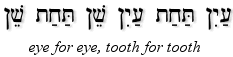
Parashat Emor concludes with the incident of a man executed for blasphemy (i.e., abusing the Divine Name), and then provides the principle of Lex Talionis, or "an eye for an eye, a tooth for a tooth" concerning matters of governmental justice. Jewish tradition has regarded the "eye for eye" statement as hyperbole, explaining that unless adequate compensation is made for the loss of which a person is liable, then the guilty person is subject to the "karma" principle of middah keneged middah ("measure for measure").
|
|
|
|
|
|
|
|
|
|
|
|
|
|
|
|
|
 |
|
|
|
'ayin tachat 'ayin, shein tachat shein
|
|
|
|
Notice that Yeshua directly addressed this principle in Matthew 5:38-39.
|
|
|
 |
|
|
|
Haftarah Reading Overview
|
|
|
|
In the Haftarah for Emor, the prophet Ezekiel encourages the exiled Jewish people by foretelling the glory of the future Temple that will be built after the Final Redemption, during the 1,000 year Kingdom of Zion. Interestingly, the priests of the Millennial Temple are called benei Tzaddok, "sons of righteousness," who kept the charge of God's sanctuary when the Levites and the people of Israel went astray. It is these benei Tzaddok who shall come near to God to minister to Him during this time, whereas the Levites will be forbidden to enter the Holy Place. Moreover, since Yom Kippur has been fulfilled, each of these priests will dress and function as a High Priest unto the LORD, and the sacrificial system will be implemented so that Israel can commemorate the atoning sacrifice of Yeshua as their Savior and true King.
|
|
|
|
|
|
|
Brit Chadashah Overview
|
|
|
|
The Mashiach Yeshua is the Stone which was rejected but has become the Cornerstone (Psalm 118:22). Whoever believes in him will not be put to shame.
The Brit Chadashah passage comes from the Apostle Peter who states that the believer in the Mashiach Yeshua is made part of the living Temple of the LORD, made part of a holy priesthood in order to offer "spiritual sacrifices" acceptable to the LORD. The believer is now chosen by God to be am segulah - a treasured people - called out to proclaim the greatness of God who delivered him from darkness to light. Peter concludes by directly applying Hosea 2:23 to the Christian: "Once you were not a people, but now you are God's people; once you had not received mercy, but now you have received mercy."
|
|
|
 |
|
|
|
 |
|
|
|
|
|
Blessing:
|
|
|
|
|
 |
|
|
|
|
|
Hebrew Audio Files:
|
|
|
|
|
Click the following links to hear the desired chapters read from this week's Torah:
|
|