|
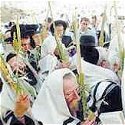
According to the Mishnah (Sukkah 4:5), during the Temple period, willow branches were placed around the altar and a parade was made around the altar while the people recited: Hoshi'ah na (הוֹשִׁיעָה נָּא) - "Save us, please!" (Psalm 118:25).
אָנָּא יְהוָה הוֹשִׁיעָה נָּא אָנָּא יְהוָה הַצְלִיחָה נָּא
בָּרוּךְ הַבָּא בְּשֵׁם יְהוָה בֵּרַכְנוּכֶם מִבֵּית יְהוָה

"Please, O LORD, save us now; please O LORD, prosper us now!
Blessed is the one who comes in the name of the LORD!
We bless you from the house of the LORD."
(Psalm 118:25-26)

Hebrew Study Card
 |
The New Testament records that it was on the last day of Sukkot (i.e., "the great day") - perhaps just after the water libation ceremony - that Yeshua stood up and cried out, "If anyone thirsts, let him come to me and drink. Whoever believes in me, as the Scripture has said, 'Out of his heart will flow rivers of living water'" (John 7:37-38).
The early sages had taught "at the feast of Sukkot judgment is made concerning the waters," referring to the rain needed for the forthcoming planting season. The historian Josephus calls the ceremonial drawing of water from the Pool of Siloam "the very sacred close (συμπέρασμα) of the year," since the amount of rainfall over the next few months would directly impact the harvest in the spring. The need for rain over the winter months in Israel was an ongoing need for the welfare of the people...
"With joy shall you draw water out of the wells of salvation" (Isa. 12:3). Yeshua once encountered a woman who had come to draw water from a well and said, "Everyone who drinks of this water will be thirsty again, but whoever drinks of the water that I will give him will never be thirsty again. The water that I will give him will become in him a spring of water welling up to eternal life" (John 4:13-14). Likewise he taught earlier in his ministry, "Blessed are those who hunger and thirst for righteousness, for they shall be satisfied" (Matt. 5:6). Just as the people understood they needed physical rain to sustain their physical lives, so Yeshua pointed to himself as the source of "spiritual rain," or "living water" that would sustain their spiritual lives. The "rain of blessing," then, referred to the refreshing power of the Holy Spirit that would become an inner source of life for those who believe... As Yeshua said, "out of his inmost being will flow rivers of living water," which some have thought refers back to the miraculous waters that were given in the desert: "Each soul will be a rock smitten in the thirsty land, from which crystal rivers of life-giving grace shall flow." Indeed the Hallel that is recited during the festival includes the verse: "He turned the rock into a pool of water, the flint into a fountain of waters" (Psalm 114:8).
If Hoshana Rabba represents "judgment delivered," then Yeshua was teaching that the Spirit of God would deliver the good verdict - and the true freedom - that Messiah secured for us through his sacrificial death as our atonement before God...
|