|
|
|
|
|
|
|
|
|
|
||
|
Hebrew Names of God |
|||||||||||
|
El and El Constructs given in Tanakh |
|||||||||||
 |
|||||||||||
|
Introduction |
|||||||||||
|
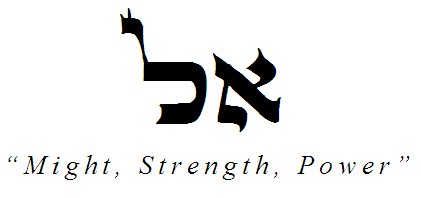
God   אֵל- El [basic form] The name for God meaning "might, strength, or power." The basic form El (אֵל) appears over 250 times in the Tanakh. Appears primarily in construct relation when describing the God of Israel. Note that the pictogram for the word El appears as a "strong Controller" or Sovereign:  The One God  אֵל אֶחָד - El Echad The One God (Mal. 2:10). Echad means one in Hebrew and hearkens to the Shema. The Faithful God  El Hanne'eman. The Faithful God (Deut. 7:9). From aman, to support, nourish. The God of Truth  El Emet The God of Truth (Psalm 31:5). Emet means firmness, faithfulness, reliableness. The Righteous God  El Tzaddik The Righteous God (Isa. 45:21). Tsaddik means just, righteous. The All-Sufficient God  El Shaddai. The All Sufficient God. Shad means "breast" in Hebrew (Gen. 17:1; 28:3; 35:11; 43:14; 48:3; 49:25; Exod. 6:3; Num. 24:6; Ruth 1:20; Job (various references); Psa. 22:10; 68:15; 91:1; Ezek. 1:24; 10:5; 23:21 etc.). Occurs 48 times in the Tanakh. In Genesis 17:1, YHVH said to Abram: "I am El Shaddai. Walk before me and be perfect." So why did the LORD choose to reveal Himself using this distinctive Name to Abram? Most English translations render El Shaddai as "God Almighty," probably because the translators of the Septuagint (i.e., the Greek translation of the Old Testament) thought Shaddai came from a root verb (shadad) that means "to overpower" or "to destroy." The Latin Vulgate likewise translated Shaddai as "Omnipotens" (from which we get our English word omnipotent). God is so overpowering that He is considered "Almighty." According to some of the sages, Shaddai is a contraction of the phrase, "I said to the world, dai (enough)" (as in the famous word used in the Passover Haggadah, Dayeinu -- "it would have been sufficient"). God created the world but "stopped" at a certain point. He left creation "unfinished" because He wanted us to complete the job by means of exercising chesed (love) in repair of the world (tikkun olam). Jacob's blessing given in Genesis 49:25, however, indicates that Shaddai might be related to the word for breasts (shadaim), indicating sufficiency and nourishment (i.e., "blessings of the breasts and of the womb" (בִּרְכת שָׁדַיִם וָרָחַם)). In this case, the Name might derive from the contraction of sha ("who") and dai ("enough") to indicate God's complete sufficiency to nurture the fledgling nation into fruitfulness. Indeed, God first uses this Name when He refers to multiplying Abraham's offspring (Gen. 17:2). 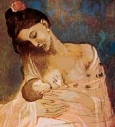 El Shaddai is used almost exclusively in reference to the three great patriarchs: Abraham, Isaac, and Jacob, and (according to Exodus 6:2-3) was the primary name by which God was known to the founders of Israel (the Name YHVH given to Moses suggests God's absolute self-sufficiency). The word "Shaddai" (by itself) was used later by the prophets (e.g., Num. 24:4; Isa. 13:6, Ezek. 1:24) as well as in the books of Job, Ruth, and in the Psalms. In modern Judaism, Shaddai is also thought to be an acronym for the phrase Shomer daltot Yisrael - "Guardian of the doors of Israel" - abbreviated as the letter Shin on most mezuzot:
The Most High God  El Elyon. The Most High God. This title stresses God's strength, sovereignty, and supremacy (Gen. 14:20; Psalm 9:2). Sometimes referred to in Scripture simply as Elyon (e.g., Num. 24:16). The Everlasting God  El Olam God Everlasting; The Everlasting God; (Gen. 21:33, Psalm 90:1-3, 93:2; Isa. 26:4). Olam means world, universe, everlasting time or space. The God who sees me  El Roi (roh-ee') God Who Sees me; Hagar's name for God when He saw her affliction (Gen. 16:13). Notice the Chateph Qamets under the Resh. The God of Jeshurun  El Yeshurun. The God of Jeshurun Yeshurun means "the righteous (yashar) people": Israel's ideal character and high calling (Deut. 32:15; 33:5,26; Isa. 44:2). The Mighty God  El Gibbor The Mighty God. Picture of God as a Warrior and Champion (Isa. 9:6). Gibbor means strong, mighty, or heroic. The God of knowledge  El De'ot. The God of Knowledge (1 Sam. 2:3). God has perfect knowledge of all things, from beginning to end (omniscient). The Great God  El Haggadol. The Great God (Deut. 10:17). When used about God, gadol means great, grand, awesome. The God of Glory  El Hakkavod The God of Glory (Psalm 29:3). Kavod means glory, weight, and honor. Note the use of the Maqqef (binder) in this construct name. The Holy God 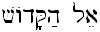 El Hakkadosh. (Sometimes transliterated Hakadosh). The Holy God (Isa. 5:16). Kaddosh means sacred, holy, set apart, utterly unique and one of a kind. The God of the Heavens 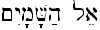 El Hashamayim. The God of the Heavens (Psalm 136:26). Shamayim refers to the abode of God. The God of my life  El Chaiyai The God of my life (Psalm 42:8). The first person personal pronoun ending is used with the word Chayim. The Gracious God  El-Channun The Gracious God (Jonah 4:2; Exod. 34:6). Chen means grace. The God of Israel  El Yisrael. The God of Israel (Psalm 68:36 [H]). Israel comes from the verb sara, contend, and associates El with YHVH (Gen. 32). The God of my strength  El Sali God of my Strength; God my Rock (Psalm 42:9). Sala means cliff or crag in Hebrew, used poetically like Tzur (Rock). The God of Patience and Consolation  El ha'savlanut ve'ha'nechamah The God of all patience and consolation (Romans 15:5). Note that erekh apayim means "patient" and tanchumim is the Hebrew word for consolation (which comes from nichum, Isa 57:18 - nichumin - comforts). The God of Compassion  El Rachum. The God of Compassion; Compassionate God (Deut. 4:31). From racham (Qal). Rechem means womb. All Merciful God 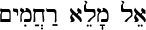 El malei Rachamim God full of mercy; All merciful God; From racham (Qal). Rechem means womb. The God of my salvation  El Yeshuati. The God of my Salvation (Isa. 12:2). From yeshuah, meaning salvation, deliverance, and victory. The God of our salvation 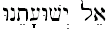 El Yeshuatenu. The God of our Salvation (Psalm 68:19). From yeshuah, meaning salvation, deliverance, and victory. The Jealous God  El-Kanna The Jealous God (or Zealous God; Exod. 20:5; 34:14; Num. 5:14, 30; Deut. 4:24; 5:9; 6:15; Jos. 24:19; 1 Ki. 19:10, 14; Ezek. 39:25; Joel 2:18; Nah. 1:2; Zech. 1:14; 8:2). Suggests that God watches us lovingly and closely, like a faithful and passionate bridegroom watches over his betrothed. God with us  Immanuel God is with us (Isa. 7:14). Immanu is a preposition with plural ending. The Awesome God  El Hannora. The Awesome God (Neh. 9:32).
|
|||||||||||
|
|
|||||||||||
 he word El (