 |
|
|
|
|
Bedikat Chametz - |
|||
|
Cleaning out the old leaven... |
|||
|
|
|
 |
|
|
||||||||||||||||||
|
|
|
|
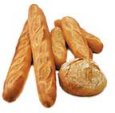
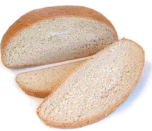
In Hebrew, leaven is called se'or (שְׂאוֹר) whereas a leavened product is called chametz (חָמֵץ). In ancient times, se'or was as a lump of old dough allowed to reach a high level of fermentation (sometimes called sourdough or yeast). When the piece of sourdough was kneaded together with a mixture of flour and water, it accelerated the rising process and created chametz (today yeast or baking powder function as se'or). |
|
|
|
|
What's wrong with Chametz? |
|
|
|
|
|
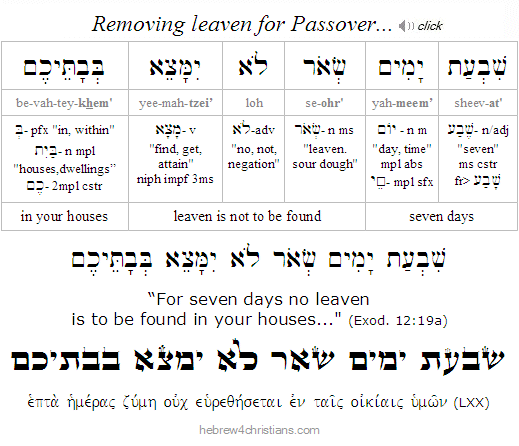
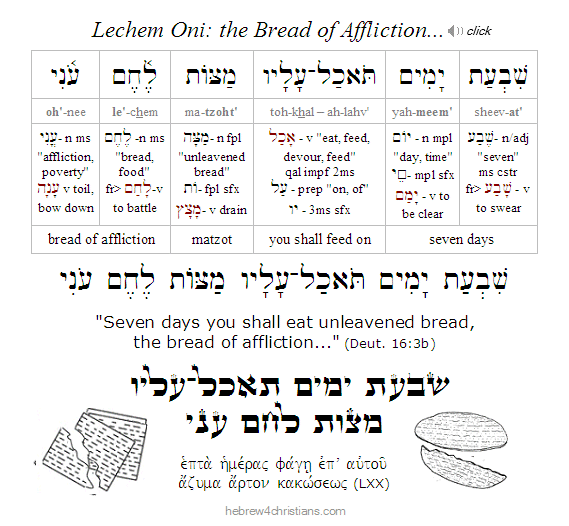
During Passover - sometimes called the Festival of Unleavened Bread - no chametz may be eaten for a full seven days - from the 15th of Nisan through the 22nd of Nisan (Exod. 12:15-18; 34:18). That means no leavened bread products of any kind may be eaten during this time. This is explicitly stated in the Torah:
No meal offering that you offer to the LORD shall be made with leaven (chametz), for no leaven (se'or) or honey may be turned into smoke as an offering by fire to the LORD. (Leviticus 2:11) Using the metaphor of leaven, the apostle Paul writes: Cleanse out the old leaven (חָמֵץ) that you may be a new lump, as you really are unleavened. For Messiah our Passover has been sacrificed (מָשִׁיחַ זֶבַח פִּסְחֵנוּ). Let us therefore celebrate the festival, not with the old leaven, the leaven of malice and evil, but with the unleavened bread of sincerity and truth. (1 Cor. 5:7-8) |
|
|
|
|
|
|
Bedikat Chametz |
|
|
|
|
On the night before Passover, a final "ceremonial search" for chametz is performed by candlelight by the entire family. This search is called bedikat chametz (בְּדִיקַת חָמֵץ) and there is an old custom that ten pieces of chametz are to be "hidden" in the rooms before they are searched. If you hide ten and you (or your children) find only nine, just keep searching! The ten pieces remind us of the ten plagues. A feather and a spoon are often used to sweep up the last crumbs of bread, which will then be burned with the other chametz the following morning. |
|
|
|
|
|
|
|
 |
||||||
 |
||||||
|
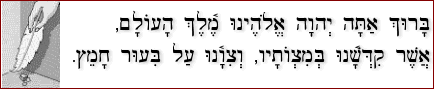
Barukh attah Adonai eloheinu melekh ha-olam, |
||||||
|
|
|
|
Blessed are You, LORD our God, King of the universe, |
|
|

|
|
|
|
The Nullification Declaration "All chametz, leaven and leavened bread that is in my possession which I have not seen, removed or is unknown to me, shall be annulled and considered ownerless like the dust of the earth." |
|
|
|
|
|
||
|
Hebrew Lesson
Cleanse out the old leaven (חָמֵץ) that you may be a new lump, as you really are unleavened. For Messiah, our Passover lamb, has been sacrificed. Let us therefore celebrate the festival, not with the old leaven, the leaven of malice and evil, but with the unleavened bread of sincerity and truth. (1 Cor. 5:7-8) Note that the Greek uses an imperative verb here (ἐκκαθάρατε): "You cleanse out (i.e., purge, as in catharsis) the old leaven so that you may become a new lump (ἵνα ἦτε νέον φύραμα), since you already are unleavened (ἵνα ἦτε νέον φύραμα) because of what Messiah has done for you." To untangle what this means, it is important to remember that all the "oughts" (i.e., commands) of the New Covenant are are directed to the truth of who you are "in the Messiah," that is, by virtue of His connection to you, and not to your former identity before you were saved. If you belong to Yeshua, you are no longer "known according to the flesh" - since that person has passed away - and now you are a "new creation" (בְּרִיָּה חֲדָשָׁה) with a new nature that is able to serve God (2 Cor 5:16-17). Another way to say this is that the imperatives of the New Covenant are always based on its declaratives; you are able to obey because of who you really are in the Messiah. It is solely out of your union with Him that you are able to please God. This is good news, since it's not up to you to do this; you need only to believe in the miracle.... חָקְרֵנִי אֵל וְדַע לְבָבִי chok·rei·nee · el · ve'da · le·va·vee "Search me, O God, and know my heart!
"For it is you who light my lamp; the LORD my God lightens my darkness" (Prov. 18:28). May it please the LORD to give us the light of His Spirit as we undergo our own inward bedikat chametz to remove the sour and rotting influences of our past lives... Amen. Related Topics:
|


|
|
|
|
|